

India’s intercity bus are being re-imagined for optimal utilisation and higher per seat realization, writes Upendra Kasbekar.
For a frequent female traveller, however, flexibility begins much before the vehicle reaches the highway. It begins with the choice of where and with whom she sits. Travelling on the Mumbai–Pune route, frequent traveller Jaya Diwaker availed the gender-seating option on a Vijayanand coach. She observed, “When offered as a choice rather than a restriction, gender-based seating can be a meaningful step towards making public transport more inclusive for women and a legitimate step towards their safety.”
That choice reflects a broader change taking place in intercity travel.Passenger expectations are no longer limited to getting from one city to another. Seating preference, privacy, comfort and the ability to choose how one travels are increasingly becoming part of the product itself. And as operators try to accommodate these different expectations, the bus is also becoming a more flexible commercial asset.
At Prawaas 5.0, one of the most interesting developments was not a new powertrain or another increase in range, but a change in how passengers are being accommodated. Volvo Buses India and JBM Electric Vehicles showcased coaches that combine conventional seating with sleeper berths, while coachbuilders such as Sutlej Motors and SYNATY Automotive demonstrated how the same passenger environment is evolving around luggage, privacy, materials and safety.
The seater-sleeper concept itself is not new. India has operated mixed configurations for years, particularly on long-distance private routes. What is changing is the level at which manufacturers are approaching the concept. Instead of leaving the combination largely to operator or bodybuilder requirements, the configuration is increasingly being considered as an integrated vehicle architecture involving body structure, passenger packaging, suspension, safety, certification and fleet utilisation.
An Established Need
The demand for sleeper travel already has a substantial base in India. The Ministry of Road Transport and Highways reported 49,616 registered sleeper coaches as of Feb’26, although this number should not be interpreted as the potential market for seater-sleeper buses. It nevertheless establishes the scale of the existing sleeper ecosystem.
Passenger behaviour is also changing with journey length. A 2026 study based on 2,130 valid passenger responses found a preference shift towards sleeper buses for journeys exceeding approximately six hours or 300 km, with comfort and privacy among the factors influencing the choice.
This creates an interesting equation for operators. A dedicated sleeper can be optimised for overnight travel, while a conventional seater works naturally on daytime routes. A mixed coach attempts to occupy the space between the two, allowing passengers with different requirements to travel together.
From Platform To Layout
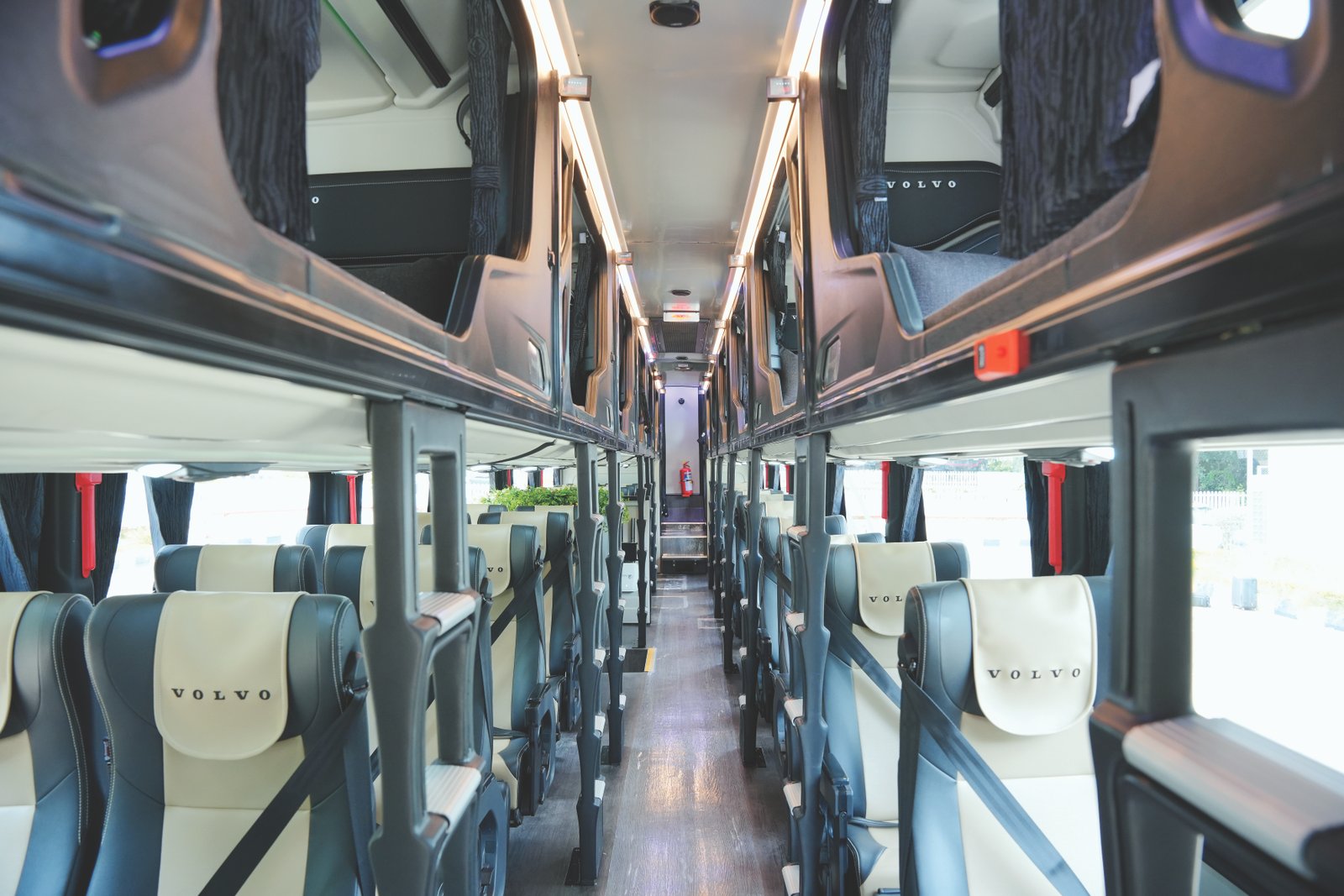
At Prawaas 5.0, the approach moved another step forward. The 15-metre Volvo 9600 Seater-Sleeper combines 27 premium lower-deck seats with calf support and 24 upper sleeper berths, along with three rear lower berths. A kitchenette, onboard toilet and approximately six cubic metres of luggage space extend its role beyond a conventional intercity coach.This also opens a different revenue equation. At an illustrative fare of Mumbai to Bangaluru Rs.1,000 per seat and Rs.2,200 per sleeper berth, a 27-seat and 24-berth configuration could generate Rs.79,800 at full occupancy. While these are not actual market fares, the example shows how a mixed configuration can give operators the flexibility to balance passenger demand, occupancy and revenue across different routes.
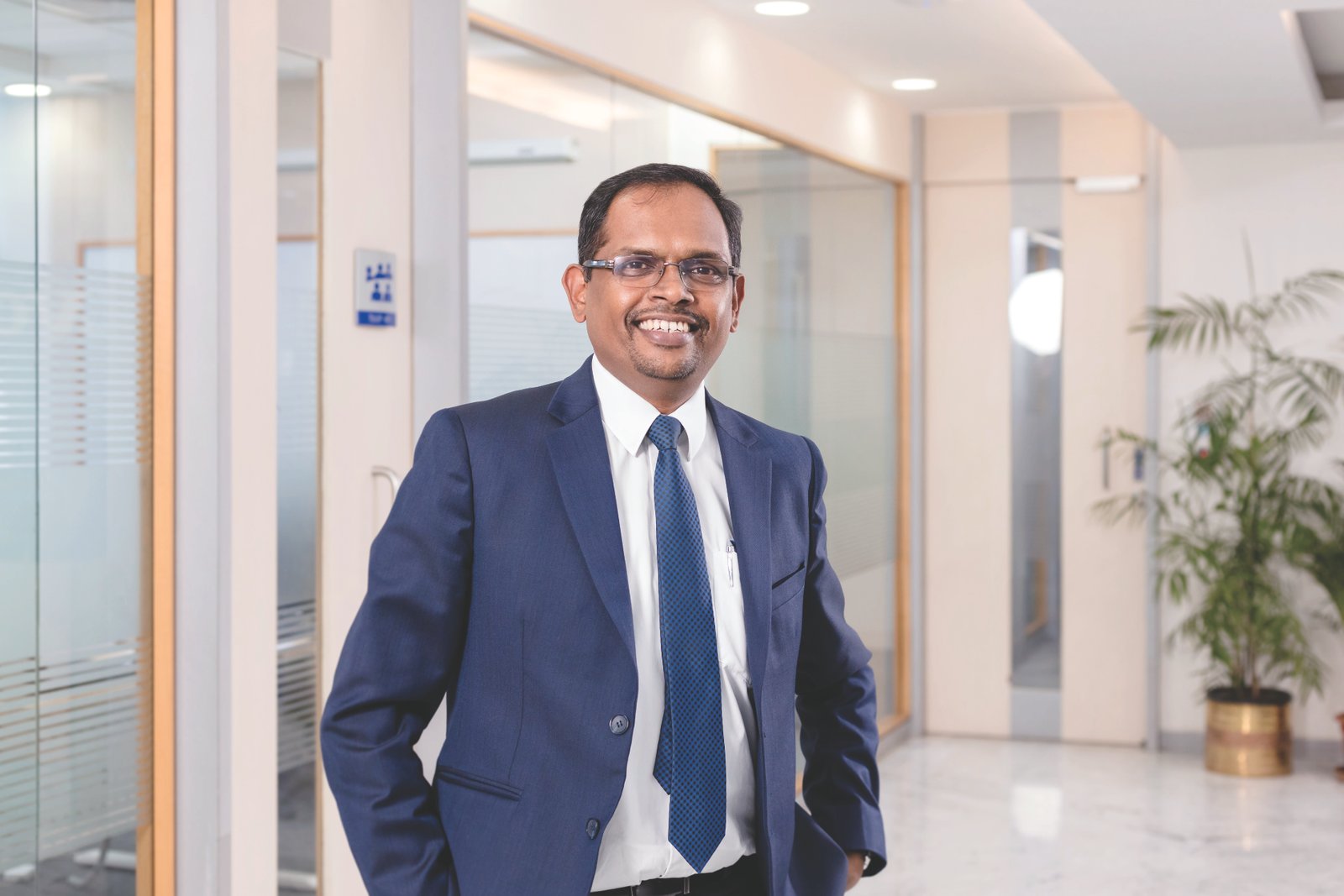
Suresh Chettiar, Executive Vice President, Bus Division, VE Commercial Vehicles.
S S Gill, Chief Commercial Officer, VE Commercial Vehicles, said, “India’s bus industry is evolving rapidly, with rising passenger expectations for premium travel experiences and operators seeking higher productivity and operational efficiency.” Suresh Chettiar, Executive Vice President – Bus Division, VE Commercial Vehicles, said, “The Volvo 9600 platform has been widely appreciated for setting new standards in luxury, safety and passenger comfort. Building on that success, we are introducing the Volvo 9600 Seater-Sleeper to meet the growing demand for more flexible premium travel solutions. Featuring 24 upper sleeper berths and 27 premium lower-deck seats with calf support, the new coach enables operators to efficiently cater to both short- and long-distance routes while delivering an elevated travel experience for passengers.” JBM is approaching a similar passenger problem from an electric direction. At Prawaas 4.0, its E12 Galaxy was presented as a 12.4-metre electric coach with a 6,350 mm wheelbase, while the latest GALAXY introduces a mixed configuration with 22 Maharaja reclining seats and 20 sleeper berths with a washroom, or 24 seats and 20 berths without one.

Nishant Arya, Chairman, JBM Electric Vehicles
Nishant Arya, Chairman, JBM Electric Vehicles, said, “The next generation GALAXY has been developed to meet the evolving expectations of premium inter-city travel with a sharper focus on luxury, utility and business efficiency.”
The significance is not only the new layout, but the flexibility of the platform itself. The GALAXY shown at Prawaas 4.0 has now evolved into multiple passenger configurations, allowing the same platform to be considered for different operating requirements. For operators, that flexibility begins to connect passenger packaging with route economics.
Engineering The Space
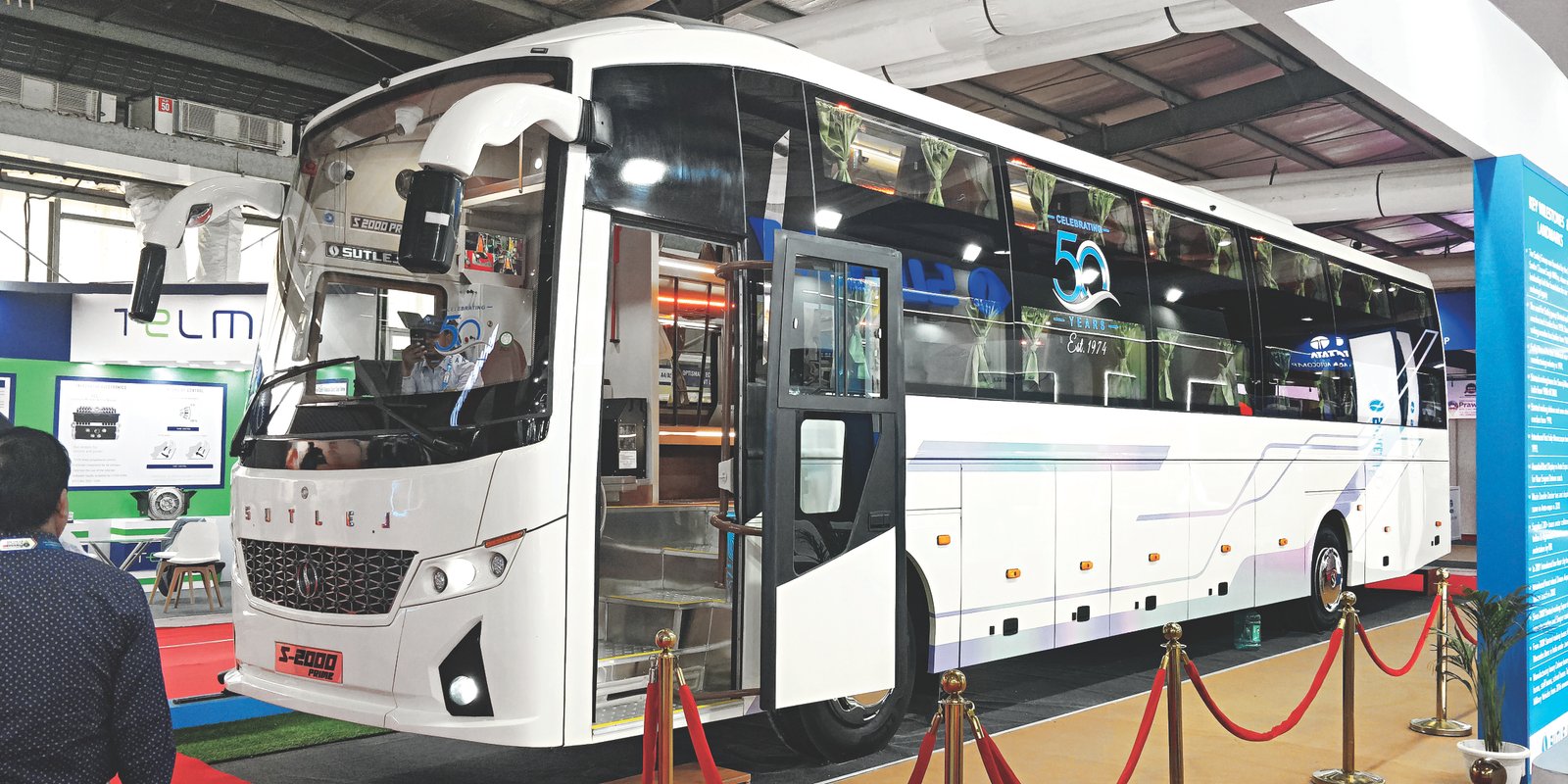
The same principle is visible further down the manufacturing chain. While Volvo and JBM are addressing the seater-sleeper concept at the vehicle-platform level, Sutlej Motors is attacking the problem through structural and packaging optimisation.
Its S2000 Prime sleeper coach reportedly gains four inches of additional height in the belly luggage compartment without increasing the overall external height, which remains around four metres. The additional volume comes from restructuring the available space rather than simply increasing the vehicle envelope. Herkamal Singh Wilkhu, Director, Sutlej Motors, said, “Safety cannot be looked at as an add-on to a bus. It has to be built into the way the vehicle is engineered, manufactured and ultimately operated.”
SYNATY’s Lavie plus approaches the same passenger requirement through material selection and privacy. The coach uses ABS FR-grade material, with the company linking its lower weight to fuel and tyre efficiency. Naresh Kumar, Managing Director, SYNATY Automotive, said, “Weight is less, fuel and tyre efficiency is increased.” The emphasis on certification is also significant. In August 2026, ICAT issued SYNATY its first compliance certificate for a 15-metre multi-axle sleeper bus under AIS-119 and AIS-153. The certified hybrid configuration provides 21 berths and 42 seats, showing that mixed passenger arrangements are now being brought into formal certification frameworks.
Safety Defines It
The more flexible the passenger arrangement becomes, the more complicated safety becomes. A seated passenger can immediately see the aisle and emergency door. A sleeper passenger may be lying behind a berth structure or privacy partition, making evacuation, visibility and access fundamentally different considerations.
AIS-119 specifically addresses sleeper-coach requirements, while AIS-153 governs several aspects of fully built bus safety. The regulatory focus has become particularly important following sleeper-bus fire investigations. In February 2026, MoRTH highlighted concerns including emergency-door dimensions, blocked emergency passages, inadequate roof hatches and missing fire-detection and suppression systems.
The Operator Equation
Yet the market is not moving overnight. When checked with local booking operators, dedicated sleeper and seater buses continue to dominate fleets, while mixed configurations are still being evaluated rather than immediately adopted commercially. The technology is available, but the operating model is yet to settle.
The reason is simple: the revenue equation has to work consistently in the real world. Operators need to know whether both seats and berths can achieve sufficient occupancy, how fares and passenger demand vary by route, and whether the added body, interior and safety complexity is justified by higher utilisation. The change may be around the corner, but operators are now doing the mathematics.
There are compromises too. Berths consume more space than seats, luggage capacity can change, and body and safety requirements become more complex. For electric coaches, battery weight and charging schedules add another layer to the calculation. Prawaas 5.0 therefore signals a shift towards making passenger flexibility part of vehicle architecture rather than an aftermarket arrangement. Volvo approaches it through a premium diesel platform, JBM through electric mobility, while Sutlej and SYNATY address the same requirement through body engineering, materials and passenger experience. The technology has arrived; the commercial model is now being tested. Whether seater-sleeper becomes a wider fleet strategy will depend on whether that flexibility delivers better utilisation for operators while giving passengers a more comfortable and practical long-distance journey.