

Mahindra’s progression in the HCV domain has transitioned from acquiring fundamental engineering capabilities to creating a total value proposition centred on uptime, fuel savings, and smart fleet operations. The introduction of the BLAZO i-TRK platform marks the next phase in this strategy for MTBD. To evaluate these operational claims, CV Magazine embarked on a 2,100 plus km long-distance road test starting from the launch event at CIDCO in Mumbai crossing state borders to end at Gurugram. Ashish Bhatia reports on the extensive Mumbai-Delhi validation. Co-drivers Prateek Pardeshi and Upendra Kasbekar joined in.
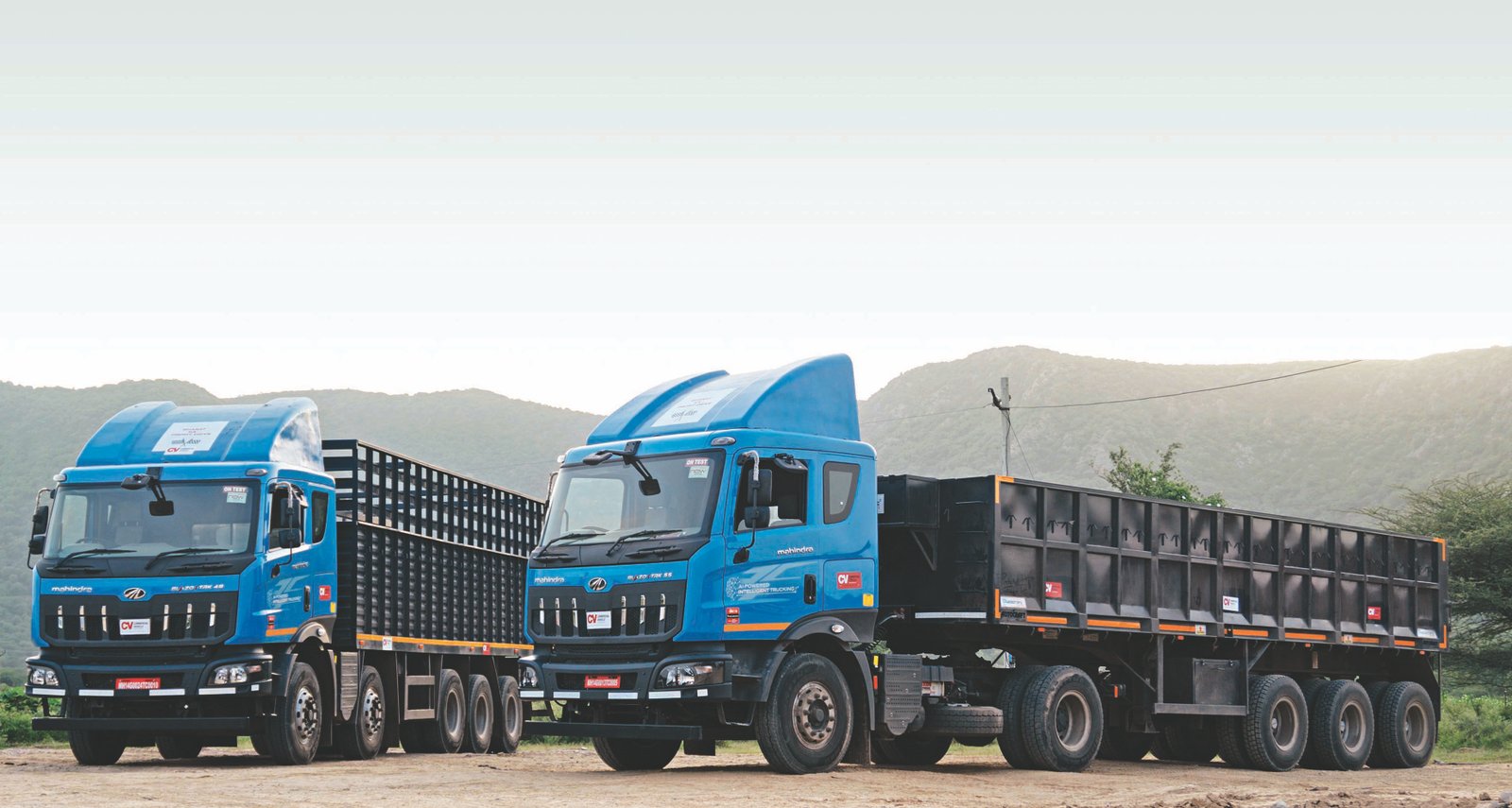
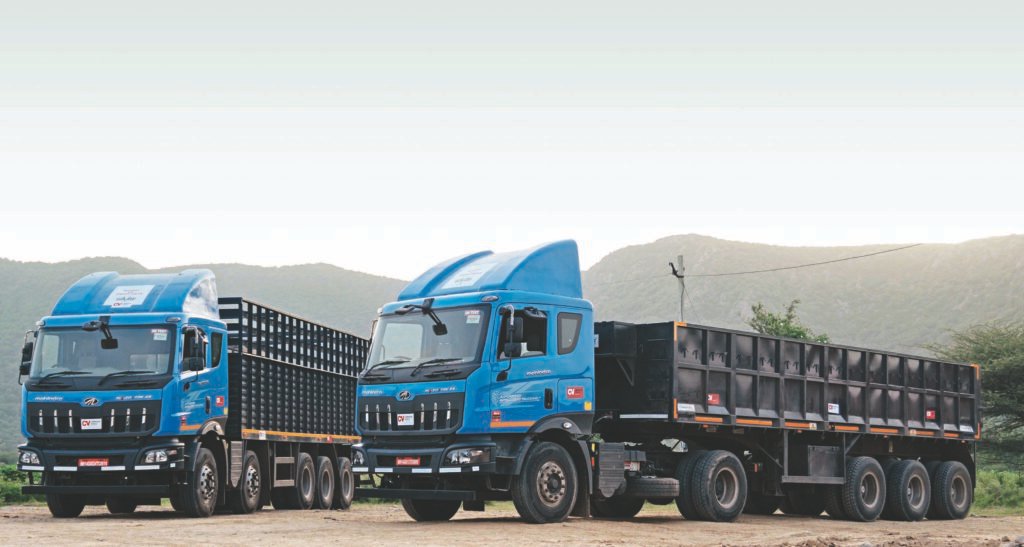
Two Configurations, one profitability proposition. The 48- tonne rigid and 55-tonne tractor trailer variants of the Mahindra BLAZO i-TRK featured in the Bharat ka profit Drive
From the Navistar collaboration that laid the foundation for Mahindra’s HCV ambitions to the arrival of Blazo in 2016, the company’s journey has increasingly focused on the economics of operating a truck. The new BLAZO i-TRK takes that proposition into the realm of onboard artificial intelligence, predictive maintenance and connected fleet management. Over seven days and more than 2,100 kms from Mumbai to Gurugram, CV Magazine tested to validate the propositions over ghats, rain-affected roads, freight corridors, service touch points and expressways to examine the thinking behind its “Profit Ka Rocket” promise and the questions that remain.
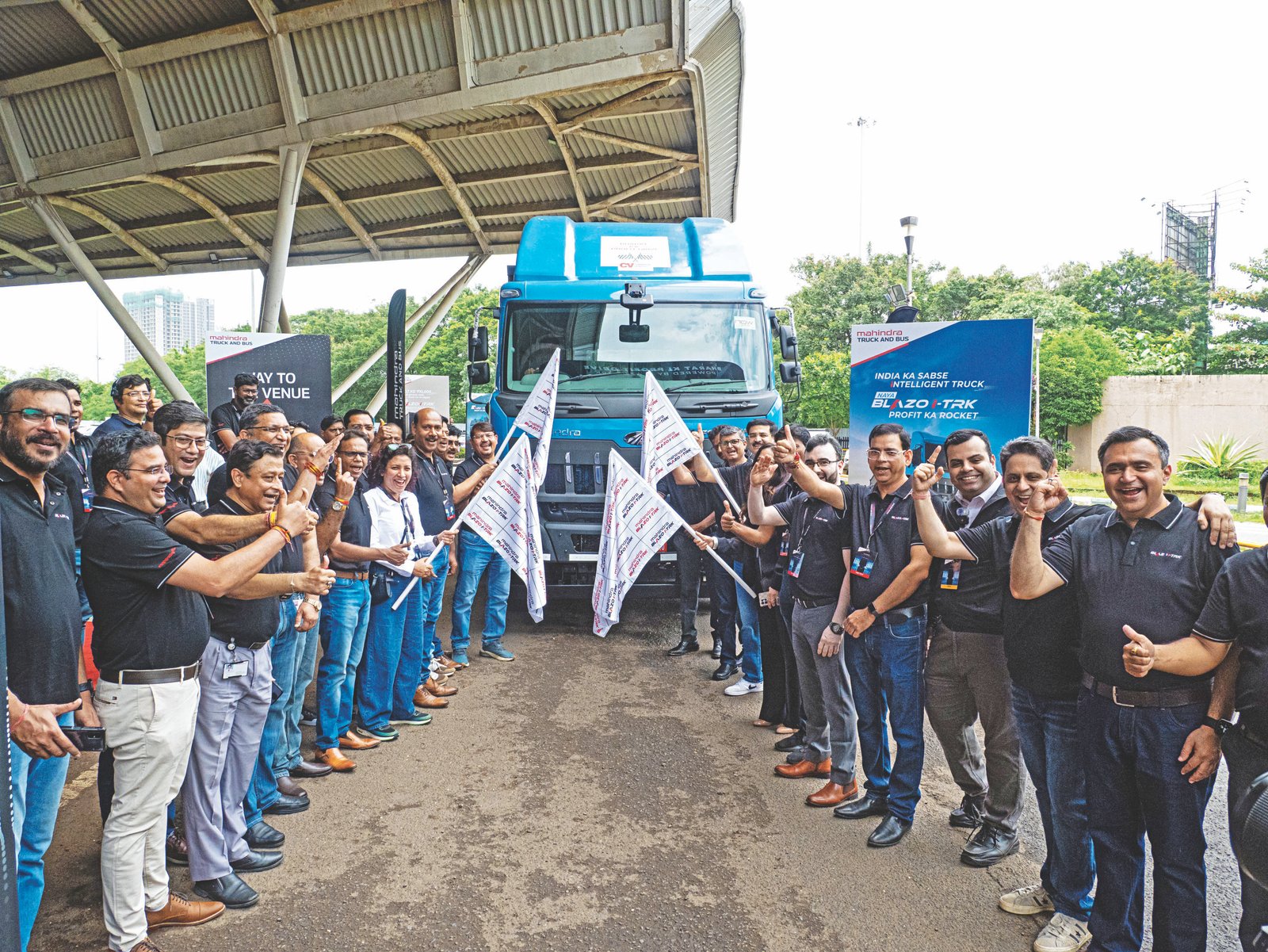
Vinod Sahay ( On the back,right hand side) with the team MTBD in attendance flagged off the Mahindra Blazo i-TRK 48-tonne rigid and the 55- tonne tractor trailers on a 2100 km plus Bharat ka profit Drive, validation with CV Magazine.
For Mahindra & Mahindra, the journey into heavy commercial vehicles was never simply about adding larger trucks to its portfolio. It was about developing the engineering, manufacturing and market capabilities needed to become a full-range commercial vehicle player. The November 2005 joint venture with International Truck & Engine Corporation of the US, associated with the Navistar International truck business, established the foundation. Mahindra brought its understanding of Indian operating conditions, sourcing, manufacturing and customer requirements, while its partner contributed experience in medium- and heavy-duty truck engineering. A subsequent engine joint venture strengthened the powertrain programme and localisation strategy.
The first products from Mahindra Navistar Automotives Ltd. (MNAL), including the MN25 and MN31, arrived in 2010. The TRUXO, TRACO and TORRO identities subsequently organised the HCV offering around multi-axle trucks, tractor-trailers and tippers. The next significant change came in 2016 with the Blazo. Its FuelSmart system gave drivers a choice of operating modes to suit varying loads and road conditions, while mileage and service guarantees made operating economics part of the brand proposition. That was an important shift. A truck’s purchase price might win initial consideration, but fuel consumption, downtime, maintenance and productive utilisation increasingly determine what it earns over its working life.
According to Vinod Sahay, Mahindra’s earlier HCV launches were themselves intended to move the industry forward. Recalling the introduction of the Blazo and Blazo X, he points to the company’s decisions to move to higher power, introduce Common-Rail Diesel Injection (CRDi) and adopt a 7.2-litre engine when smaller-displacement engines were prevalent among competitors. “We have been trying to lead the industry for long,” he says. The BLAZO i-TRK represents the next stage of that ambition. Its proposition combines an AI-enabled automatic drive mode with additional powertrain measures, predictive maintenance, connected fleet intelligence and formal service commitments. The objective is to deliver a more consistent economic benefit while reducing the effort required from drivers and fleet managers to achieve it.
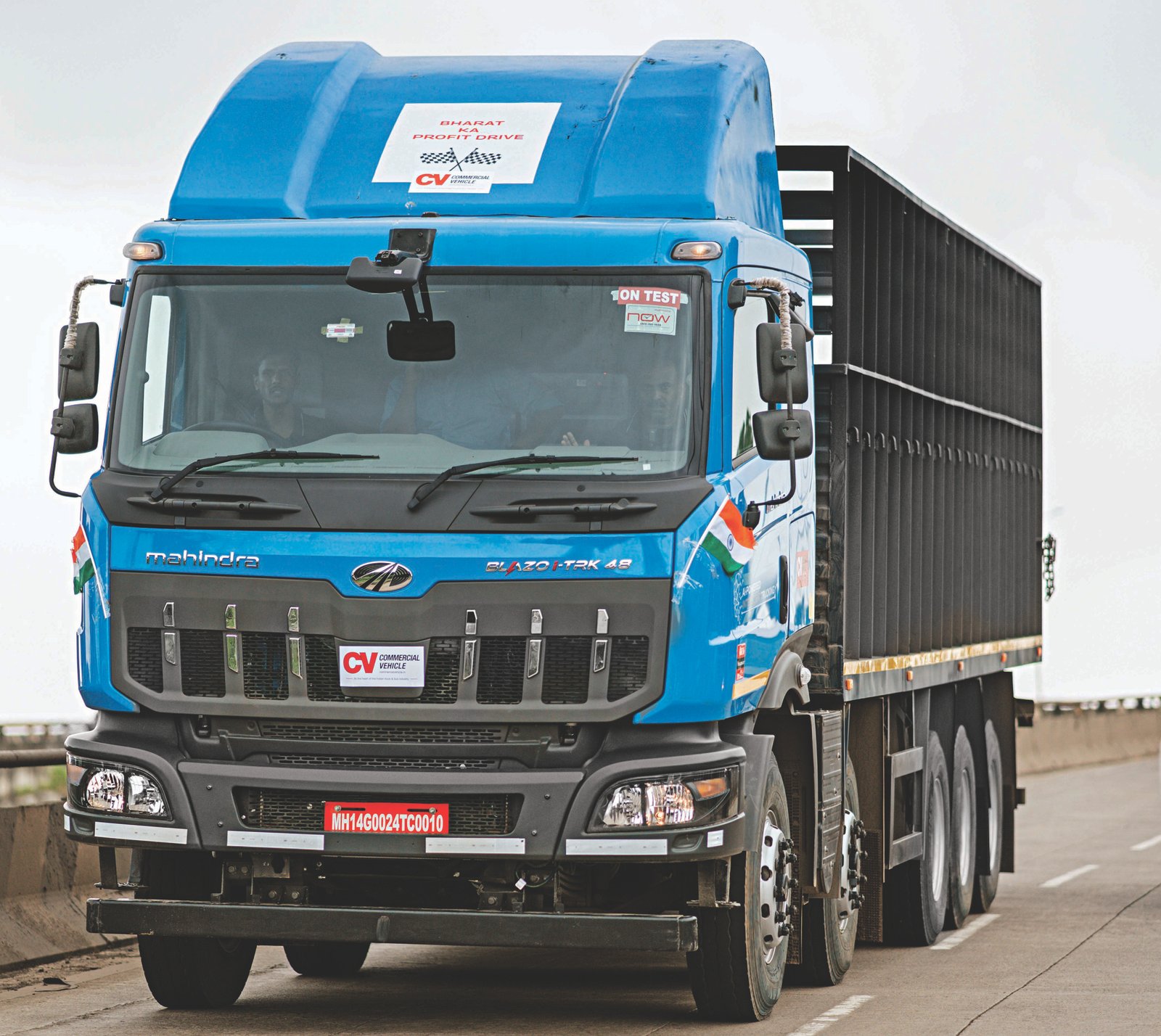
The BLAZO i-TRK’s integrated cab and updated front fascia reflect Mahindra’s focus on combining distinctive design with driver- oriented functionality.
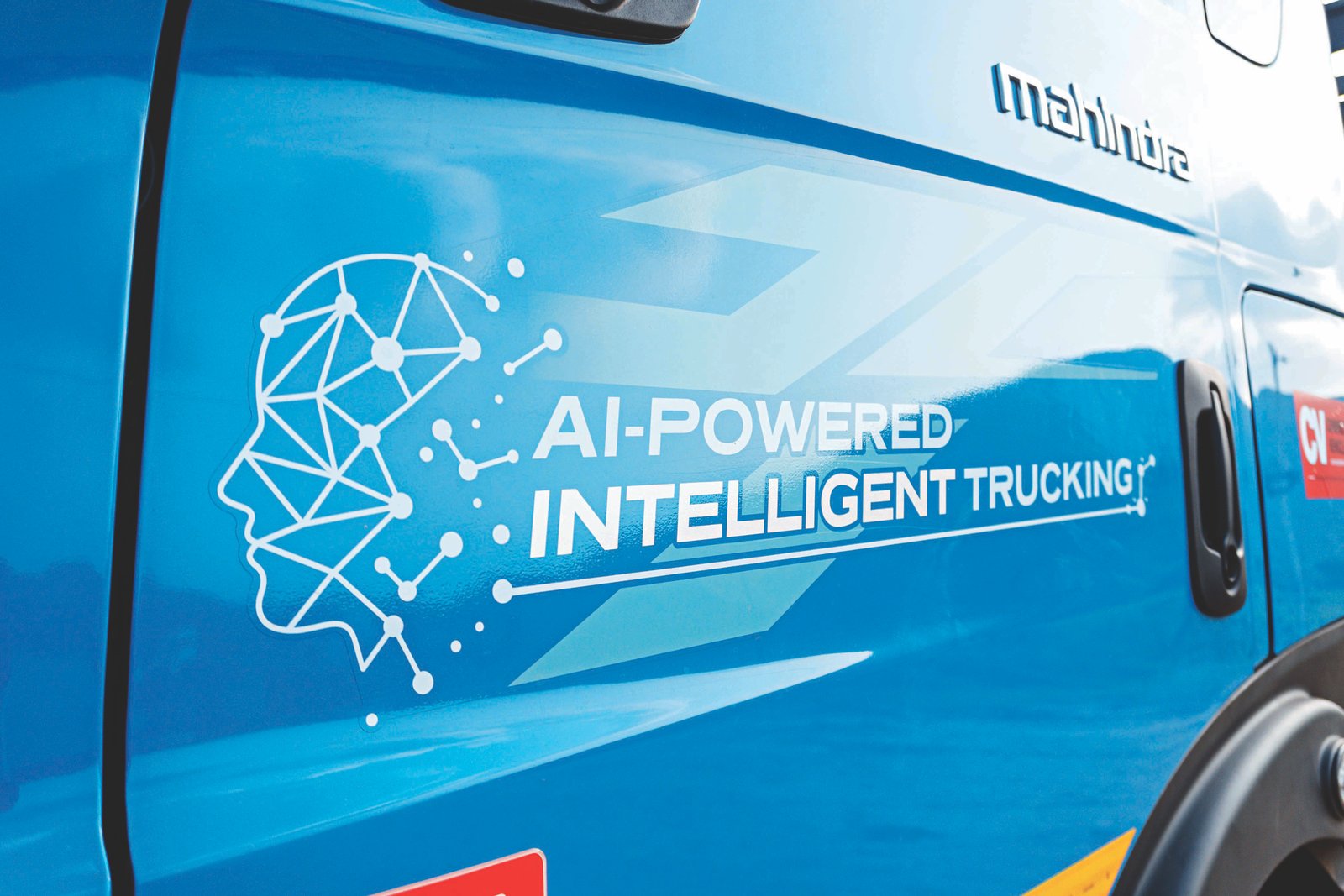
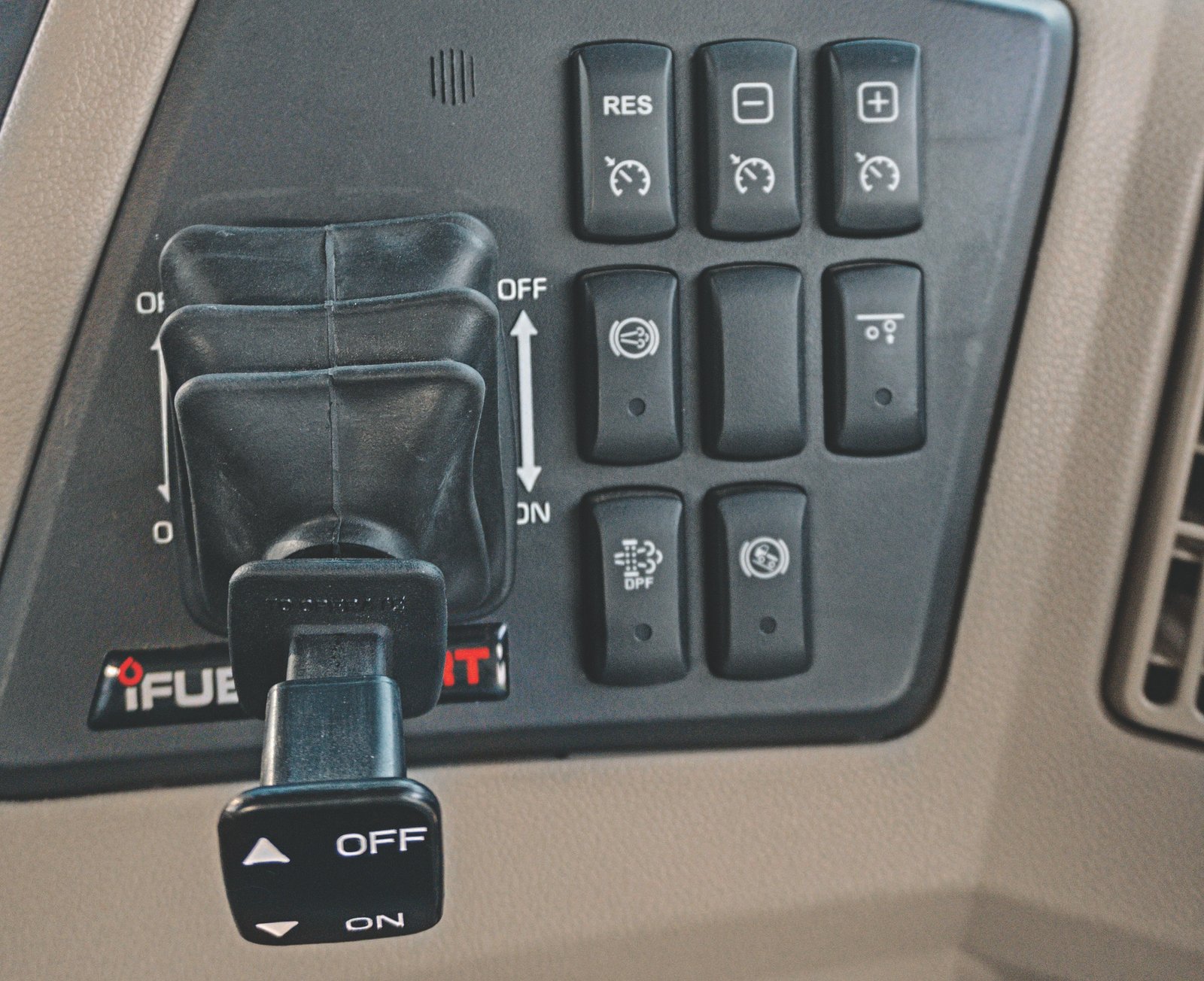
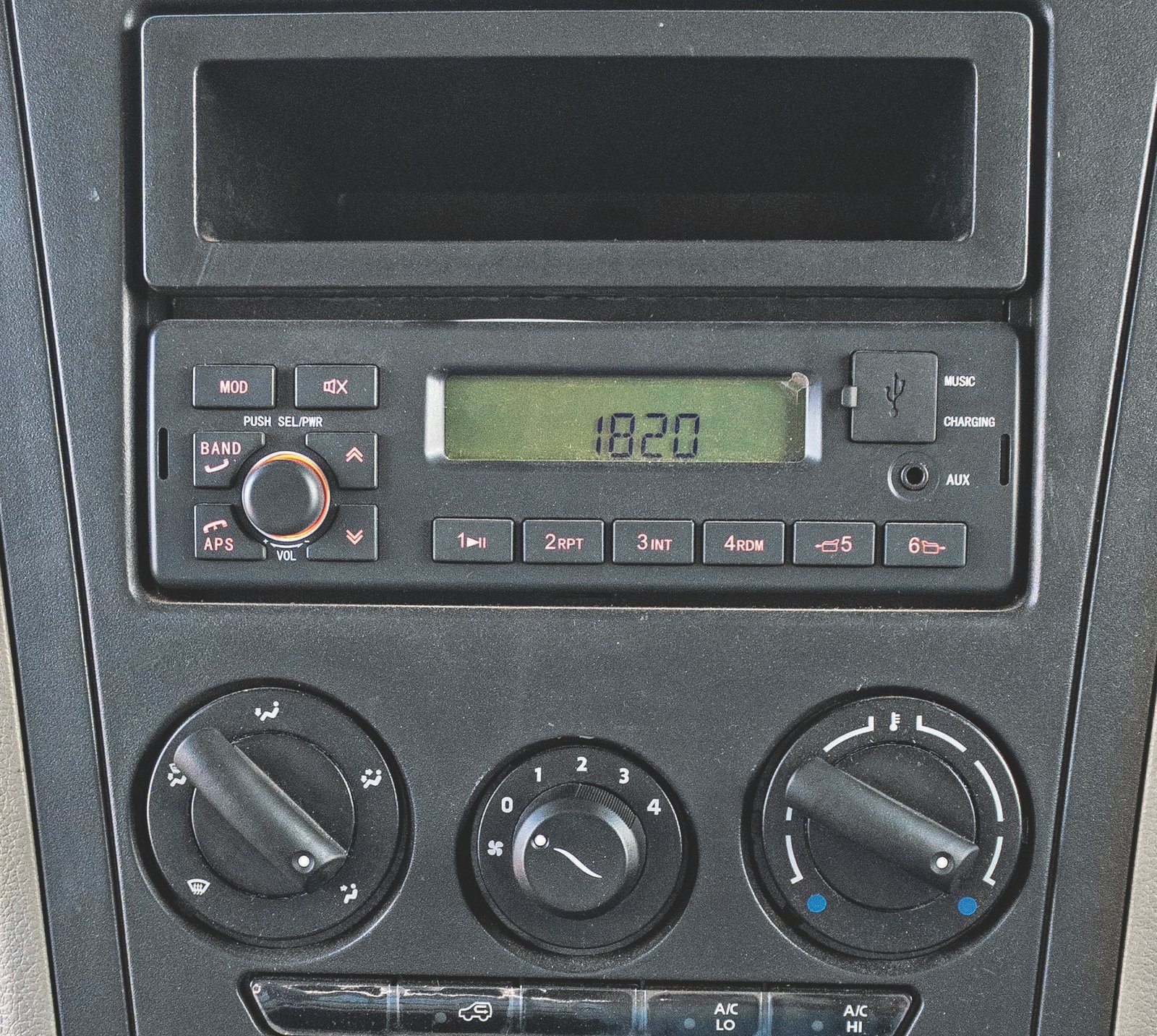
The Blazo i- TRK brings AI- powered iFUELSMART together with connected- vehicle technology and driver- focused controls to support efficient fleet operations.
THE CUSTOMER ASKED FOR MORE
The BLAZO i-TRK emerged from an 18-month development exercise centred on customer feedback. The underlying challenge was not that Mahindra’s trucks lacked fuel efficiency. It was that the benefit did not always appear substantial enough to persuade a transporter to move away from a familiar brand. Sahay recalls customers appreciating the mileage guarantee while questioning whether a saving of 10–15 litres over a 2,000-km journey was sufficient reason to switch. They also raised concerns about service and spare-parts reach relative to more established competitors. “We said, let us solve both these problems with the technology,” he explains.
That response defines the i-TRK’s direction. The launch proposition is built around three assurances: Earn More, Run More and Control More. Under Earn More, Mahindra claims up to 10 per cent better fuel efficiency and potential additional profit of up to Rs. 15 lakh per truck over five years. Run More brings together reliability improvements, predictive maintenance, parts availability and the 48-hour Uptime Guarantee. Control More is supported by iMAXX 2.0 telematics and the NOW 24×7 mobile application.
The BLAZO i-TRK uses Mahindra’s 7.2-litre, 320 hp mPOWER engine, developing 1,100 Nm torque between 1,100-1,700 rpm. Its cabin combines air-conditioning, a COMFiMAXX three-way adjustable suspended seat, EzyCruise cruise control and a driver-focused workspace. The launch claims establish the benchmark. The roadcheck, however, offers a more useful perspective on how the truck behaves when conditions are not controlled.
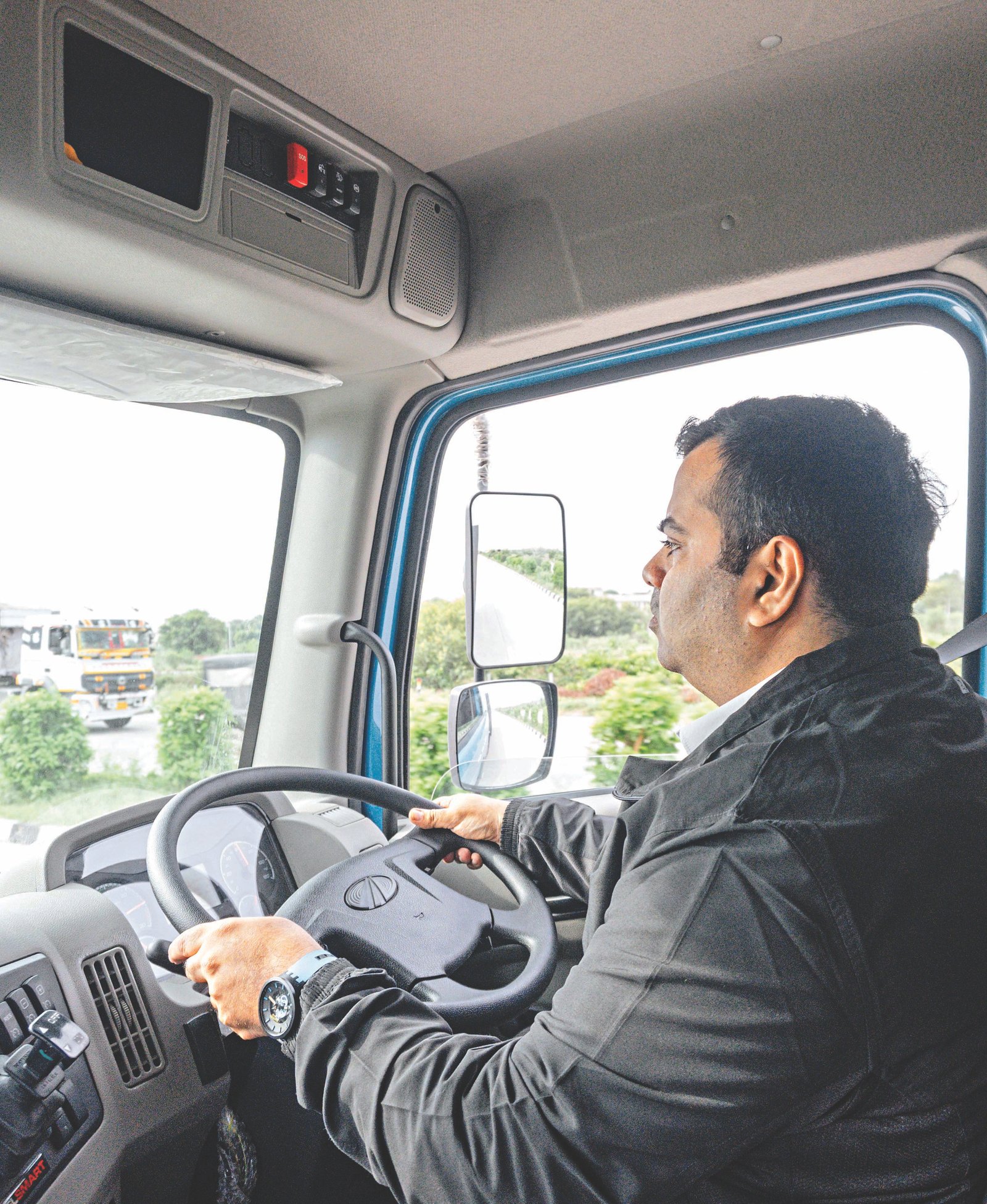
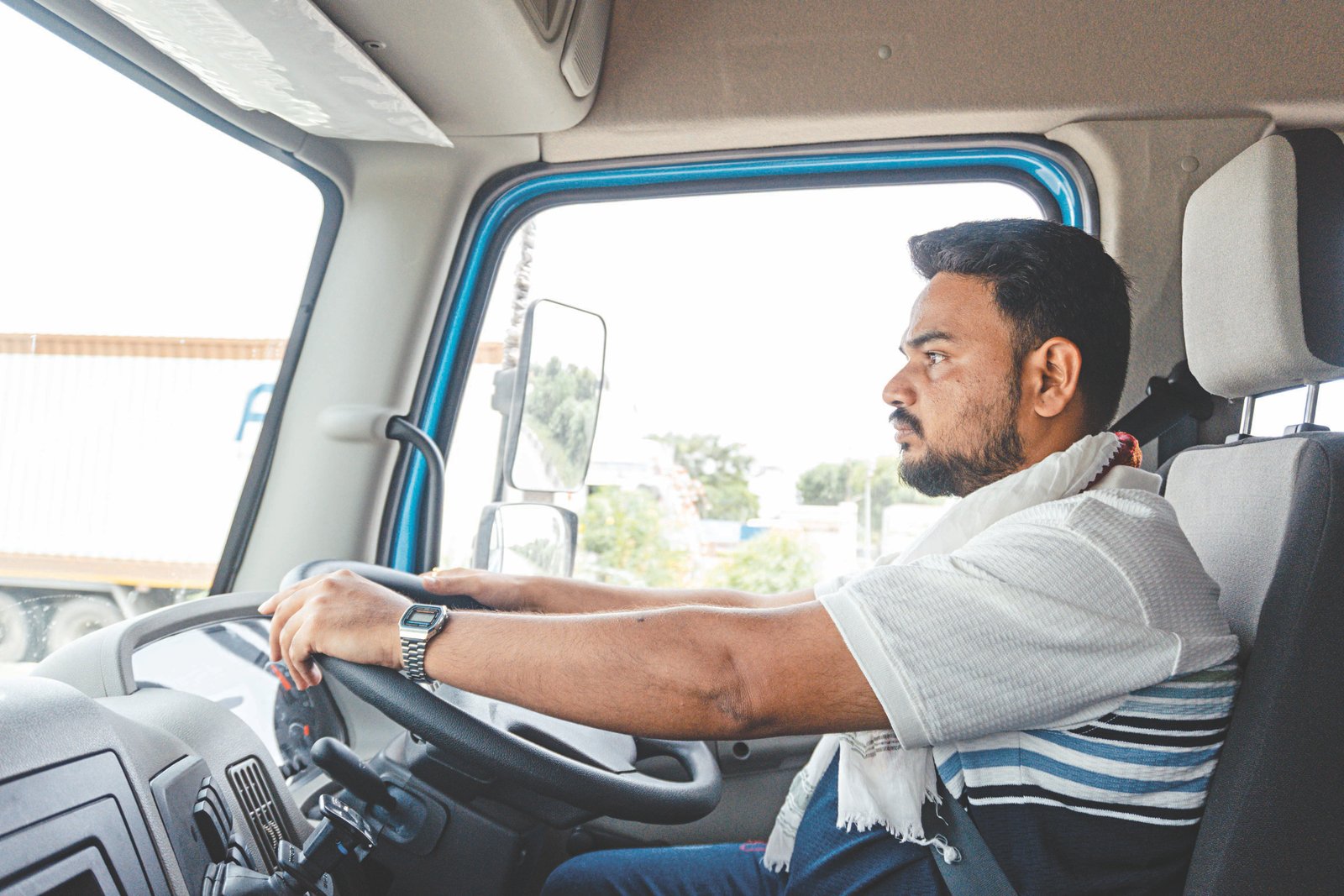
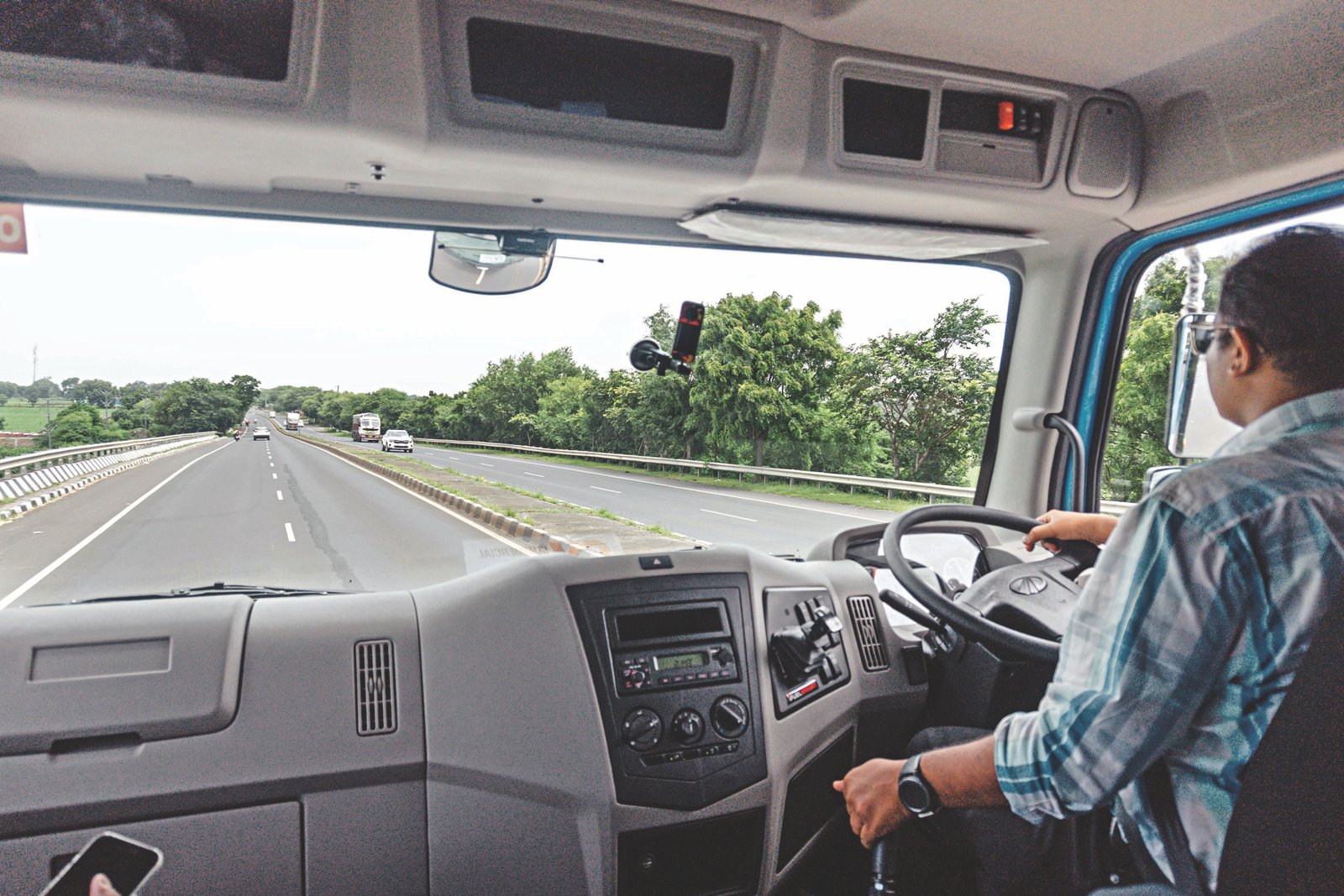
Team CV set off with the Mahindra BLAZO i-TRK on the Bharat ka Profit Drives to assess its fuel- efficiency, technology,comfort and uptime propositions under real-world operating conditions across a 2,100-km- plus route.
VARIED OPERATING CONDITIONS
The Mumbai–Gurugram journey covered more than 2,100 km across seven days, taking the two BLAZO i-TRK trucks through Nashik, Dhule, Indore, Ratlam, Udaipur and Jaipur belts before the final arrival in Gurugram. The convoy encountered rain-affected stretches, ghats, rough patches, interstate border procedures, service facilities and timely aid, eventually, the smoother infrastructure of the Delhi–Mumbai Expressway stretch.
The two configurations, a 48-tonne rigid truck and a 55-tonne tractor-trailer, provided different operating contexts. Gross Vehicle Weight (GVW) verification was completedduring the journey, bringing the assessment closer to laden operating conditions. The daily running generally averaged around 200–250 km, with the final leg covering approximately 250–300 km. The value of the exercise lay in this variety with drives often extending to late hours and stretches with poor visibility. Rather than presenting a single fuel-economy number or a controlled demonstration, the drive exposed the trucks to changing gradients, road surfaces (good and poor) and traffic conditions, while creating opportunities to interact with drivers, fleet owners, dealers and service personnel along the way including dhabha owners home to truckers, away from home.


EARN MORE: FUEL EFFICIENCY
Fuel economy was a recurring subject of discussion throughout the drive. The daily observations indicated that the MID readings improved significantly as the journey moved away from dense urban traffic , deliberate stops and ghat sections towards more favourable highway conditions. This reinforced the importance of interpreting fuel consumption against the route and duty cycle rather than treating a single reading as representative of the truck’s overall efficiency.
The distinction matters. Stop-start traffic, gradients, rainfall, road surface, payload, speed and driving style all affect consumption. The drive team also noted that the vehicles were still within their initial running-in period, making a longer operating cycle important before concluding sustained fuel efficiency.
Mahindra’s AI-enabled iFUELSMART system is designed to address one variable within this equation. The consistency with which the truck selects its operating mode. Sahay explains that the onboard edge-AI chip considers GPS-derived road and gradient information, estimated load, engine rpm, gear selection and accelerator input before making the mode decision automatically. This a marked change over the driver having to select the mode previously that created a dependence on his skill set and timely intervention. It impressed the drivers and operators we met en route. The road observations also showed why this system deserves continued examination. During the Indore–Ratlam leg, the 55-tonne tractor-trailer displayed the Heavy mode engaged on a downhill section despite zero throttle input. This behaviour was flagged for further investigation through the backend iMAXX data and Mahindra’s control logic. It would be premature to conclude from the isolated observation, but it highlights the need to understand the automated mode selection across differing gradients and duty cycles within a larger sample set.
Prior, while on the Dhule–Indore leg, the FuelSmart appeared accurate, supporting smoother mode selection with a low lag resulting in drivers lauding the considerably lowered driver fatigue experienced on such long haul routes with both competing brands and the previous Blazo generation. This performance must be assessed through a longer, more systematic observation of mode changes and corresponding operating conditions with extended onroad operations. Mahindra claims a direct six-to-10 per cent fuel-efficiency advantage from FuelSmart against competing trucks, depending on the comparison, and projects up to Rs. 15 lakh in additional profit over five years. The drive did not establish a like-for-like comparative baseline, so those figures remain manufacturer claims. What the journey did establish is that fuel efficiency cannot be separated from the road, the load and the truck’s operating strategy. The progressive mileage was testimony.
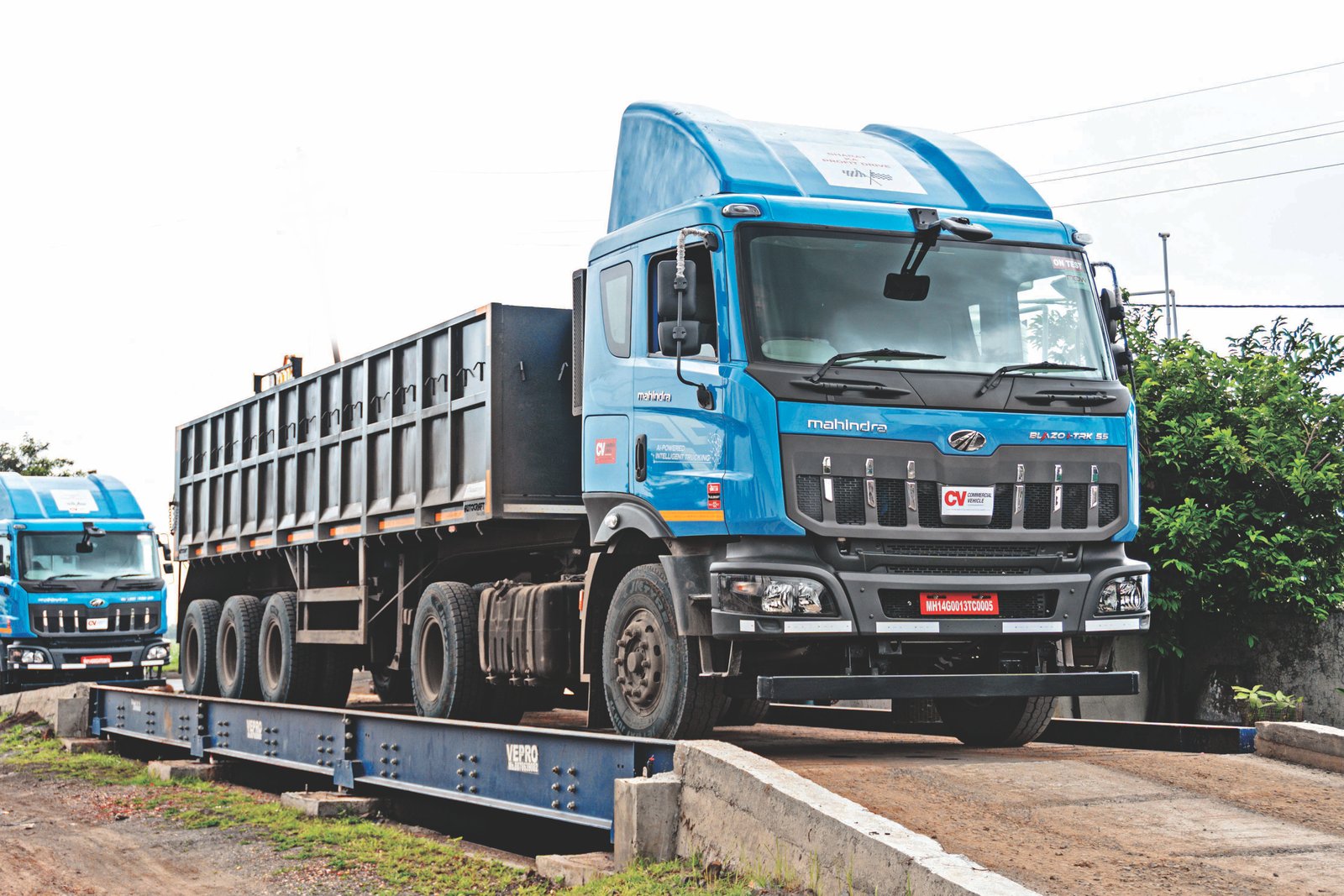
The 55-tonne laden tractor trailer climbs over a private weighbridge for a compliance check near Jalwania state border en route to Madhya Pradesh.
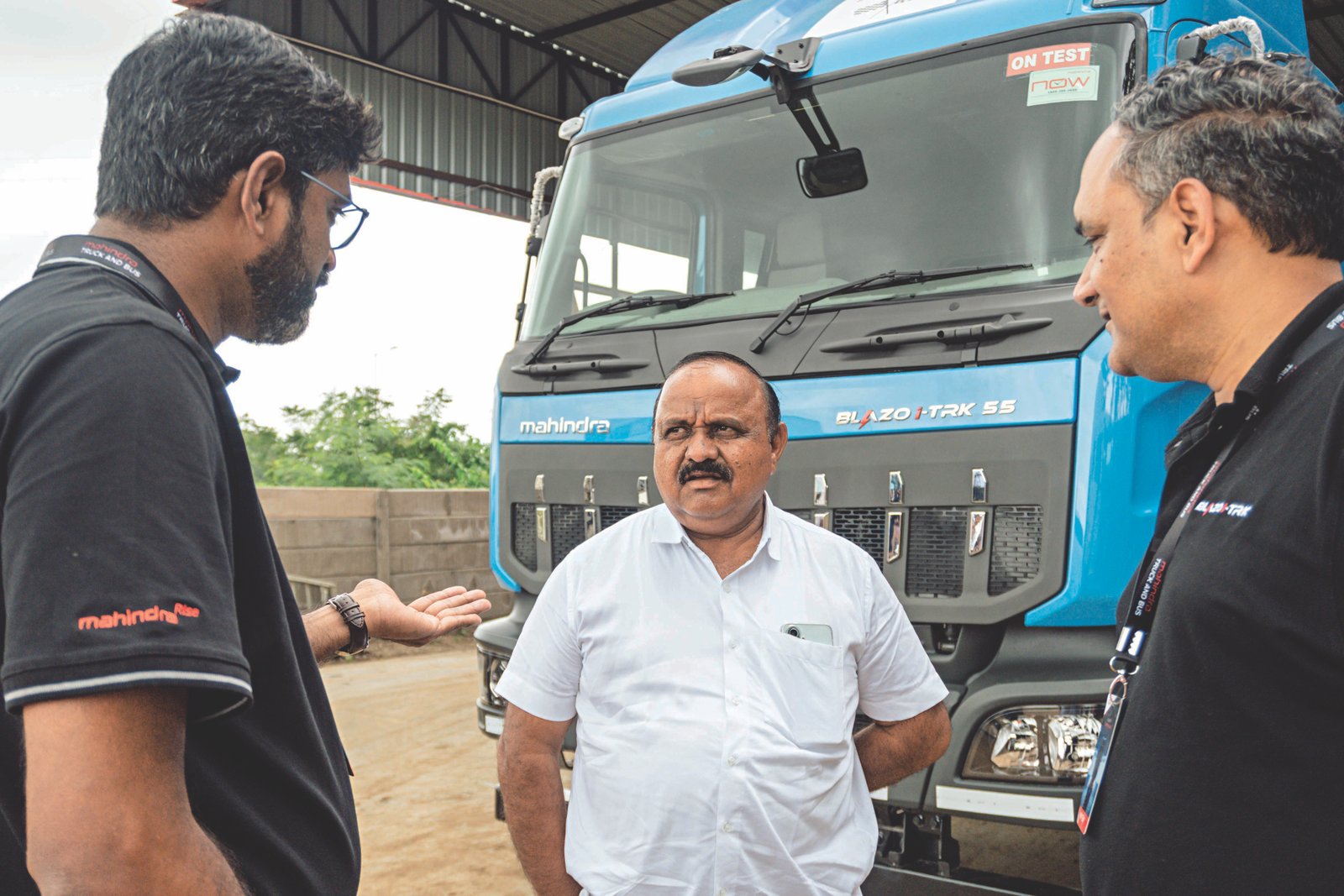
(L To R) Team MTBD explaining the value propositions of the Blazo i-TRK to a key MTBD fleet operator ( in the centre).
DRIVER WORKSPACE
Driver interactions on the opening Mumbai–Nashik leg itself provided an early indication of how the i-TRK’s cabin proposition was being received. Drivers appreciated the cabin’s volume and workspace, as well as the suspended cabin and suspended seat. The combination was seen as relevant to reducing fatigue during long-haul operations. The factory-built cabin also prompted a useful conversation. Some drivers take pride in customising their cowls, but recognised the safety proposition of an integrated solution compared with makeshift structures like the Indori and Jodhpuri cabins popular in the segment as Team MTBD and CV Magazine listed the advantages as a whole on behalf of the industry. The sleeper berth, storage and audio system with Bluetooth connectivity were additional points of interest and heightened aspirations.
The simplified cruise-control interface received a positive response from existing set of Blazo drivers. The ease of engaging followed by taps for incremental speeds and reduced gear shifting to pierce the highways without much intervention had team CV log operating speeds of up to 60 kmph on the expressway on the 48-tonne rigid, while the 55-tonne tractor-trailer surprised by attaining 72 kmph on similar inputs albeit with a higher intent to test its peak. These are observations from the drive, not recommended operating speeds. Actual speed must always reflect road conditions, posted limits, load and safe driving requirements. The cruise mode also revealed human errors by parallel vehicles, some veering off the path with others coming dangerously close as they veered of the straight line due to a possible road hallucination.
The journey also exposed a practical distinction between equipment and ergonomics. During fleet-owner interactions in Jaipur, customers compared the i-TRK with competing vehicles and observed that deeper footsteps on one rival made cabin ingress easier. The BLAZO i-TRK’s door opening angle requires a sideways tilt of the torso making it a tad unnatural. Due to the highest volumetric cabin in the segment, one requires to lean over to reach the door and close it. These observations, though subjective, could be noticed by a few set of drivers depending on their body type. Others might not notice it altogether. Power windows and central locking were added to the MTBD wishlist by others. It is how stakeholders evaluate a truck through daily interactions with it. A comfortable seat and four-point suspended cab with high NVH levels were hailed by a majority distinct drivers of high productivity, in turn high profitability.




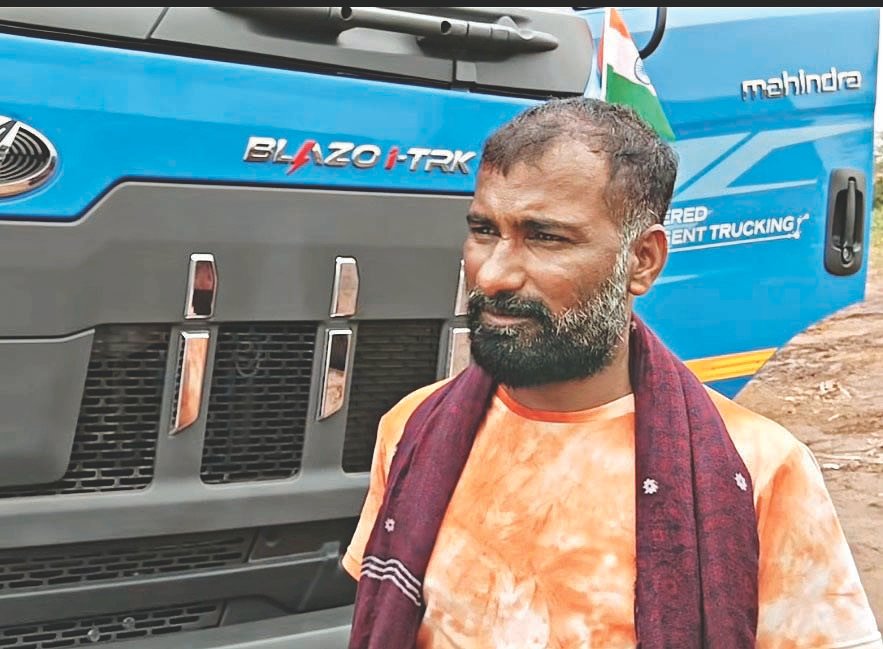

Conversations with drivers along the route brought real-world priorities into focus, from fuel economy and cabin comfort to vehicle monitoring and reduced downtime.
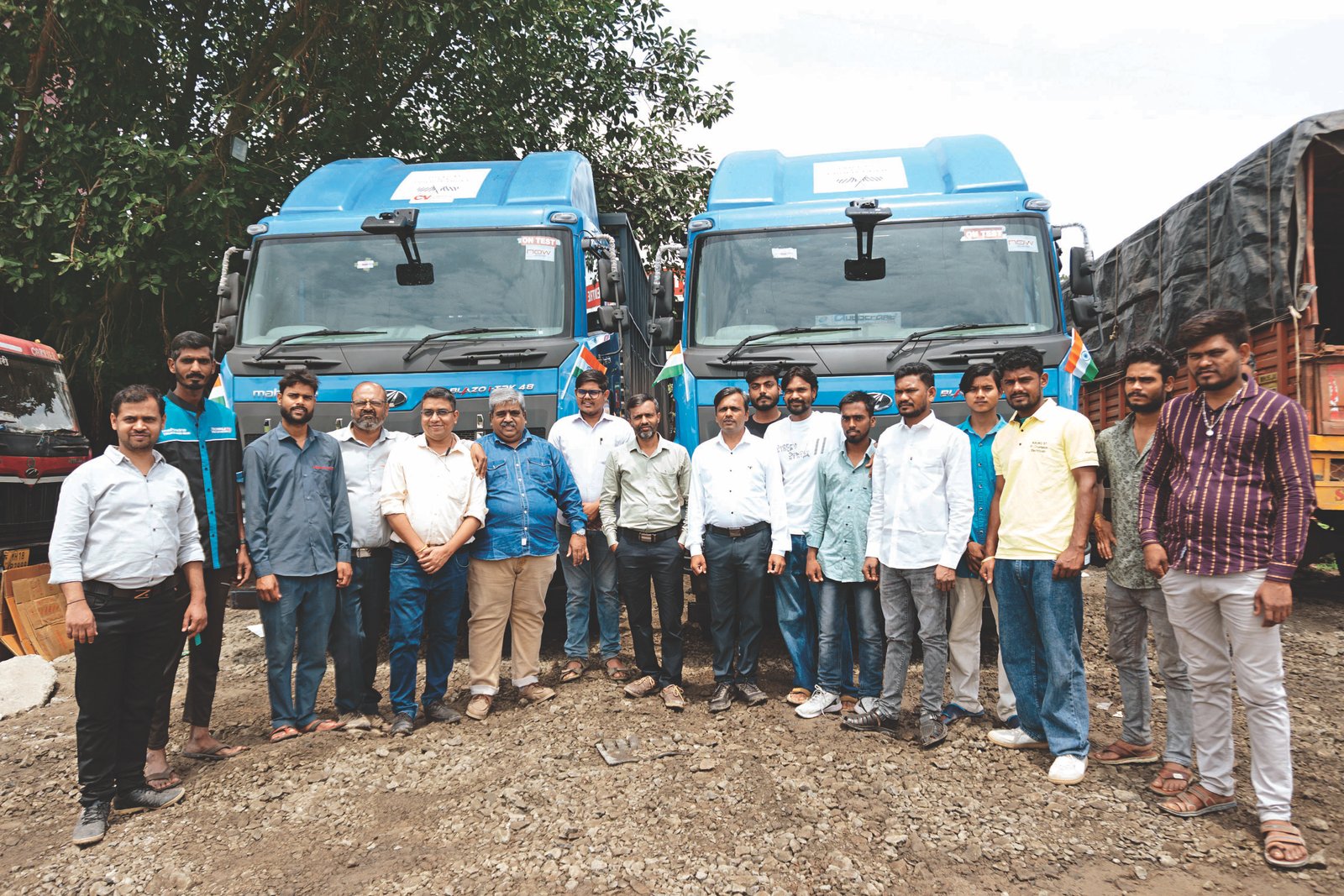
Ganesh Tarla ( ninth from the left), Owner of Tarla Automobiles and Distributor in Nashik, with Sachin Tarla on his right, evaluating the value proposition of the Mahindra Blazo i- TRK.
RUN MORE: UPTIME GUARANTEE
Mahindra’s 48-hour Uptime Guarantee is a central element of the i-TRK proposition. Under the stated programme, eligible customers will receive Rs. 10,000 per day if the truck is not repaired within 48 hours, subject to the applicable terms and exclusions. The Parts Supply Guarantee covers 250 critical parts, with assured availability within 24 hours or the parts supplied will be free of cost. In a clutch fluid related snag, we experienced this for ourselves as the assisting crew put the truck back on road despite it being an odd hour and the highway stretch blacked out.
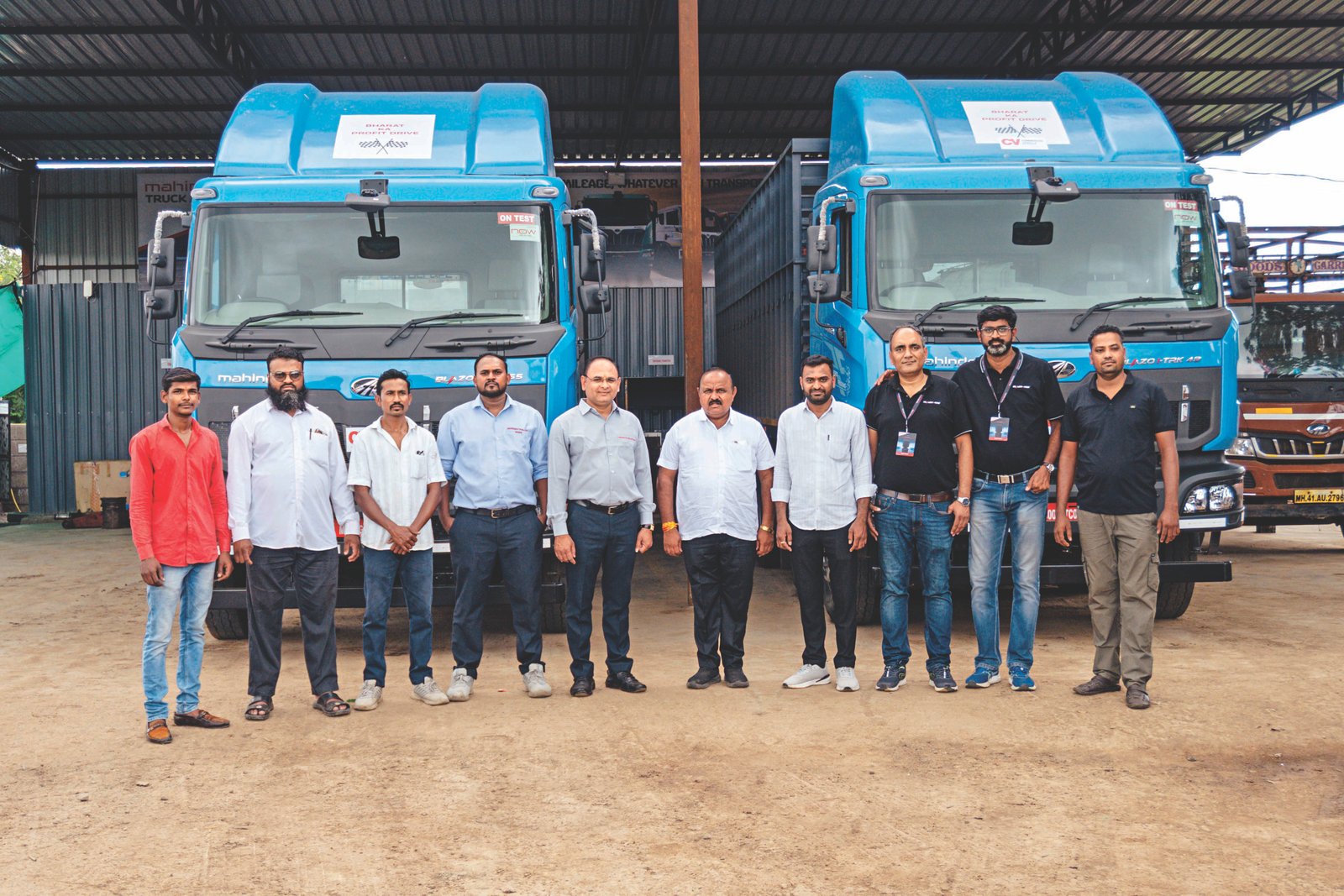
Paresh Pawar ( fourth from the right), Owner of Pawar Automobiles,Dhule evaluating the value proposition of the Mahindra Blazo i- TRK.
The drive offered a view of the service infrastructure supporting these commitments. At Pawar Automobiles in Dhule, the expanding customer care centre footprint along a key transport corridor illustrated the importance of having support close to where trucks roll. A fleet operator there reported running nine Mahindra Blazo trucks since 2012, providing a tangible example of brand trust led loyalty and customer retention.
Further down the route, Sanghi Trucking near Ratlam provided visibility into mechanical servicing and accidental repairs. The visit also included an explanation of the BSVI EATS and an older Blazo engine through a Mahindra Mobile Training van. It connected the Blazo i-TRK to the technical and service experience accumulated from previous generations.
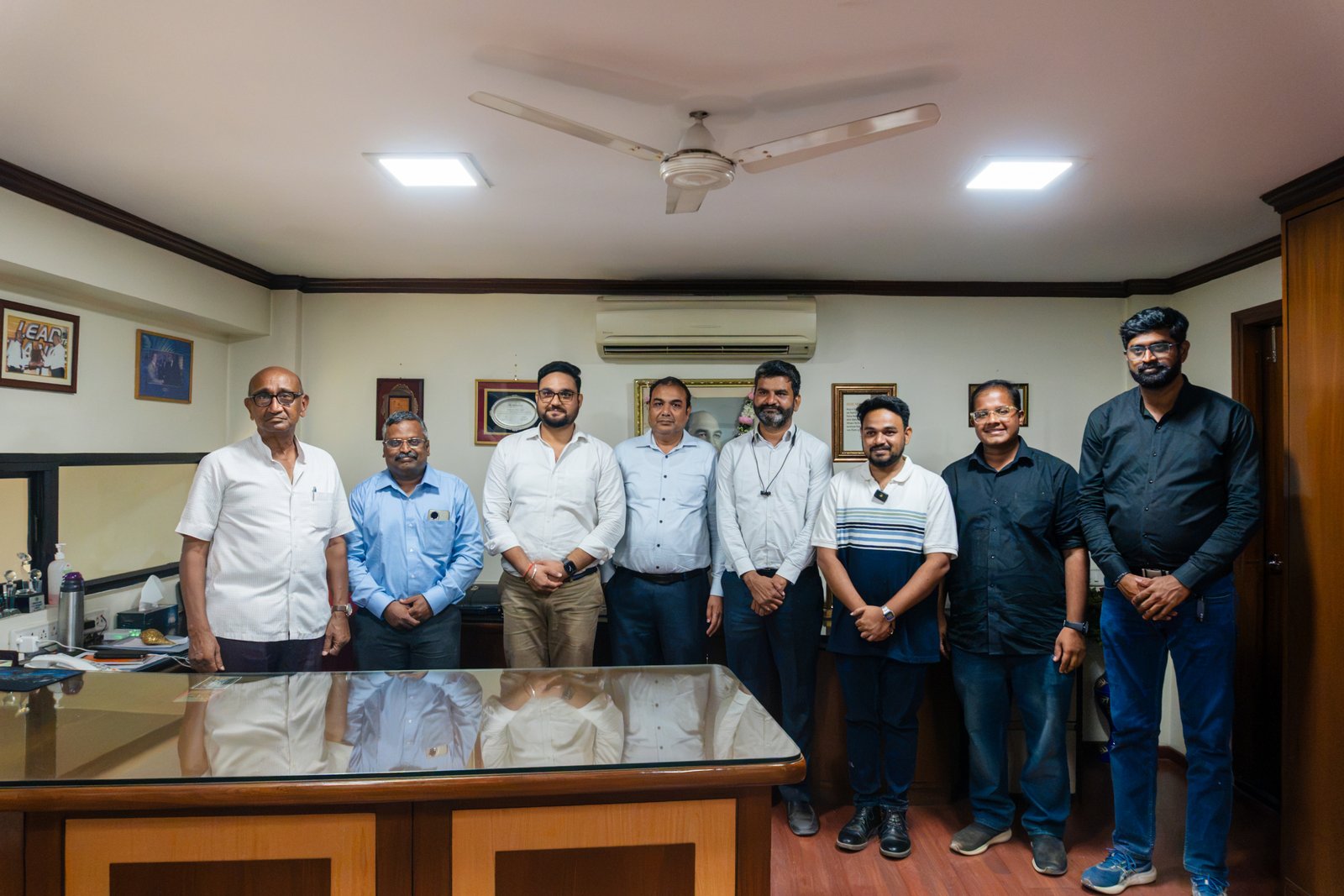
Jaipur’s Kishore Gehlot, MD, K.S. Motors (P) Ltd. with an over four decades of experience behind him, evaluated the value proposition of the Mahindra Blazo i- TRK and echoed the MTBD confidence in offering customers an assured uptime.
The Jaipur visit to K.S. Motors provided another perspective on service readiness. The facility operates a dedicated overnight team comprising an electrician, mechanic and helper between 8 pm and 8 am. With dedicated two to three service vans for field requirements. Such arrangements are relevant to the uptime proposition because breakdown support must be available round the clock.
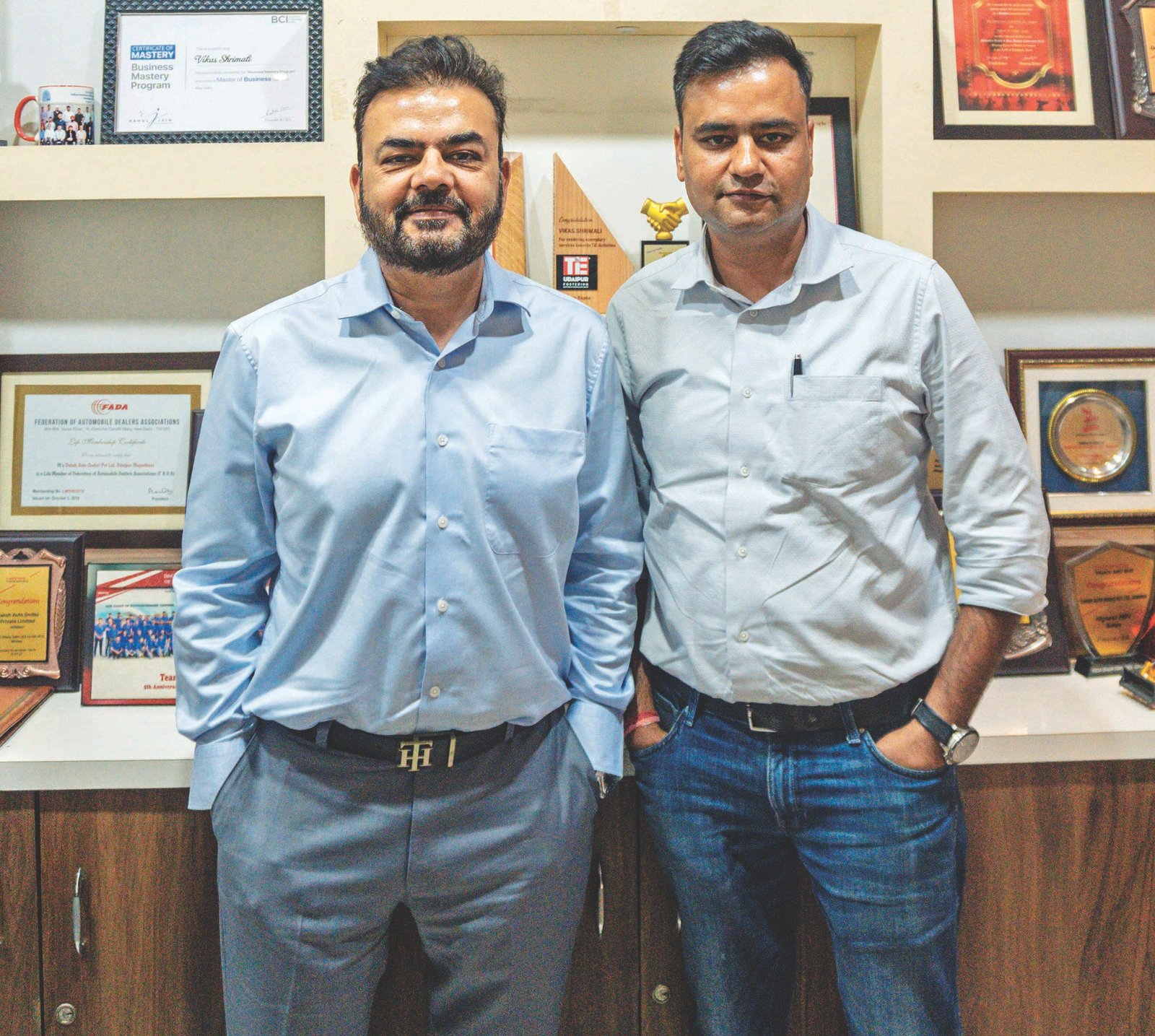
Vikas Shrimati, and Piyush Shrimali of Daksh Auto, highlighted the role of diagnostics, workshop readiness and local support in delivering on the promise of vehicle uptime through genuine parts.
At Daksh Auto in Nimbahera, dedicated bays for servicing and accidental repairs were impressive. They highlighted the significant role played by larger dealerships in putting the vehicle back on the road. The exercise also revealed why service readiness must be considered alongside product performance. Advanced on board diagnostics can help identify faults, while locally stocked spare parts and trained technicians can reduce the lag between diagnosis and repair. But a road check cannot independently validate a 48-hour repair guarantee across all locations. That requires a much broader record of breakdowns, response times, parts availability and completed repairs. The drive did, however, make the supporting ecosystem visible as it tested the capabilities in real time and real world operations. The uptime promise is not delivered by the truck alone. It depends on the service network, its people, its inventory and the processes connecting them.
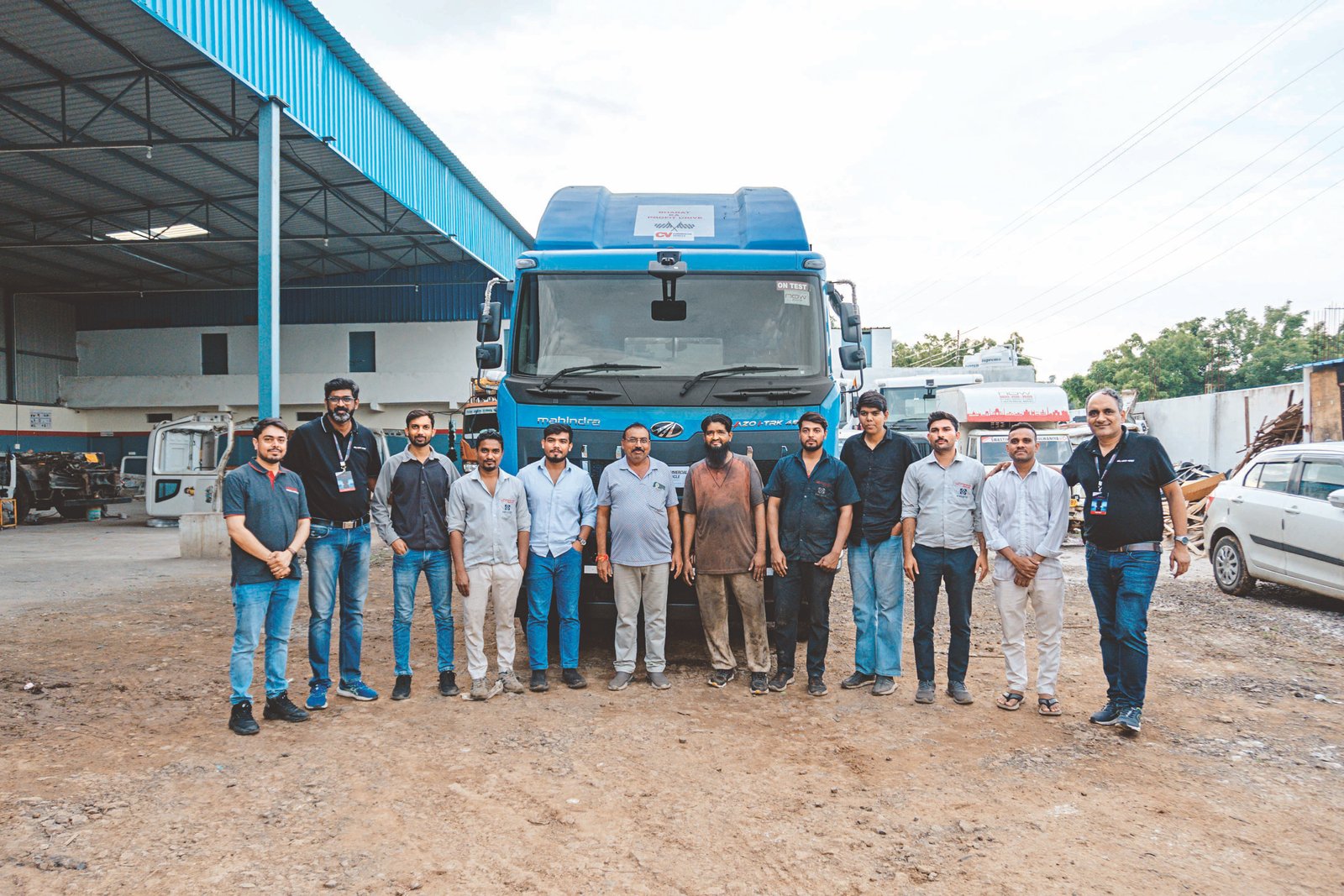
Parag Sahu ( centre) , Director of swastik Auto Parts, Julwania evaluating the value proposition of the Mahindra Blazo i- TRK.
CONTROL MORE: FLEET INTELLIGENCE
Mahindra positions iMAXX 2.0 as a connected fleet-management system rather than simply a tracking device. Its functions include vehicle-health monitoring, distance-to-Empty information, utilisation reports, driver analytics and alerts relating to air-filter clogging and DPF performance. Remote AC management, and fuel theft deterrence wherein GPS cordinates of the theft location are sent across and the vehicle crank inhibited were well received. Fuel theft was consistently referred to a big menace across the NH-network and drivers, often blamed by operators.
Driver conversations during the journey demonstrated a real world, growing awareness around telematics, AI-enabled functions and fully-built vehicles. Fuel-efficiency analytics, for example, became more valuable when they were witnessed as factors of controllable factors linked to the driver. The NOW 24×7 app complements this ecosystem with service requests, appointment booking, roadside assistance, parts ordering and service-history access. These functions were part of the broader product proposition discussed with customers and stakeholders, en route. This was among the core objectives of the Bharat Ka Profit Drive, where the Blazo i-TRK was evaluated by the key stakeholders themselves.
FLEET OWNERS JUDGE THE TRUCK
At New Durga Transport, a fleet of approximately 130 vehicles, all Mahindra Blazo trucks, reflected a long-standing relationship with Mahindra extending back to the Navistar era. The interaction provided an opportunity to introduce the i-TRK to an experienced customer and the next generation of the business. In Dhule, the operator running nine Blazo trucks since 2012 offered another window in to the compounding benefits of continuity. These conversations illustrated that the new age Blazo i-TRK would be judged not only against its launch claims but against the performance, service and ownership experience customers have accumulated over years with the erstwhile Blazo and the competing vehicles.
Jaipur’s fleet-owner discussions brought a different benchmark into view. Operators with fleets of approximately 1,200–2,000 vehicles described monthly utilisation of around 11,000–14,000 km on some applications. One six-year-old competing truck was reported to have covered around seven lakh kilometres with one clutch replacement and no engine rebuilds in its lifetime. Such examples underline the durability expectations that the new Blazo i-TRK must match up and surpass, although they are individual fleet reports requiring a further deep dive. On road interest in the i-TRK was also consistent across the journey. We even attracted attention from a team of trainee MSRTC drivers who joined us for a meal at the popular Sagar Inn Hotel (Dhabha) on the Mumbai-Nashik route. Treating truckers as their extended family offering daily needs but also assistance in exceptional circumstances including and not limited to safety related incidents. Paneer Angara, Shev Bhaji, Veg Kheema, Dal fry and Dal Tadka were found to be among their favourites. Shopkeeper Safar in the business for 14 years is the go to man for truckers seeking a gamcha to electronic items for mounting on the truck. These conversations demonstrated the true value of taking the Blazo i-TRK beyond its launch environment into the environment in which it is expected to help operators earn more, run more and control more.
MORE TO PROVE
The BLAZO i-TRK brings together a 320 hp powertrain, automated drive-mode selection, connected fleet intelligence, driver-focused equipment and defined service commitments. The seven-day Bharat Ka Profit Drive showcased how these elements are being received by drivers and fleet stakeholders, while exposing the trucks to varied road conditions and service environments. The feedback goes right back into improving the present generation and lay the ground for the future iterations of the entire series. Fuel-economy readings changed with the route, and the final 3.70 kmpl MID figure on the 48-tonne rigid truck should be treated as an observation rather than a validated competitive result. The 55-tonne tractor trailer displayed a fuel economy reading of 2.93 kmpl on the MID in comparison for the trip leg. The unusual Heavy-mode indication on the 55-tonne tractor-trailer requires technical follow-up, while the ABS signal observed on the 48-tonne truck during the Ratlam–Udaipur leg also requires a look into to determine whether it was transient or indicated a corrective need. Neither observation should be dismissed without a technical explanation. The final measure will be the truck’s performance over a much longer working life and the extent to which the promise of “Profit Ka Rocket” holds up in the transporter’s accounts.
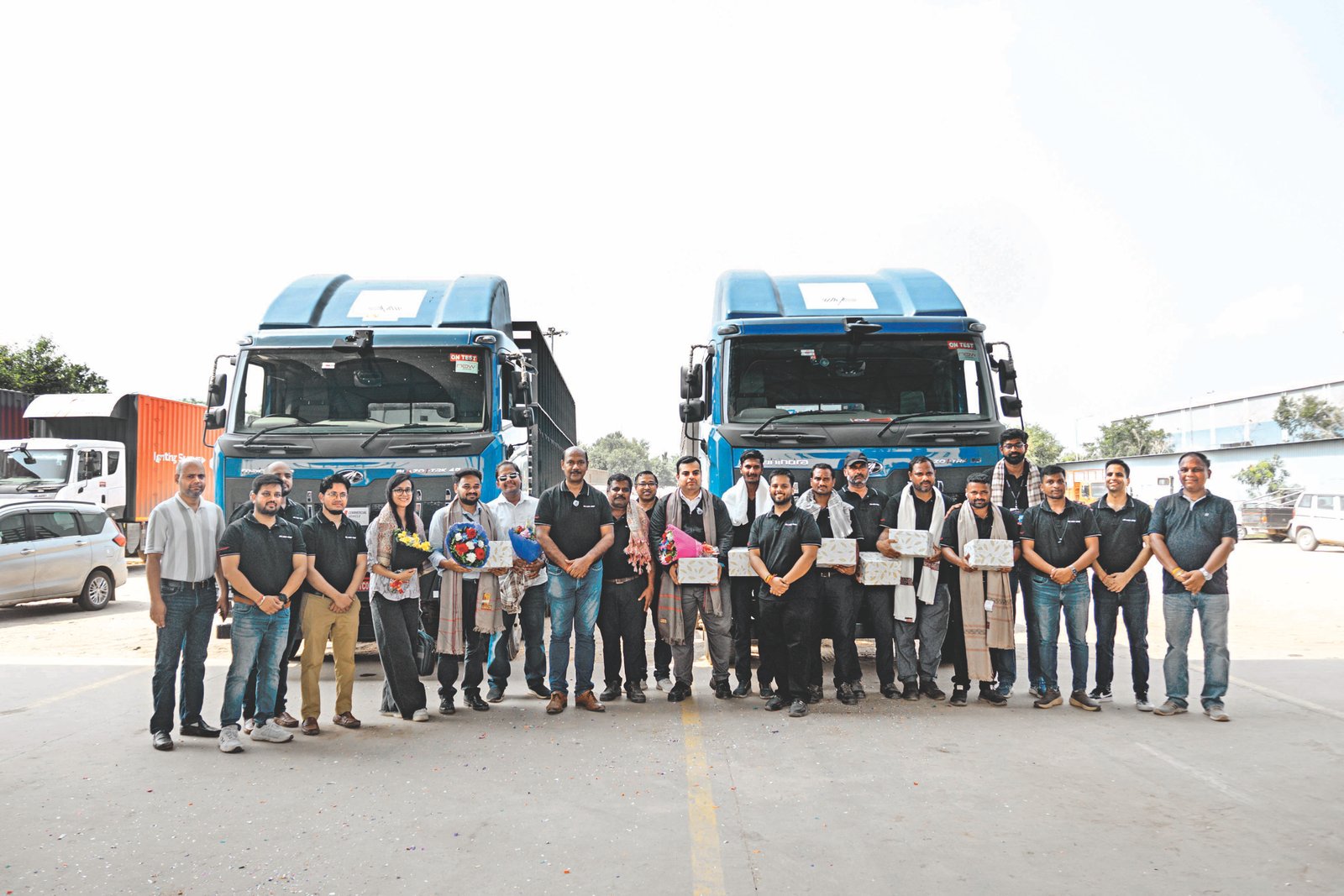
The road check culminated with it’s objectives achieved as the Mahindra Blazo i- TRK 48- tonne tractor trailer were celebrated on the finish line at the MTBD crew and Team CV being felicitated for a comprehensive o road validation of 2100 plus kms under their belt.
THE NEXT PEAK WILL BE BIGGER THAN THE EARLIER PEAK
Vinod Sahay explains the rationale behind why MTBD believes the BLAZO i-TRK is designed to change the economics of trucking in this exclusive conversation with Ashish Bhatia. He discusses the customer insights behind the new truck, how Mahindra intends to turn intelligence into profitability, why driver acceptance remains central to the technology and his outlook for India’s HCV industry.
Q. You describe the BLAZO i-TRK as more than the next chapter in Mahindra’s HCV journey. What makes it significant for the industry?
A. When we launched Blazo and Blazo X, we did several things that were ahead of their time. When the industry was at 180 hp, we went with 280 hp. When mechanical engines were prevalent, we were among the first to introduce a Common-Rail Diesel Injection (CRDi) engine. When the market was largely using 5.5- to 6-litre engines, we launched a 7.2-litre engine. Today, 300–320 hp and the larger engine displacement have become much more mainstream. We also took a conscious decision not to sell cowl-chassis trucks that required makeshift cabins. Driver ergonomics and safety are important. We introduced a proper cabin with the MN25 and carried that philosophy forward with Blazo.
We have also been the only brand offering a mileage guarantee of this nature. Having sold close to a lakh Blazo trucks, we have not had a single truck returned under the guarantee. But customer expectations have changed. We went back to the drawing board for 18 months, studied the requirements and created the BLAZO i-TRK. I believe it is potentially the next chapter for the industry because we are bringing intelligence into the way the truck operates and how its profitability can be managed.
Q. What has changed in the economics of trucking, and what did customers tell you they needed from the next generation of Blazo?
A. The business of our customers has become far more competitive. Their customers increasingly award logistics contracts through request-for-quotation-based bidding. If someone offers the same service at five paise per kilometre less, a contract can move. At the same time, operating costs are rising, including fuel and driver costs. The other change is that trucks have become more capable and their useful lives are increasing. I know customers who bought our vehicles in 2017 and are still operating them in their first ownership cycle. Many customers continue to sell trucks after four or five years, but I believe a well-maintained truck can operate efficiently for seven to eight years, particularly with an Annual Maintenance Contract (AMC). When we spoke to customers about the Blazo, they appreciated the mileage guarantee but told us the fuel-efficiency difference was not always large enough to make them switch from a trusted brand. They also said that, while they were confident about the truck, they wanted greater confidence in our service and spare-parts capability. We took both concerns seriously. The i-TRK is our response to the need for a more meaningful fuel-efficiency advantage, backed by better reliability, predictive maintenance and service support.
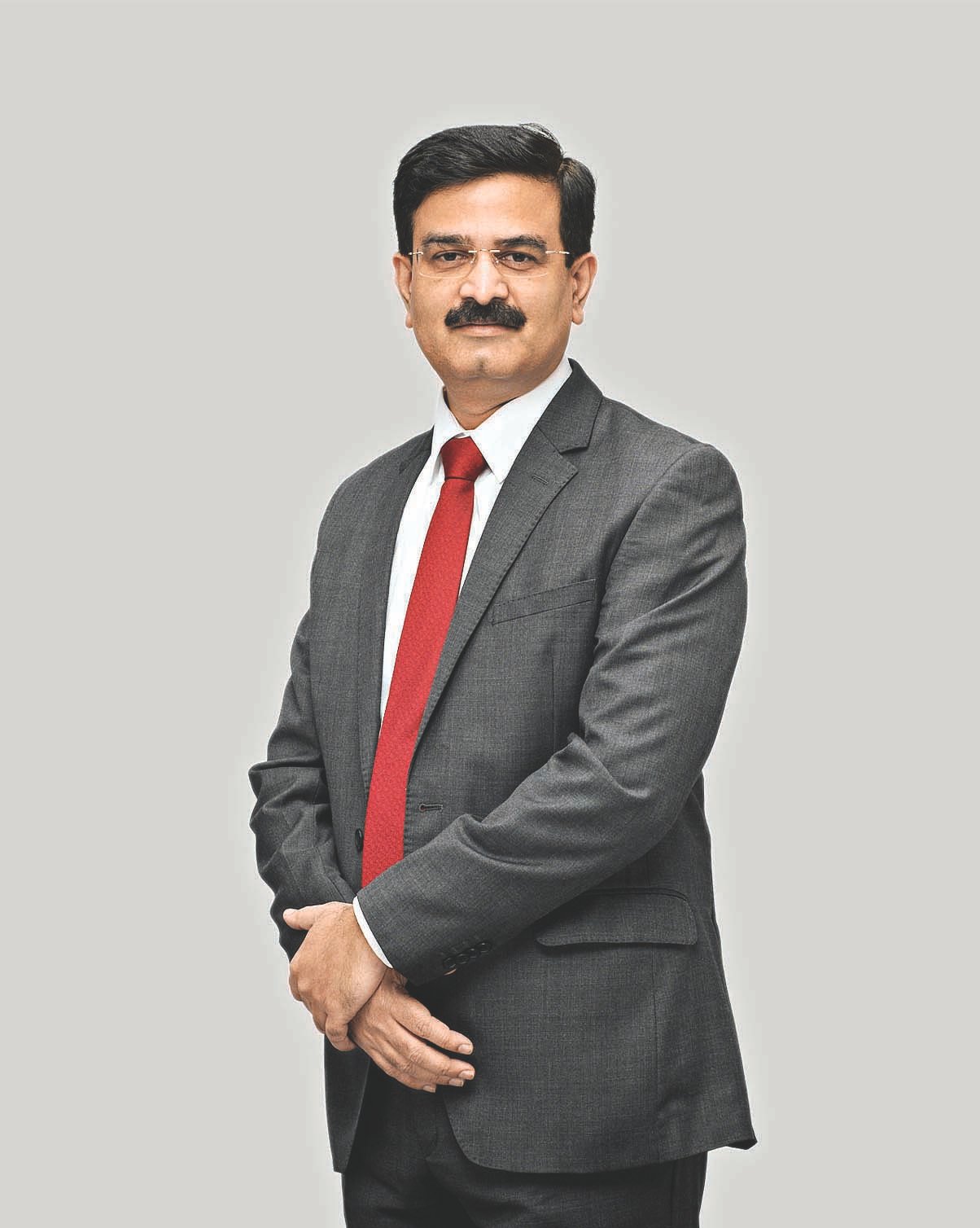
Vinod Sahay, President- Trucks & Buses, Executive Chairman- SML Mahindra and Member of the Group Executive
Q. The original FuelSmart system gave drivers a choice of operating modes. What led you to move towards AI-enabled automatic mode selection?
A. With the earlier system, customers told us that drivers were not always switching modes at the appropriate time. A truck might be operating in Light mode when it needed more power, or in Turbo mode when a more economical mode was suitable. We had introduced the technology, but the benefits depended on the driver making the right decision consistently. Customers asked us to make the truck simpler to operate and reduce the scope for incorrect mode selection. That is where the intelligence in BLAZO i-TRK comes in. It has an onboard edge-AI chip, so the computing happens in the truck itself rather than depending on cloud processing.
The system uses several inputs. The GPS antenna helps identify gradients and road conditions, while the truck estimates the load it is carrying using its built-in machine-learning capability. The system also considers engine RPM, gear selection, and accelerator-pedal input, among other parameters, to determine which mode is appropriate. The truck then makes the mode change automatically. We have removed the need for the driver to select the mode manually. Our objective is to make the truck more consistent in its operation, irrespective of whether the driver is among the most experienced and efficient in the industry. The technology should help a larger proportion of drivers achieve better results without requiring them to manage every decision themselves.
Q. Mahindra talks about up to Rs. 15 lakh in additional profit over five years. What assumptions underpin that calculation?
A. Compared with the Blazo X itself, we have improved fuel efficiency by 15 per cent, according to our internal assessment. The industry has also made improvements, so when we compare the i-TRK with competing trucks, the difference varies. We currently see a fuel-efficiency advantage of around six to 10 per cent, depending on the vehicle being compared. Our calculation assumes average running of approximately 8,000–9,000 km a month for a heavy truck in cargo applications, at current diesel prices. At a six-to-seven per cent advantage, we estimate additional profit of around Rs. 10–12 lakh over five years. At 10 per cent, the potential reaches Rs. 15 lakh. In certain comparisons, the difference can be higher. These are potential savings based on the assumptions used. The customer’s actual result will depend on how much the truck runs, the application, fuel prices and the competing vehicle. The mileage guarantee continues, but the additional-profit proposition goes further by quantifying the potential benefit of the efficiency difference.
Q. Fuel efficiency is only one side of the equation. How are you addressing a transporter’s concern that the truck may break down and remain idle?
A. Every truck can break down because trucks work extensively. When customers consider a new brand, they look not only at the product but also at the availability of service and spare parts. We have addressed this on three fronts. First, we have made changes to the product to improve reliability. By our internal reliability index, we have recorded a 276 per cent improvement. That is our own measure of the reduction in failures per thousand vehicles over defined periods. Second, we have expanded the capabilities of iMAXX. We already had telematics and predictive alerts, but iMAXX 2.0 adds further prognostic information. A problem identified early can be addressed before it develops into a breakdown. We operate a 24×7 centre in Chakan that monitors vehicles and flags those operating outside expected parameters so that action can be taken. Third, we have strengthened the service network and the availability of spare parts. We use digitally supported systems to forecast part consumption and position inventory where it is needed. Our stated network reach is approximately one service touch point every 75 km on most national highways and every 50 km on state highways. The 48-hour Uptime Guarantee brings these efforts together. We will put the truck back on the road within 48 hours in eligible breakdown cases, excluding accident repairs. If we fail to do so, we compensate the customer Rs. 10,000 per day beyond the stipulated period. We estimate the daily cost of keeping a heavy truck idle at around Rs. 6,000–8,000, depending on the vehicle and its costs. The compensation is deliberately higher. Simply saying that we will support the customer is not enough. We are saying that if the truck is not repaired within the committed period, the pain is on us.

Rajesh Jejurikae, ED & CEO , Auto & Farm Sectors
Q. How does iMAXX 2.0 move beyond conventional vehicle tracking?
A. Tracking is only the starting point. We want the system to help customers understand vehicle health, anticipate maintenance requirements and improve the way their fleets operate. For example, the system provides information on Distance-to-Empty, utilisation and driver performance. Fleet managers can compare driving behaviour, including gear changes, idling and clutch-riding patterns. Drivers can also use this information to understand where they can improve. We have introduced remote vehicle crank inhibit as a security feature. If a customer reports a truck stolen and the report is verified, the vehicle can be immobilised when it next stops, preventing it from restarting. It cannot be immobilised while moving, as that would create a safety hazard. We have also provided remote air-conditioning control. This helps fleet owners manage unnecessary AC use when a vehicle is idling. Our wider telematics offering also includes fuel-theft alerts; we have been providing this capability for several years and monitor it with a high degree of accuracy. The objective is to turn vehicle data into actionable information that can reduce avoidable expenditure, improve utilisation and provide fleet owners with greater control.
Q. Technology can improve efficiency, but the driver ultimately has to operate the truck. What have you done to make the system work for the driver?
A. We have made several improvements to the cabin, its suspension and the driver’s seat. The suspended seat, adjustable steering and improved cabin environment are intended to make long journeys more comfortable. Cruise control is another example. It is available on various vehicles, but our customer feedback suggested that many drivers found the operating procedure complicated. They had to navigate several controls to switch it on, adjust the speed or switch it off. We have simplified the interface with three dedicated dashboard switches: one to turn cruise control on and off, one to increase speed and another to reduce speed. We want a driver to be able to operate it intuitively. Using cruise control appropriately on highways can also contribute to fuel efficiency, although we have not included that potential benefit in our Rs. 15 lakh calculation. We have also increased the unnamed-driver insurance cover offered with the i-TRK. The package provides three-year cover of Rs. 10 lakh for specified events involving death or major disability, subject to the policy terms. The message to drivers is that the intelligence is there to make their work easier, not to replace their judgement. They can concentrate on driving while the system takes care of the operating-mode selection and provides information that can help them improve their performance.

Pratap Bose,Chief Design & Creative Officer, Auto& Farm Sectors, Mahindra and Mahindra Ltd.
Q. Looking beyond the launch, how do you see the Indian HCV industry evolving?
A. There is a strong correlation between economic growth and the commercial vehicle industry. Manufacturing and mining, in particular, have a close relationship with heavy commercial vehicle demand. If the Indian economy performs well and these sectors grow, the HCV industry should benefit. The previous peak in HCVs was in 2019. After that, the industry experienced several shocks. The axle-loading changes created significant excess capacity, followed by the pandemic and subsequent emission-related technology transitions, which increased costs.
The replacement cycle associated with the 2019 peak was consequently delayed. We believe that cycle is now approaching. With the economy performing well, replacement demand should become more important over the next couple of years. There will continue to be cyclicity, and external events can create short-term fluctuations. But India remains one of the world’s major HCV markets, alongside China, North America and Western Europe. In our assessment, the Indian market has a positive long-term trajectory. I believe the next peak will be bigger than the earlier peak, and the next low point will be higher than the previous low point. The overall trend should remain positive.
Q. What would you like fleet operators to take away from the BLAZO i-TRK proposition?
A. The way customers buy trucks needs to evolve with the business. Acquisition price and resale value matter, but they are not the only measures of profitability. Customers should consider the fuel efficiency, maintenance, uptime and total operating economics of the vehicle. They should also make better use of the life that modern trucks can offer. A well-maintained truck can remain productive for seven to eight years. After that, the scrap value of different trucks may become more comparable, so the operating economics over the vehicle’s useful life become particularly important. We want customers to evaluate trucks based on what they can earn from them, not just what they pay when they buy them. We also believe challengers should be encouraged if the industry is to continue innovating. Ultimately, our objective with the BLAZO i-TRK is to help customers earn more, run their trucks for longer and gain greater control over their operations. That is what “Profit Ka Rocket” means to us.
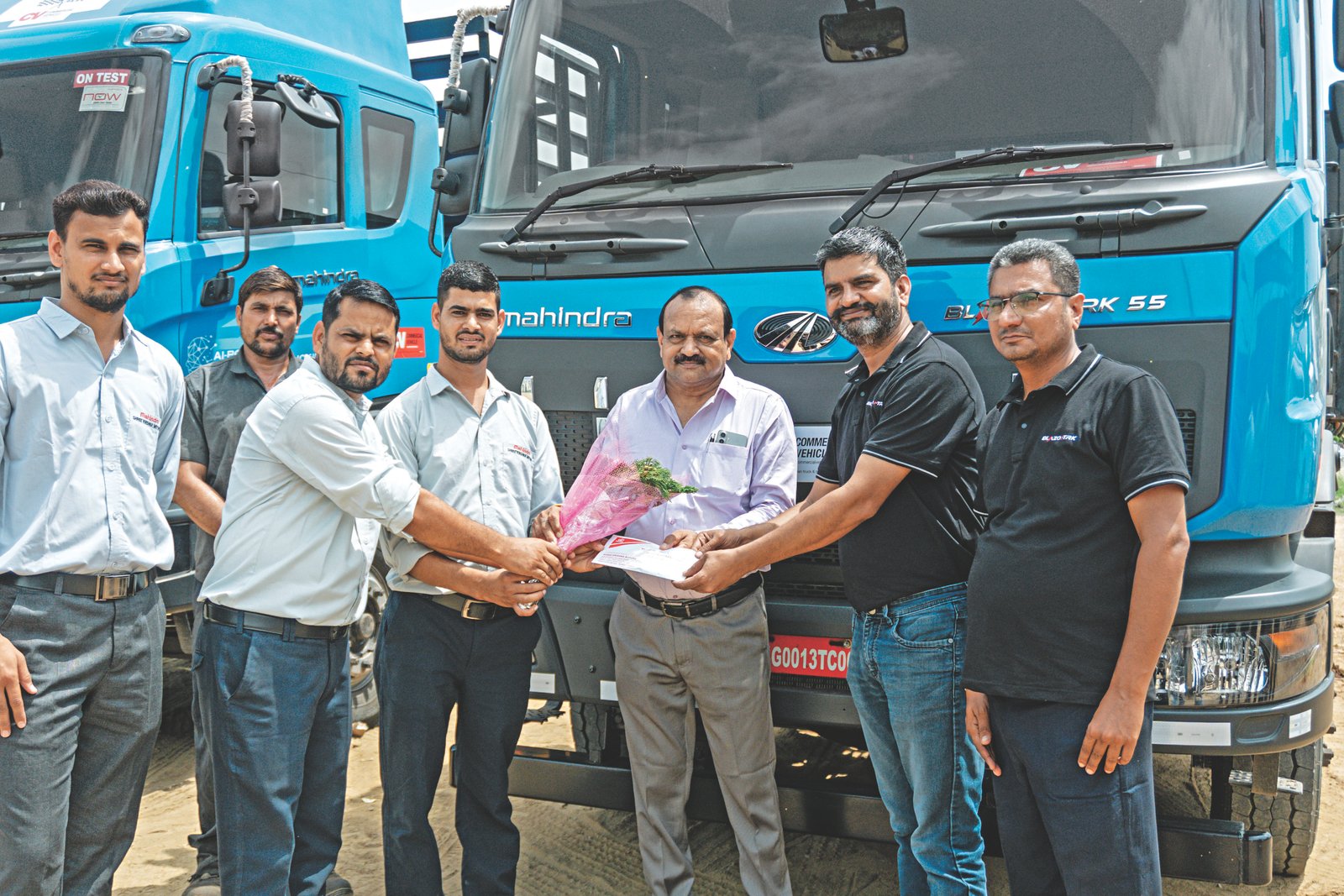
MTBD felicitated key stakeholder Shivji Ram Gora, Owner, Shree Krishna Motors, Bhilwara while seeking first hand inputs and commitments on the BLAZO i- TRK’s propositions.
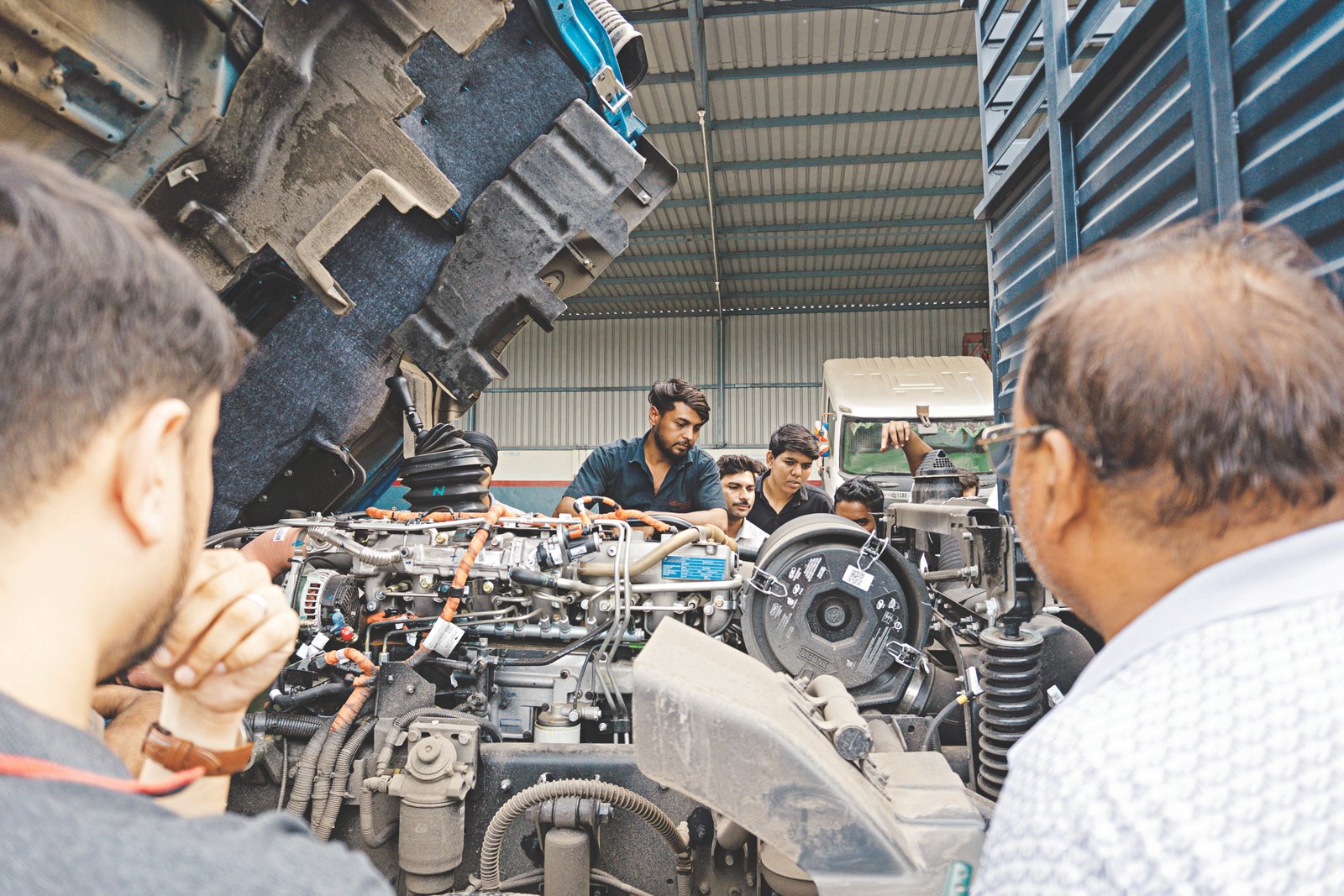
Building capability beyond the vehicle, Mahindra’s Mobile Training Van and service personnel highlight the importance of technician training in the after sales ecosystem.