

CEAT’s Ambernath facility is evolving from an agriculture-focused plant into a broader export-oriented OHT manufacturing hub, with capacity set to rise from 105 to 160 tonnes per day, writes Upendra Kasbekar.
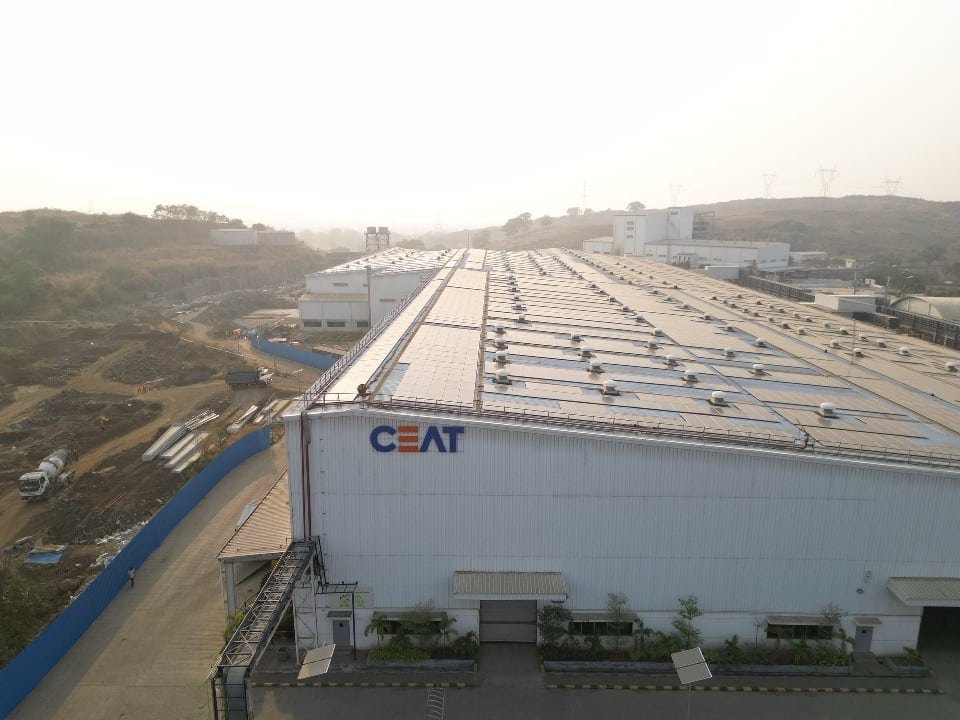
When CEAT established its dedicated Ambernath manufacturing facility in 2018, the focus was largely on agricultural radial tyres. Since then, the plant has expanded into forestry, Very High Flexion (VF), steel and other specialised Off-Highway applications, while its output is primarily directed towards international markets.
The facility currently operates at a capacity of 105 tonnes per day, with the planned expansion set to take this to 160 tonnes per day. At the same time, plant utilisation has reached around 90–95 percent underlining the need for additional capacity as CEAT Specialty expands its export business.

“The current capacity is 105 tonnes per day, going up to 160 per day in the next 45 to 60 days,” Amit Tolani, Chief Executive, CEAT Specialty, said during a visit to the facility.
The expansion reflects the transformation of Ambernath since its establishment. “In 2018, we started this dedicated plant and the focus at that point of time was agricultural radial tyres,” Tolani said. “You have seen how this plant has expanded into making various categories of products, including steel, forestry and Very High Flexion tyres.”
Product Expansion
Agriculture continues to form the core of CEAT Specialty’s OHT business, but the portfolio is becoming increasingly diversified. Excluding CAMSO, Tolani puts the business mix at approximately 85per cent agriculture and 15per cent construction/non-agricultural applications. With CAMSO included, the mix is expected to move closer to 50:50, increasing exposure to construction, tracks and material-handling applications.
CAMSO is particularly relevant to this transition, bringing established construction and compact construction products, tracks, international OEM relationships and premium-market presence into CEAT Specialty’s portfolio.
The change is also visible in the products manufactured for developed agricultural markets. Large-format radial tyres such as the CEAT Farmax 850/60 R38 reflect the requirements of highly mechanised agriculture, where larger tractors and equipment operate across bigger land parcels.
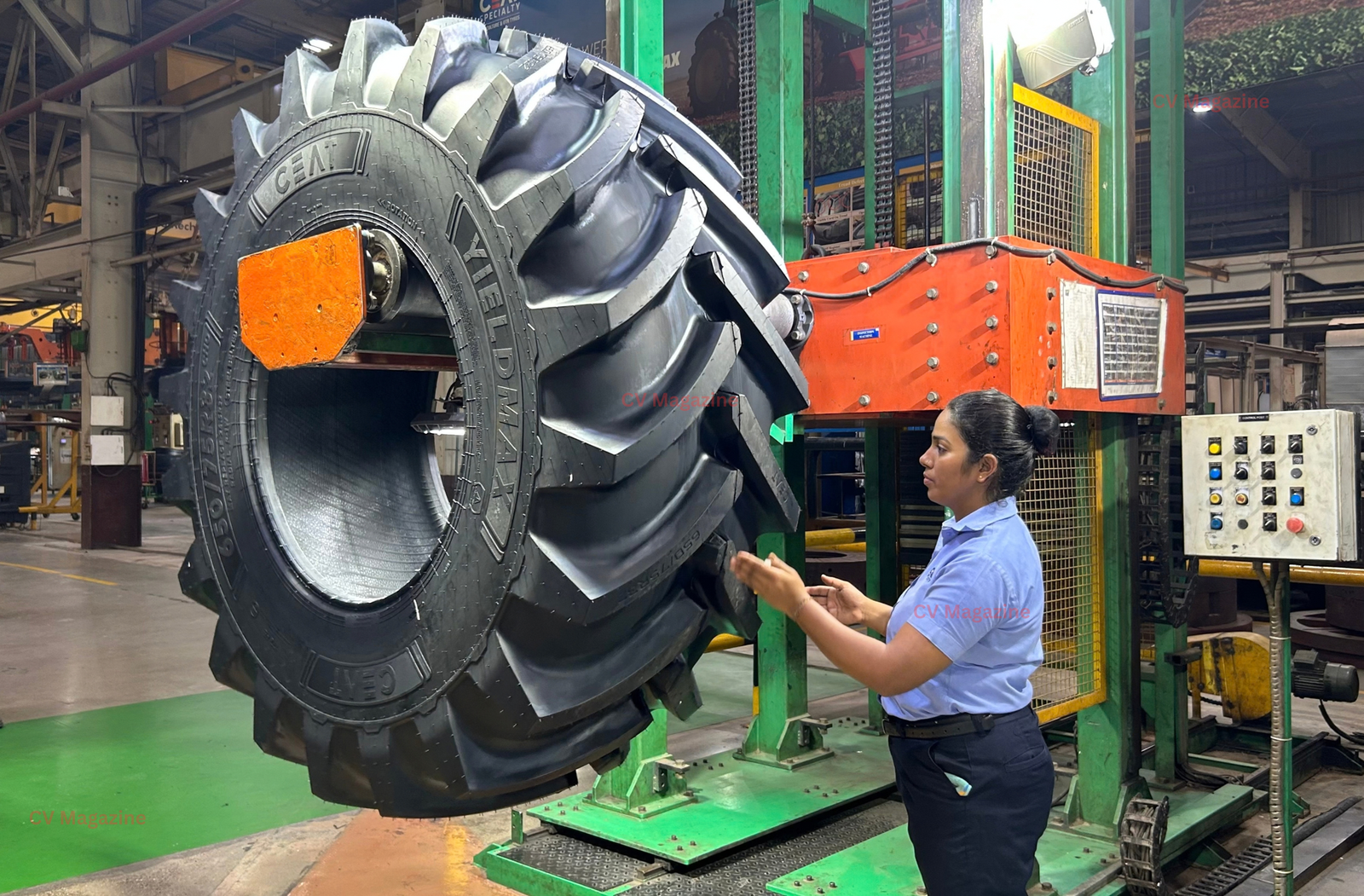
CEAT’s VF800/70R38 Torquemax is another example of this technology focus. VF construction enables the tyre to carry the required load at lower inflation pressure, increasing the tyre footprint and helping reduce soil compaction. The technology is particularly relevant to modern agricultural applications where protecting the soil while maintaining traction and productivity is increasingly important.
The YIELDMax IFLEX IF1250/50R32 201D addresses high-capacity agricultural applications, using Increased Flexion technology to support lower-pressure operation while maintaining load capability.
Sustainability Push
Sustainability is another area where CEAT is developing products for international markets. Its Sustainmax agricultural VF tyre uses a high proportion of sustainable materials, combining renewable and recycled inputs with tyre technologies aimed at maintaining performance.
Tolani said the product was developed with a longer-term view of how global markets are evolving. “We don’t want to take a follower mindset. We wanted to take a leadership mentality, and that was the thought process and brainchild behind Sustainmax,” he said.
The focus is particularly relevant for export markets such as Europe, where regulations around material traceability and deforestation are becoming increasingly stringent. CEAT has been working on EUDR compliance, with Tolani confirming that the Ambernath plant is compliant even though only around 20 per cent of its output currently goes to Europe.
Steel Opportunity
The next opportunity is extending the plant’s capabilities into steel OTR tyres for applications including mining and construction. CEAT has historically been more heavily exposed to agriculture, with Tolani putting the agricultural contribution at around 80–85 per cent of its OHT business before the broader CAMSO integration.
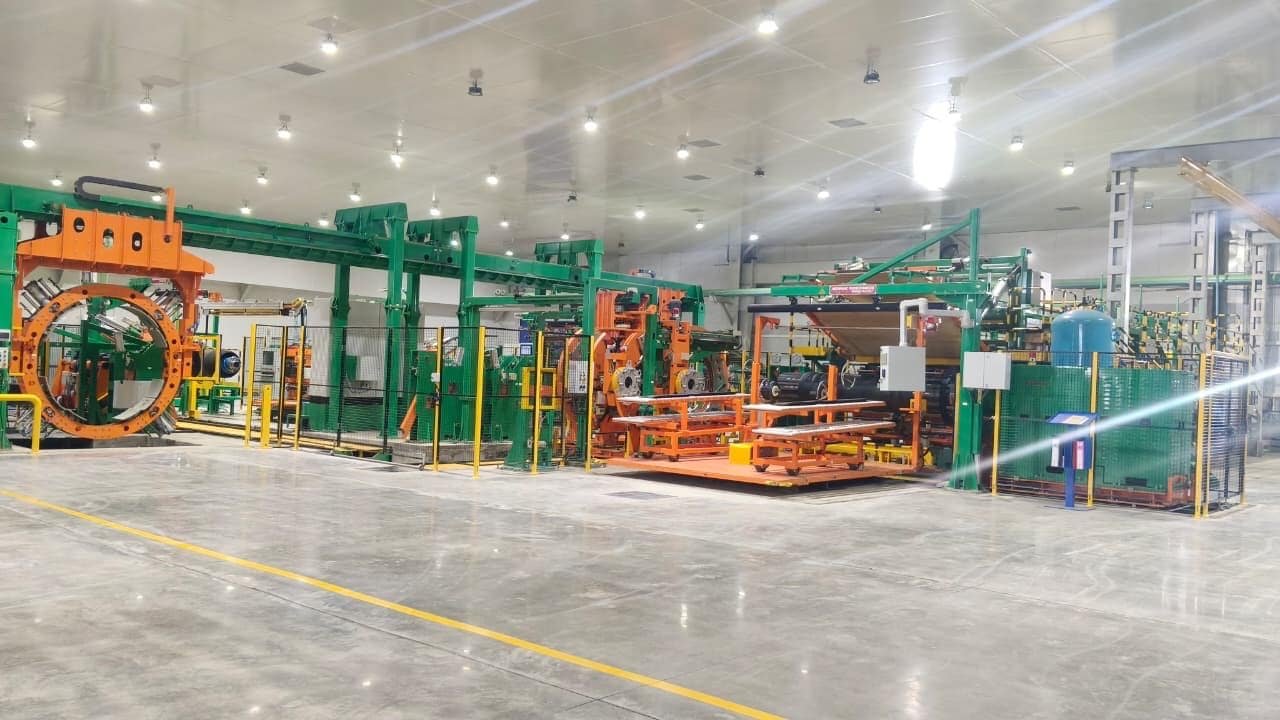
The new steel OTR capability is intended to provide a route into mining and other demanding applications where steel-belted construction, durability and high load-carrying capability are critical.
This also fits into CEAT’s broader strategy of using its existing manufacturing and distribution capabilities to enter adjacent OHT segments rather than remaining concentrated in agriculture.
Digital Manufacturing
The expansion at Ambernath is also being accompanied by greater use of automation, digitalisation and AI. The plant uses SCADA systems, digital traceability and analytics to monitor manufacturing processes, while CEAT is exploring AI-based inspection using high-resolution cameras.
One practical application is monitoring the plant’s steam network. Digital systems can identify leakage and its location rapidly, reducing the time required for manual inspection and corrective action. Traceability also extends from incoming raw materials through production and finished goods, allowing specific batches and manufacturing parameters to be tracked.
AI is additionally being explored for predictive analysis, inspection and optimisation of material mixing, with the objective of improving productivity and consistency rather than simply replacing manpower.
For Ambernath, therefore, the expansion is not simply about producing more tyres. It represents the evolution of an agriculture-focused facility into a higher-capacity, diversified and digitally enabled export manufacturing base, with CAMSO, steel OTR, advanced agricultural tyres and sustainability-led products widening CEAT Specialty’s global OHT opportunity.