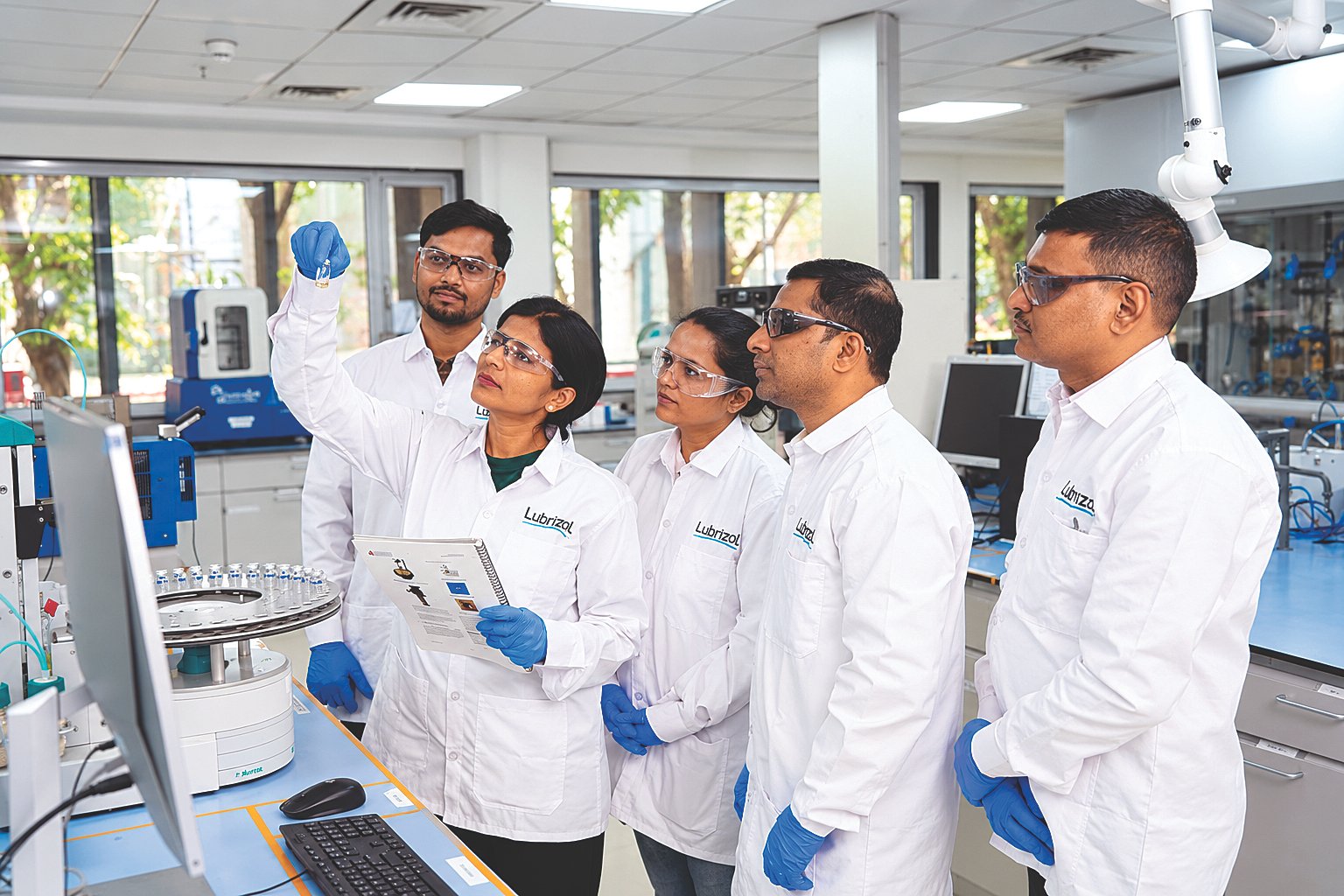


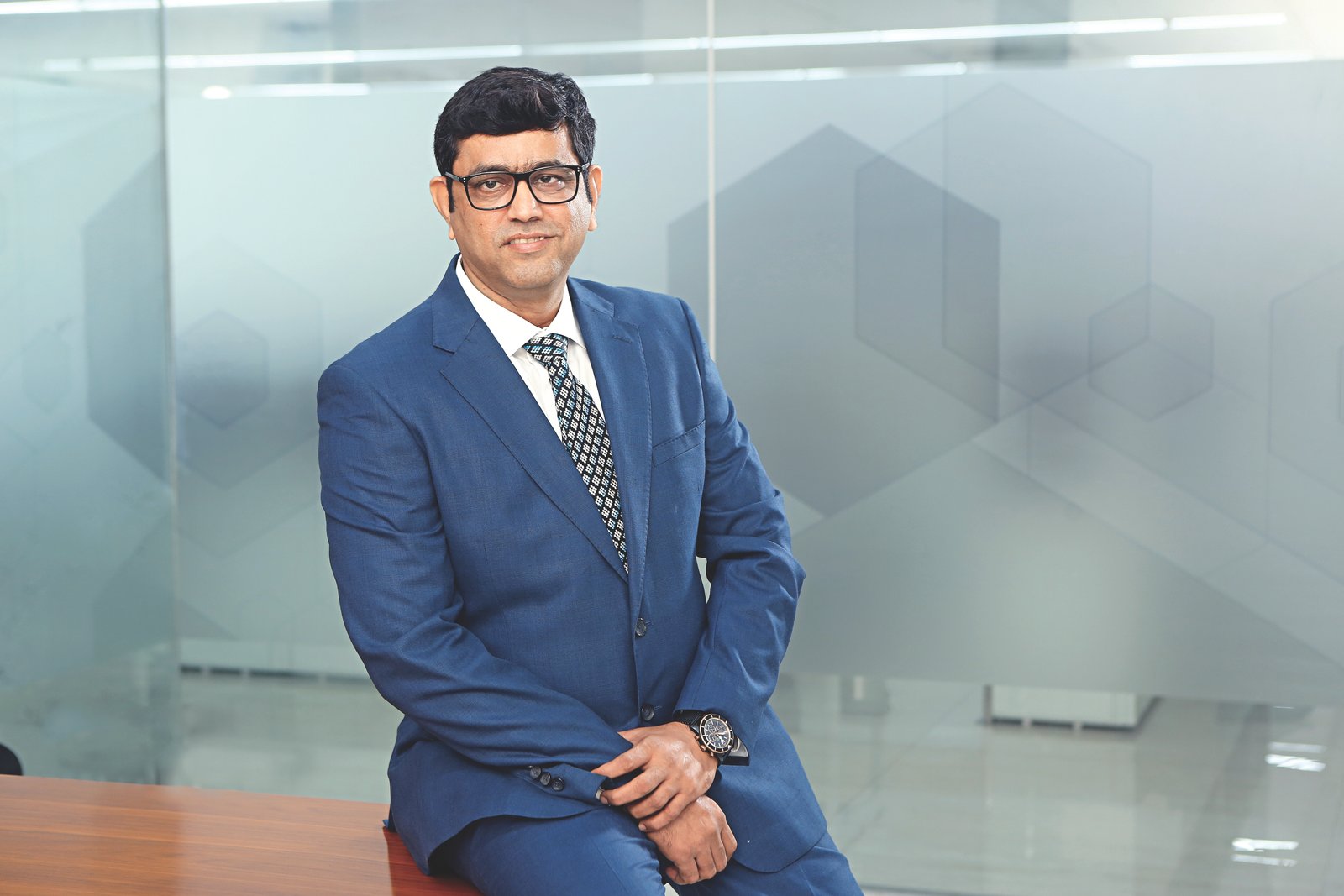
Kailash Sawant, Sales Director, India & South Asia, Lubrizol Additives, speaks with Ashish Bhatia about addressing core customer needs in India, an increasingly pivotal market for both adopting and driving these next-generation solutions.
Q. How is the current business sentiment for the commercial vehicle segment and the industry at large, specifically looking toward H1-FY27?
A. India’s automotive and commercial vehicle sector entered H1-FY27 with cautious optimism. Underlying demand remained supported by infrastructure spending, replacement cycles, logistics growth, and the continued formalisation of freight and last-mile delivery. While growth rates may moderate after the strong rebound seen in FY26, the market fundamentals remain constructive, particularly in commercial vehicles, where industry estimates point to record volumes in FY27 and sustained demand from LCVs, MHCVs, buses and emerging electric platforms. For Lubrizol, this creates a strong opportunity to partner with OEMs and lubricant marketers on solutions that improve efficiency, durability, emissions performance and total cost of ownership. GST 2.0, bank interest rates and PLI incentives are key demand drivers for the automotive and commercial vehicle market. GST 2.0 improves affordability and supports fleet replacement, while lower interest rates can boost financing-led purchases. PLI incentives will have a longer-term impact by encouraging localisation, EV adoption and advanced automotive manufacturing. Overall, these factors are supportive, though actual growth will depend on freight activity, infrastructure spending, rural demand and financing conditions.
Q. How are global trade dynamics and India’s position as a focal centre influencing your supply and consumption strategies?
A. Global trade dynamics are making supply resilience, localisation, and agility more important than ever. India is increasingly positioned not only as a strong consumption market, but also as a strategic manufacturing and innovation hub for global and regional value chains. This shift is influencing our strategy by encouraging us to build stronger local capabilities, improve supply reliability, and bring sourcing, production and technical support closer to customer demand. For Lubrizol, the focus is on balancing global technology strength with local execution. By leveraging India’s growing manufacturing base, customer proximity and expanding market scale, we can respond faster to market needs, reduce supply chain complexity and deliver solutions tailored to Indian operating conditions—while staying connected to Lubrizol’s global platforms and expertise.
Q. With OEM relationships shifting from transactional sourcing to deeper, ecosystem-led partnerships, how is Lubrizol facilitating this transition to enable future-ready mobility in India?
A. OEM engagement is clearly moving beyond product supply toward co-development, early-stage technical collaboration and ecosystem partnerships. Lubrizol is supporting this transition by bringing together additive chemistry, application engineering, testing capability, market insight and global formulation experience. We work with OEMs across evolving platforms including ICE, hybrid, CNG, LNG, ethanol blends, electric drivetrains and advanced transmission systems, to develop solutions that meet performance, emissions, durability and sustainability expectations. The objective is to engage earlier in the design cycle, reduce time to market and help OEMs deliver future-ready mobility solutions for India. Our strategy is to combine global science with local execution discipline. India has unique duty cycles, climate conditions, fuel variability, cost expectations and operating intensity, so global best practices must be adapted, not simply transferred. Lubrizol does this by applying global formulation knowledge, then validating and customising solutions through local technical teams, customer collaboration and field understanding. This enables us to deliver products that meet international performance standards while being practical, scalable and commercially relevant for Indian OEMs, lubricant companies and end users.
Q. As India evolves from a manufacturing hub to a market shaping future mobility platforms, what is your strategy for adapting global best practices to local market realities for effective execution?
A. As India transitions from being primarily a manufacturing hub to a market that actively shapes future mobility platforms, Lubrizol will leverage global best practices coupled with deep local market understanding to drive innovation that meets India’s unique realities, such as a diverse vehicle parc, growth in two-wheelers and commercial vehicles, increasing emission regulations, varied operating conditions, and evolving mobility trends including CNG, hybrid, and EV adoption. For Lubrizol, this means working closely with OEMs, lubricant marketers, and industry stakeholders to understand emerging requirements that translate to solutions that deliver tangible local benefits in fuel economy, durability, emissions compliance, and total cost of ownership. By combining customer insights, strong partnerships, and data-driven market intelligence, we can ensure effective execution while helping shape the future of mobility in India.
Q. To what extent are specialised substances and chemical additives serving as the primary enablers for OEM innovation in addressing rising complexity across powertrains, fuels, emissions, and durability?
A. In the Indian mobility landscape, lubricant additives have become a key enabler of OEM innovation. OEMs are moving to an era of efficiency across parameters of performance, safety and reliability. Now helping manufacturers meet increasingly stringent regulations across emissions, fuel-efficiency targets, durability requirements, and evolving hardware designs. Engines are becoming smaller, more powerful, and compatible with advanced emission-control systems; additive technologies play a critical role in delivering wear protection, deposit control, oxidation stability, and fuel economy while supporting new lubricant specifications and lower-viscosity formulations. Our advanced additive molecules help bridge the gap between changing OEM hardware requirements and regulatory demands, enabling vehicles to achieve better performance, longer drain intervals, improved reliability, and compliance with emerging norms without compromising durability or customer value.
Q. How does Lubrizol balance local innovation with “local-for-local” manufacturing strategies while streamlining supply chains to achieve long-term goals?
A.The voice of customers is critical, as well as policies like “Make in India”, PLI and other various schemes designed to support EV manufacturing. Lubrizol balances local innovation with a strong local-for-local strategy by combining the strength of its global supply network with deep regional expertise and supply security built through decades-long relationships with suppliers, customers, and industry stakeholders. This enables consistent access to high-quality raw materials while ensuring resilience and responsiveness to local market needs. However, our approach goes beyond simply “Make in India.” It is equally focused on “Innovate in India.” Through our state-of-the-art blending laboratory and dedicated technology development teams based in India, we develop and validate solutions tailored to local OEM requirements, operating conditions, and evolving regulatory standards. This combination of global technology leadership, local innovation capabilities, and robust regional supply chains allows Lubrizol to deliver faster, more relevant solutions to customers while supporting long-term growth and sustainability objectives in the Indian lubricants market.
Q. What are the key growth areas for Lubrizol within the mobility sector, and how does your support for OEMs differ across the vehicle lifecycle from factory fill to in-service performance and total cost of ownership?
A. Key growth areas include CV, MCO, PV, off-highway applications, alternative fuels, electric and hybrid platforms, driveline fluids and fuel economy solutions. Lubrizol supports OEMs across the full lifecycle from factory fill and service-fill strategy to field performance, emissions system compatibility and total cost of ownership. At factory fill, the focus is on specification compliance and hardware protection from day one. In service, the emphasis shifts to durability, drain interval optimisation, efficiency, customer uptime and sustained performance under real-world operating conditions. Lubrizol solutions meet the evolving regulatory and sustainability requirements while combining global R&D strength with local responsiveness delivering relevant technology, reliable supply and measurable value for customers across mobility platforms.
Q. Based on your assessment of H1, how do you expect your strategy to evolve across markets in CY2026/H2-FY27 to maintain a long-term competitive advantage?
A. Based on our H1 assessment, our CY2026/H2-FY27 strategy will focus on driving technology-led growth through premiumisation, advanced additive solutions, and closer OEM collaboration. As Indian OEMs adopt stricter lubricant specifications and more sophisticated engine technologies, we will leverage our global innovation capabilities and local technical expertise to deliver solutions that improve engine durability and emissions performance. Growing demand for synthetic lubricants and higher-performance formulations further supports this direction. Our competitive advantage will come from combining local innovation, strong customer partnerships, and a resilient supply network to rapidly respond to evolving regulations, hardware changes, and future mobility trends, ensuring sustainable growth and long-term market leadership in India. Lubrizol is focused on the changing fuel landscape in India; the government has clarified that E20- compatible vehicles have shown no major drivability or component issues in validated trials. However, the shift also creates new technical expectations for both fuel and lubricants. Higher ethanol content can change combustion chemistry and increase the possibility of fuel dilution, especially in short-trip, stop-start, cold-start and urban operating cycles. When ethanol or partially combusted fuel enters the crankcase, it can affect lubricant viscosity, oxidation stability, corrosion protection, and additive performance. Ethanol can also interact with water and acidic by-products, increasing the need for stronger dispersion, anti-wear protection, corrosion control, deposit management, and oxidation resistance in engine oil formulations. This creates a clear opportunity for Lubrizol.
Q. Given the shifting supply chain landscape due to the West Asian conflict, US-India tariffs and recent FTAs, what direct and indirect impacts do you anticipate on Lubrizol’s operations and regional trade strategies?
A. The evolving geopolitical and trade landscape presents both risks and opportunities. West Asian conflicts have had an impact on logistics, supply availability, and raw material costs. However, new trade agreements and tariff changes will improve market access and regional manufacturing opportunities. We will leverage our global supply network to strengthen regional supply security, diversify sourcing, and increase local responsiveness. This approach helps mitigate disruptions while positioning us to capitalise on growing localisation and innovation opportunities across the region.
Q. Finally, what key trends or breakthrough developments can the industry look forward to regarding your global pipeline of performance chemicals?
A. The industry can expect continued breakthroughs in performance chemicals that address efficiency, emissions, durability, electrification and sustainability. Areas of focus include advanced lubricant additives, fluids for hybrid and electric mobility, thermal management, improved fuel economy, lower emission formulations, longer-lasting components and solutions that support circularity and resource efficiency. Globally, Lubrizol’s pipeline is shaped by the same core customer needs: improved performance, reduced environmental impact, greater reliability and faster commercialisation. India will be an increasingly important market for both adopting and contributing to these next-generation solutions.