

Blending scale with precision, EKA Mobility’s manufacturing ecosystem enables seamless production of electric commercial vehicles, write Sahil Kesari & Niharika Singh.
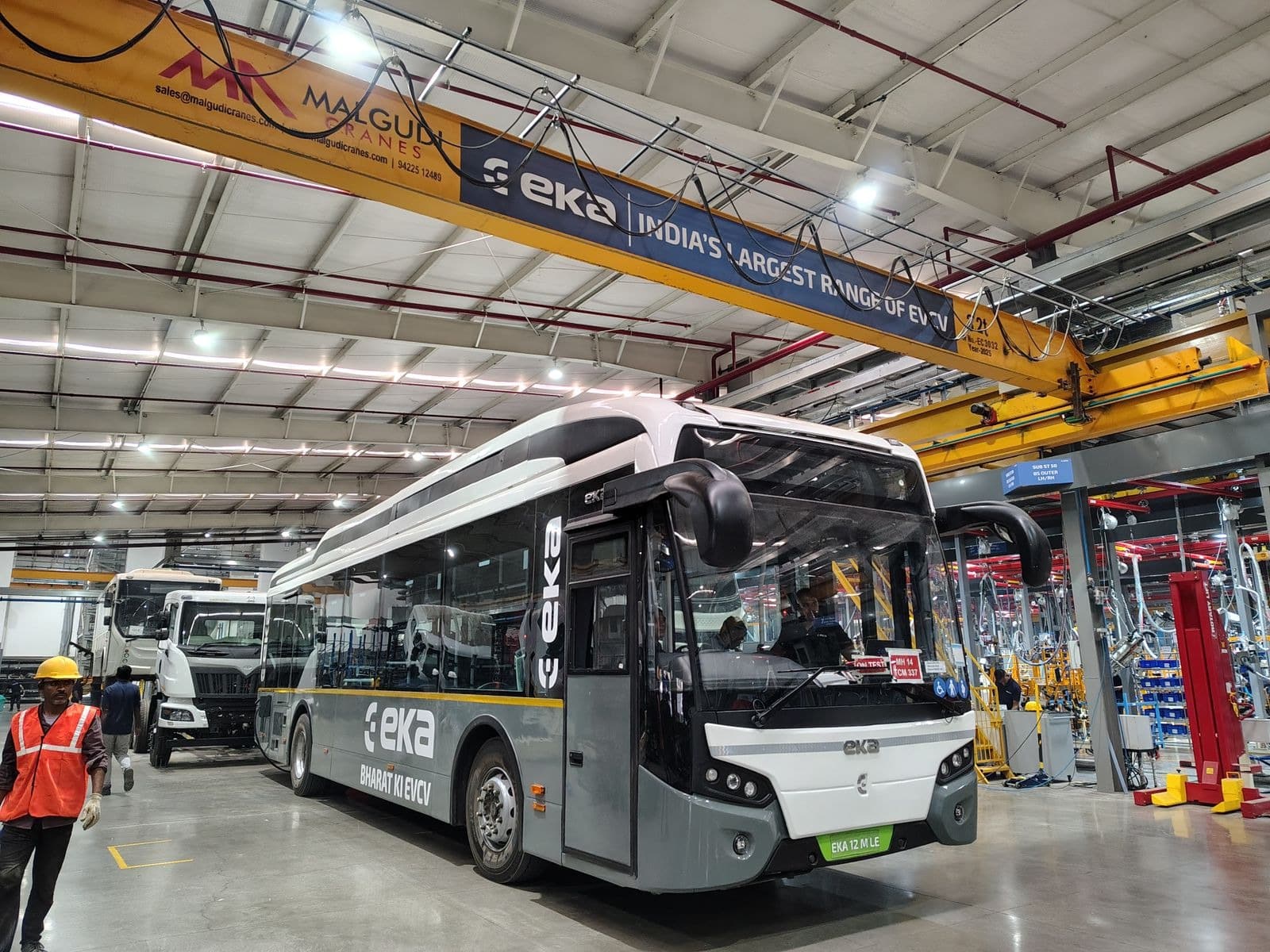
With the growing push for sustainable transportation, EKA Mobility is among the bold OEMs riding the momentum. Founded in 2022, the Pune-based company is positioning itself as a global electric commercial vehicle manufacturer, offering end-to-end solutions across the new energy mobility value chain, from design and manufacturing with advanced technology integration. Dr Sudhir Mehta is banking on innovation, operations, and growth. The strategic alliances with Japan’s Mitsui Co. and the technology transfer from Netherlands-based VDL Groep reflect the global ambition. It is backed by a joint, multi-phase, estimated USD 100 mn investment.
Investor confidence from Mitsui & VDL, ENAM Holdings, and NIlF has enabled rapid expansion. EKA operates across two Pune manufacturing facilities with an upcoming facility in Pithampur. The capacities range from an estimated 4800 units to 10,000 buses annually. With over five hundred vehicles already on Indian roads, and tender results giving it an edge, EKA has established a visible presence across public transport and logistics. Its e-buses are deployed in high-impact zones such as airports, including collaborations with Uber for the Shuttl, while partnerships with IKEA highlight its growing role in last-mile electric delivery.
The company’s order book of over 3,000 e-buses reflects strong demand under government initiatives such as the PM e-Bus Sewa Scheme. Its product portfolio spans buses, light commercial vehicles, and trucks. With dealership expansion plans from 26 to over 100 touchpoints, EKA is strengthening its nationwide presence. Backed by policy support, including approval under the Government of India’s Auto PLI scheme, the company is well-positioned to scale operations and drive EV adoption across segments. EKA Mobility is building a complete ecosystem aimed at enabling sustainable, efficient, and accessible mobility solutions for India.
ShopFloor Sojourn
Inside EKA Mobility’s Manufacturing Powerhouse
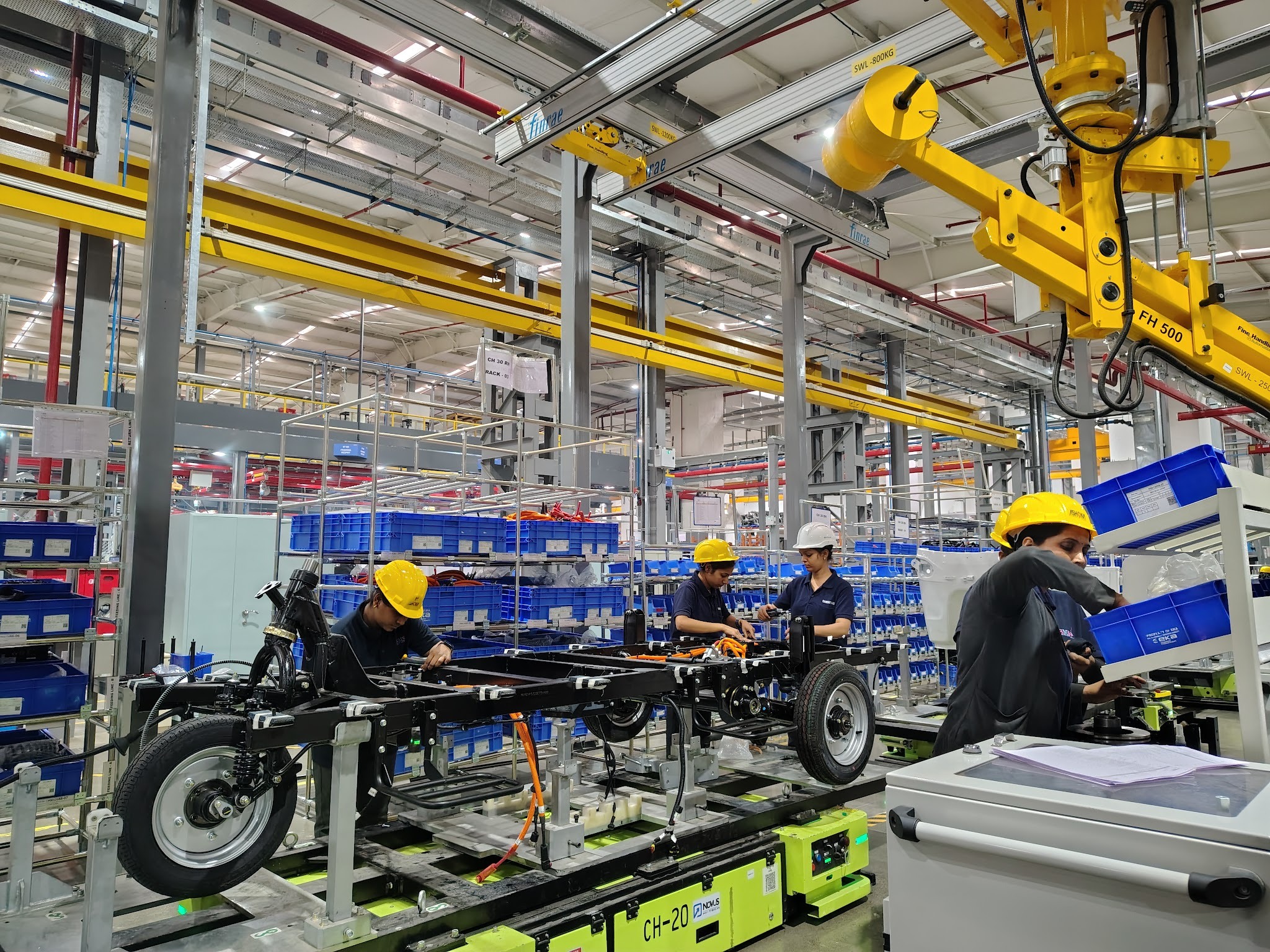
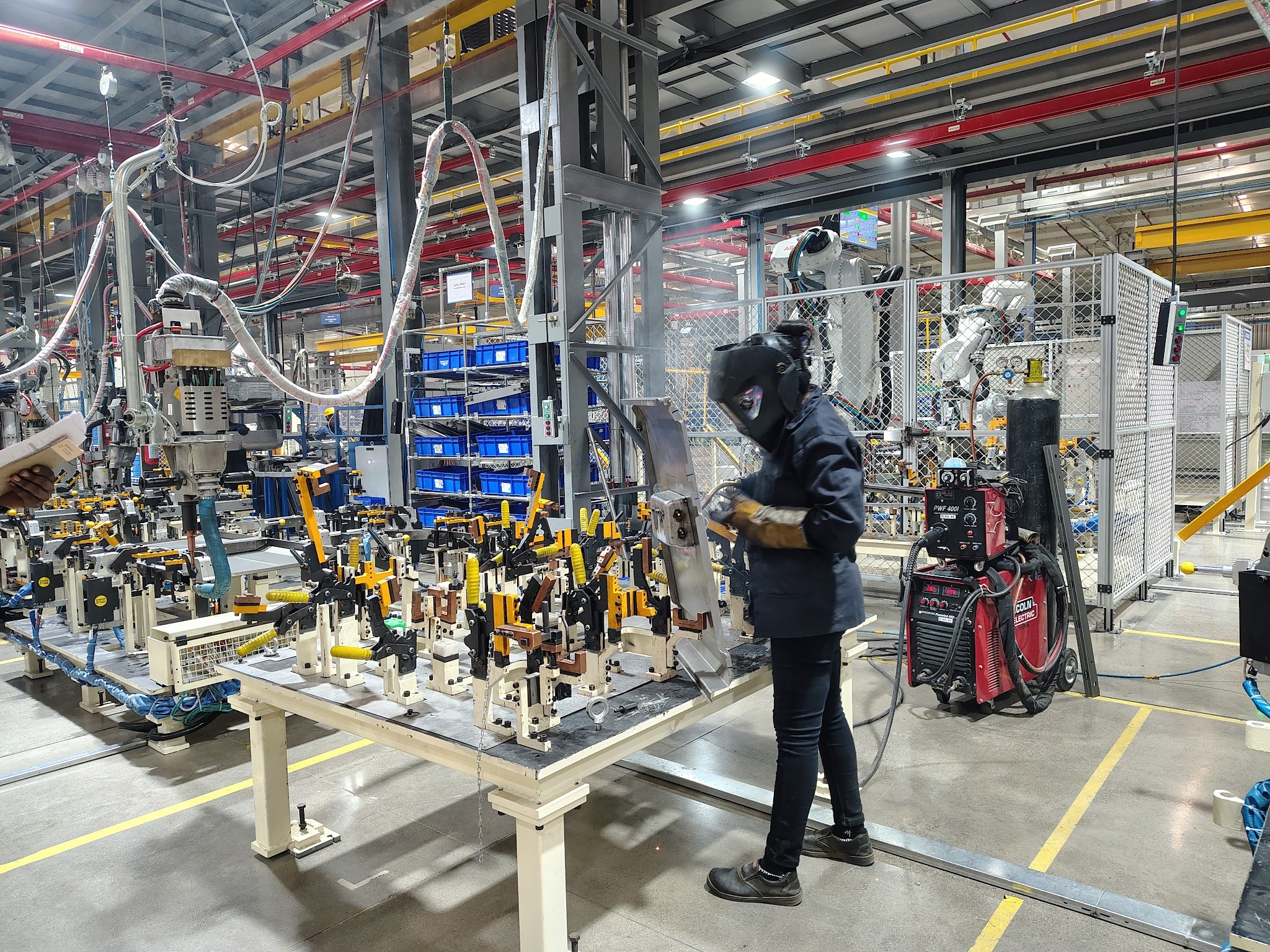
Step inside EKA Mobility’s shopfloor, and the scale, structure, and precision of its operations become immediately evident. At the heart of this network is the Koregaon Bhima e-Bus plant in Pune, spread across 547,291 sq. ft., over 13 acres. Fully operational, the facility has an annual production capacity of 4,800 units and employs around 800 personnel. The shopfloor layout is optimised for efficiency, with clearly defined zones for chassis assembly, body fabrication, battery integration, and final vehicle testing. Dedicated quality control checkpoints ensure that each vehicle meets performance and safety benchmarks before dispatch. The integration of EV-specific systems, such as battery packs, power electronics, and drivetrains, highlights the plant’s capability to handle next-generation vehicle architectures while maintaining consistency at scale.
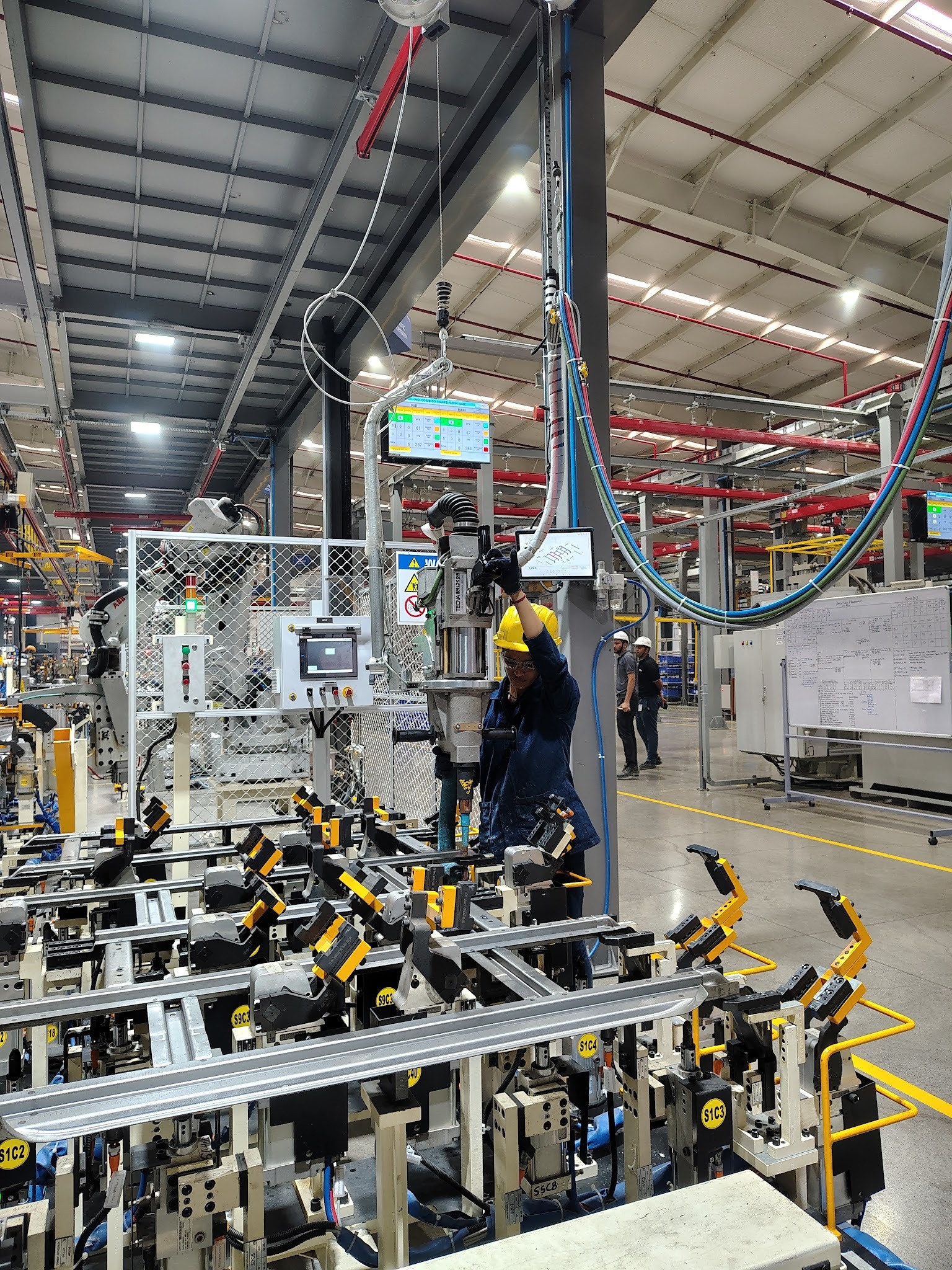
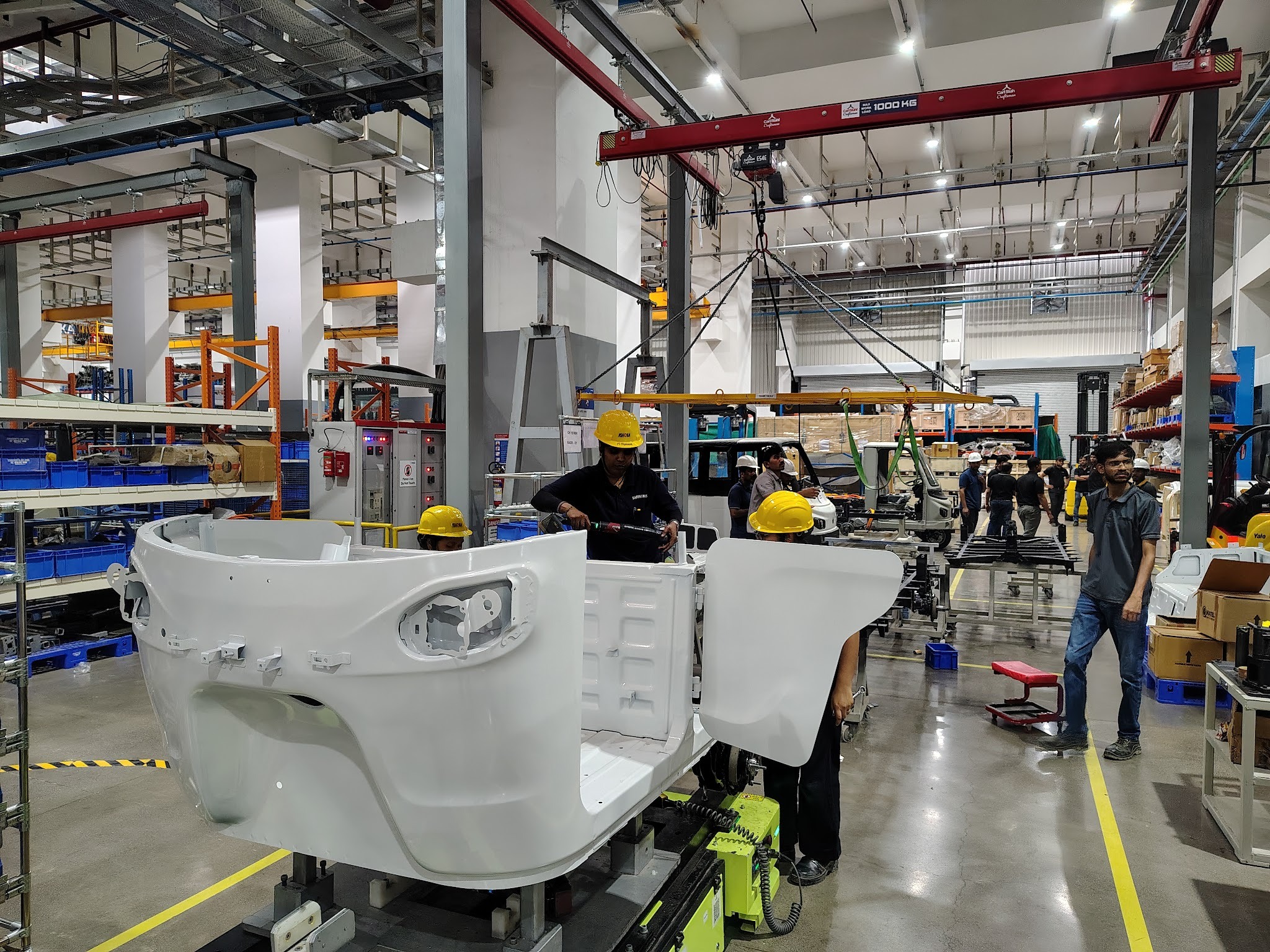
Complementing Koregaon Bhima is the Chakan plant, also located in Pune, which focuses on trucks and small commercial vehicles. Spread over 3,19,688 sq. ft. across eight acres, this facility is designed for higher throughput, with an initial production capacity of 24,000 commercial vehicles annually. What distinguishes the Chakan unit is its close integration with a state-of-the-art R&D centre housing over 400 engineers and designers. This proximity enables real-time feedback between product development and manufacturing, accelerating innovation cycles and improving overall product quality. Looking ahead, the upcoming Pithampur plant represents a significant leap. Spanning 20,03,755 sq. ft. across 46 acres, the facility is designed to produce 10,000 units annually, backed by 500 people. Once operational, it will play a crucial role in meeting large government and institutional orders while reducing delivery timelines and logistics complexity.
Across all facilities, EKA’s manufacturing philosophy is rooted in flexibility and modularity. The shopfloor is designed to accommodate multiple vehicle formats, including buses, light commercial vehicles, and trucks, on adaptable production lines. This approach allows the company to respond quickly to changing market demands while optimising resource utilisation. Critical EV processes such as battery pack installation, drivetrain assembly, and electronic system calibration are seamlessly integrated into the production flow. Advanced testing protocols ensure that vehicles are validated for real-world operating conditions, reinforcing reliability and durability. With over 500 vehicles already deployed on Indian roads and an order book exceeding 3,000 e-buses, the shopfloor operates in close alignment with market demand and performance feedback.
Beyond production, EKA’s facilities function as hubs of innovation and employment. A skilled workforce supported by strong R&D capabilities drives continuous improvement across processes and products. As India moves toward large-scale electrification of mobility, EKA Mobility’s shopfloor stands as a critical enabler-delivering not just vehicles, but a scalable and future-ready manufacturing backbone for the EV ecosystem.
Industry Talk | Exclusive
Scalable EV Ecosystem
In this conversation, Zoeb Karampurwala, Chief Product Officer of Eka Mobility, speaks to Sahil Kesari and Niharika Singh on innovation, electric mobility trends, product strategy, and the future of sustainable commercial transportation in India.
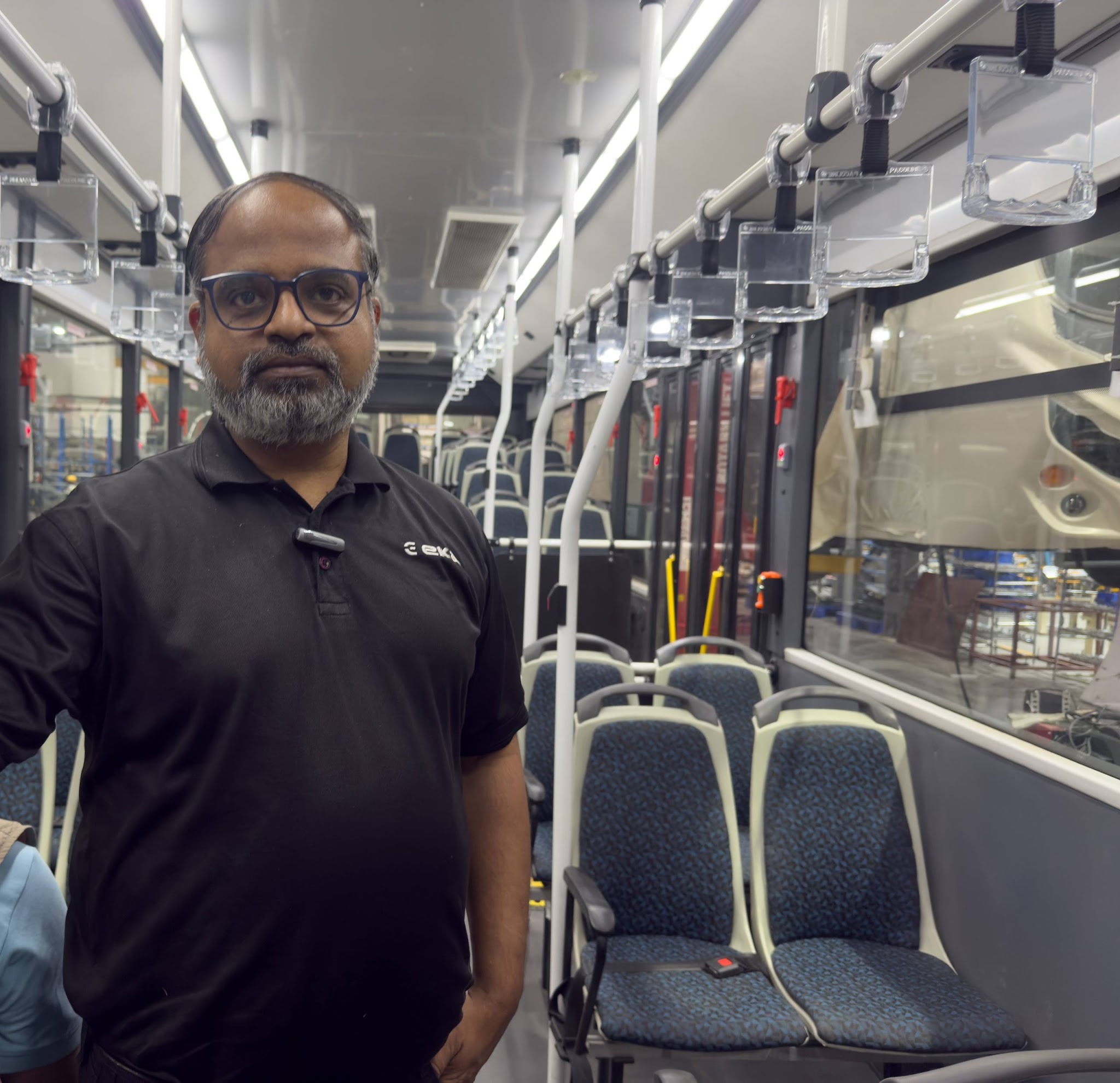
Zoeb Karampurwala, Chief Product Officer, Eka Mobility
Q.India’s adoption of electric commercial vehicles is still heavily influenced by policy incentives. When do you think the market will become purely driven by economics?
A.At EKA Mobility, we believe the industry is already moving steadily toward economics-led adoption, particularly in high-utilisation commercial applications. Policy incentives have certainly helped accelerate the initial transition, but fleet operators today are increasingly evaluating EVs based on total cost of ownership, operational efficiency, and uptime advantages. Our products are designed specifically to deliver long-term operating savings and reliability in real-world Indian conditions. As battery costs continue to reduce and charging infrastructure expands, we expect electric commercial vehicles to become commercially self-sustaining over the next few years, especially in urban transport and logistics applications.
Q.Which segment will drive the next major growth wave for EKA out of buses, trucks, or small commercial vehicles?
A.For EKA Mobility, all three segments are strategically important because we have built a scalable EV ecosystem with a multi-platform approach. We see significant near-term momentum in the logistics and cargo mobility space, driven by the rapid growth of e-commerce and urban distribution requirements. At the same time, the electric bus segment remains a strong focus area for us as public transport electrification continues to gain pace across India. Our strategy is centred around offering purpose-built EV platforms that can cater to multiple commercial applications efficiently.
Q.As a challenger OEM, how can you build customer confidence against established legacy players with service networks?
A. At EKA Mobility, customer confidence is built through product performance, operational reliability, and strong aftersales support. Since inception, we have focused on creating an EV-first ecosystem that combines advanced vehicle engineering with connected technologies and proactive service solutions. We work closely with fleet operators to understand their operational requirements and provide continuous support through telematics, diagnostics, and predictive maintenance systems. Our focus is not only on selling vehicles but on ensuring maximum uptime and operational efficiency for customers. Over time, real-world performance becomes the strongest differentiator.
Q.What differentiates EKA’s business model from legacy commercial OEMs entering electrification?
A.EKA Mobility was established as a clean-sheet EV company from day one, and that fundamentally shapes our business model and product philosophy. Unlike traditional OEMs adapting legacy ICE architectures, we have built our platforms, technologies, and operations entirely around electric mobility. This allows us to innovate faster, integrate software and connected technologies more effectively, and optimise vehicle performance specifically for EV applications. Our focus extends beyond manufacturing vehicles. We are building an integrated electric mobility ecosystem designed around future commercial transportation needs.
Q.How much advantage does a clean-sheet EV platform provide compared to converted ICE architectures in real operating conditions?
A.We believe clean-sheet EV platforms offer a substantial advantage in real-world commercial operations. At EKA Mobility, our platforms are engineered specifically around electric drivetrains, battery integration, weight distribution, and energy management systems. This enables better efficiency, improved vehicle dynamics, higher payload optimisation, and enhanced thermal management compared to converted ICE platforms. Since there are no legacy design limitations, we can also integrate advanced software and connected technologies more seamlessly, which is critical for modern fleet operations and long-term scalability.
Q. What is your strongest technological differentiation today?
A. Our key differentiator lies in our integrated EV platform and software-driven mobility strategy. At EKA Mobility, we focus on developing intelligent commercial mobility solutions instead of just standalone electric vehicles. Our platforms incorporate advanced telematics, connected-vehicle technologies, energy-optimisation systems, and modular architectures specifically designed for Indian operating conditions. Additionally, we emphasise localisation, scalability, and adaptability, allowing us to effectively serve various commercial vehicle segments through a unified technology ecosystem.
Q.Beyond your collaboration with Log9, are you pursuing a multi-supplier battery strategy to manage scale and supply risk?
A.At EKA Mobility, we recognise that supply chain flexibility and technology adaptability are extremely important for long-term scalability. While strategic collaborations remain valuable, we are continuously evaluating multiple technology partnerships and sourcing strategies to ensure resilience and flexibility across our operations. Different vehicle applications may require different battery solutions, and our approach is centred around maintaining the ability to integrate evolving technologies while ensuring reliability, scalability, and customer-specific optimisation.
Q.How much of the battery pack architecture, thermal management, BMS calibration, and integration is developed in-house?
A.At EKA Mobility, we have built strong in-house capabilities across critical EV integration areas, including battery architecture optimisation, thermal management, software calibration, and vehicle-level system integration. Commercial vehicles operate under demanding conditions, particularly in India, where temperature variations, payload demands, and operating cycles can be extremely challenging. Our engineering approach focuses on ensuring safety, durability, efficiency, and long-term reliability by deep integration of the battery system with the overall vehicle platform.
Q.Which battery chemistry do you believe is best suited over the next decade?
A.From EKA Mobility’s perspective, battery chemistry selection must align with application-specific requirements such as duty cycles, operating conditions, safety, lifecycle durability, and cost efficiency. LFP chemistry offers a strong balance for many commercial vehicle applications in India because of its thermal stability, safety profile, and long operational life. However, we believe the industry will continue to evolve with multiple chemistries coexisting for different use cases. Our focus remains on adopting technologies that deliver the best combination of performance, reliability, and operational economics for commercial fleet customers.
Q.How do you evaluate competition between new-age EV companies and traditional OEMs who have the structural advantage?
A.We believe the EV industry is creating opportunities for both established manufacturers and new-age mobility companies. Traditional OEMs bring scale, manufacturing experience, and established networks, while companies like EKA Mobility bring agility, faster innovation cycles, and EV-native product development capabilities. Our advantage lies in the fact that we are not constrained by legacy systems or ICE-era architectures. This allows us to move faster in technology integration, platform development, and customer-centric innovation. Ultimately, the market will reward companies that can consistently deliver reliable products, operational efficiency, and long-term customer value.