

A Marathi proficiency drive for autorickshaw and taxi drivers is moving from classrooms towards compliance. But on the ground, the exercise is raising a larger question, write Upendra Kasbekar, Niharika Singh and Sahil Kesari.
For a city that rarely stops moving, the autorickshaw is often the most immediate link between a passenger and the rest of Mumbai’s transport network. A short ride can begin outside a railway station, continue through a congested lane and end at a workplace, hospital, school or home. The journey may last only a few minutes, but within those minutes, language can determine how easily a destination is understood, how a disagreement is handled and how comfortable a passenger feels. It is this everyday interaction that sits at the centre of Maharashtra’s Marathi proficiency initiative for non-Marathi-speaking autorickshaw and taxi drivers. What began as a government effort to ensure that drivers can communicate in the state’s official language has gradually developed into something larger. The programme now touches on questions of passenger behaviour, professional conduct, compliance, livelihood and even the relationship between a migrant workforce and the state in which it earns its living.
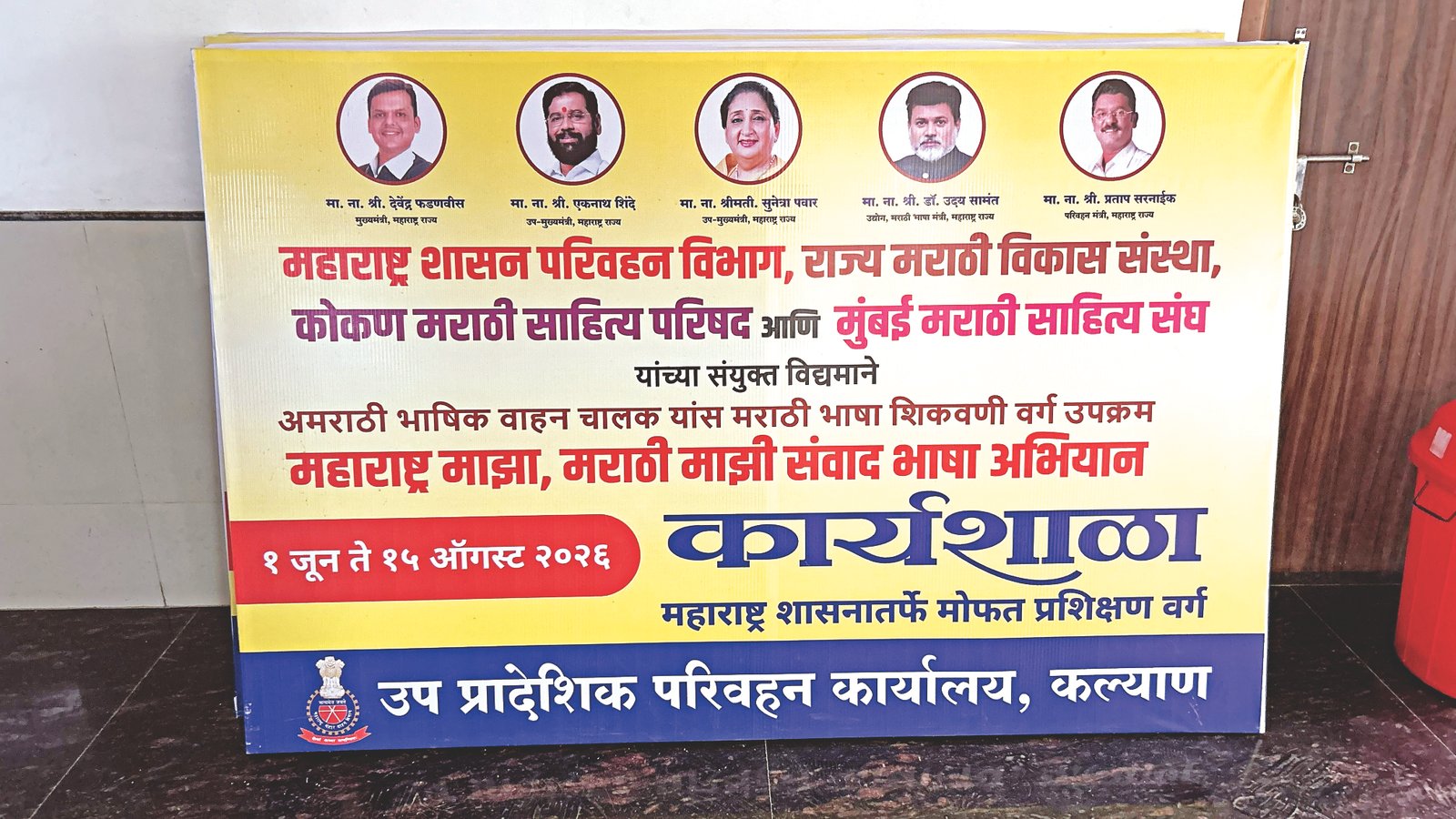
The Maharashtra government announced the initiative in April 2026 and launched the ‘Hinduhhridaysamrat Balasaheb Thackeray Marathi Shikvani Abhiyan’ on Maharashtra Day, 1st May. Implemented through the state’s Marathi Language Department in association with organisations including the Mumbai Marathi Sahitya Sangh and Konkan Marathi Sahitya Parishad, the programme was designed around functional Marathi rather than formal language education. The idea was not to turn an autorickshaw driver into a Marathi scholar. The objective was to make everyday communication easier by understanding destinations, speaking with passengers, handling basic complaints, communicating during emergencies and using common phrases required during a journey.
Transport Minister Pratap Sarnaik has described the initiative as a way for people earning their livelihood in Maharashtra to develop a connection with Marathi while also improving passenger communication. The government has maintained that the programme is about practical communication and cultural connection rather than simply imposing a language on those who have migrated to the state. But once a language initiative becomes compulsory, the questions become more complicated. A driver has to learn. A government has to provide the infrastructure to teach. A passenger expects the learning to translate into better service. And the driver, who earns only when the vehicle is on the road, has to absorb the cost of attending the classroom. The real story therefore begins not with the government announcement, but inside the RTO centres where the policy has reached the road.
The Auto Test
Walk into an RTO training centre these days and the familiar image of an autorickshaw driver sitting behind the wheel is replaced by a very different one. Drivers are seated in classrooms, attending sessions, interacting with trainers and appearing for examinations. The atmosphere is a mix of curiosity, acceptance and, in some cases, scepticism. The exercise may have started as a language initiative, but on the ground it has become a conversation about the way Mumbai’s autorickshaw drivers interact with the people they transport every day. For a city that depends heavily on autorickshaws for last-mile connectivity, that conversation is important. Every day, thousands of passengers depend on drivers to get to railway stations, offices, hospitals, schools and homes. The interaction can last only a few minutes, but it can also determine how safe, comfortable and respected a passenger feels. A visit to RTO training centres in Mumbai’s suburbs offered a glimpse into how differently the same policy can look once it reaches the ground. The objective remained common, but the atmosphere, scale and ease of implementation varied.
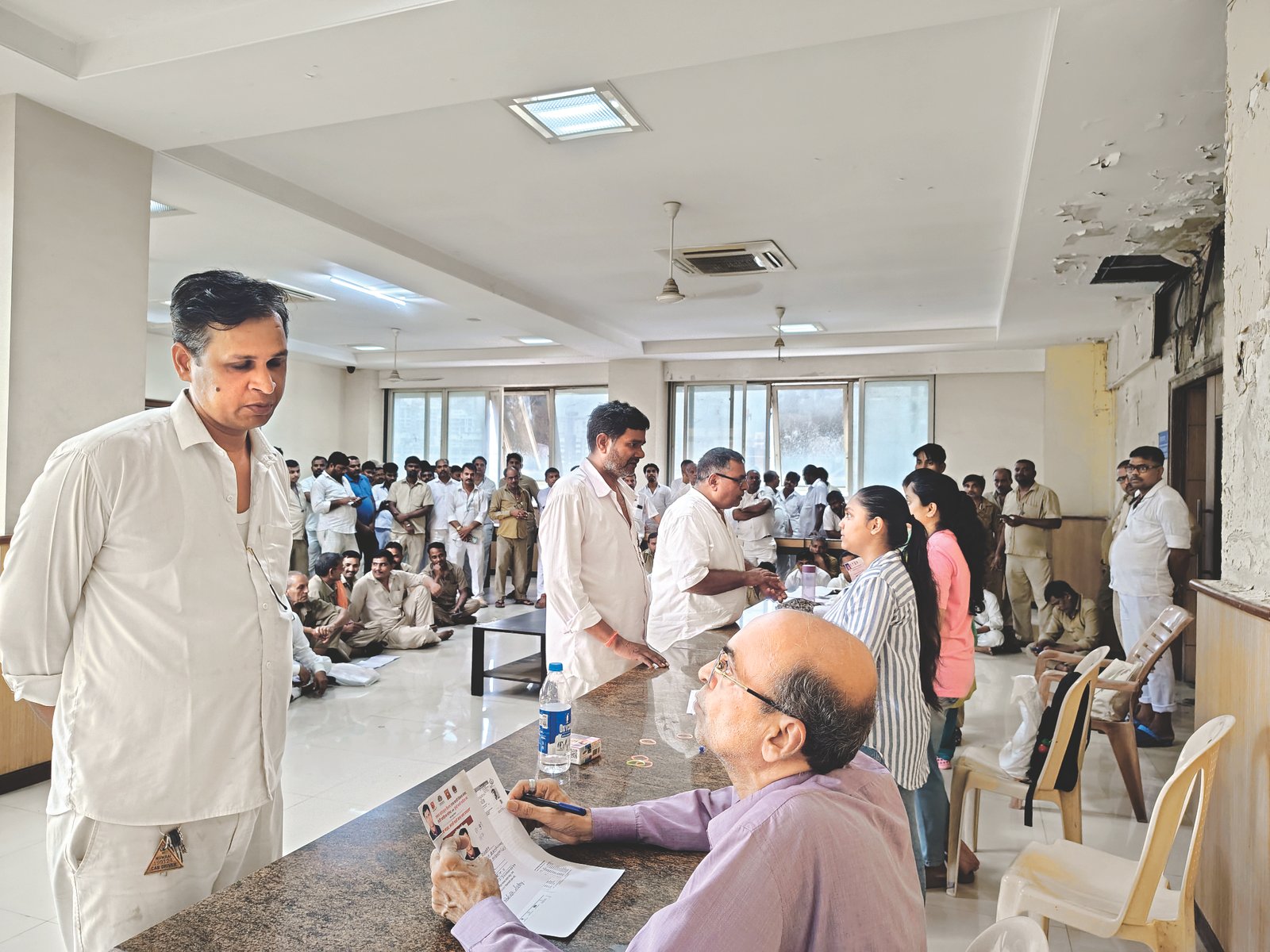
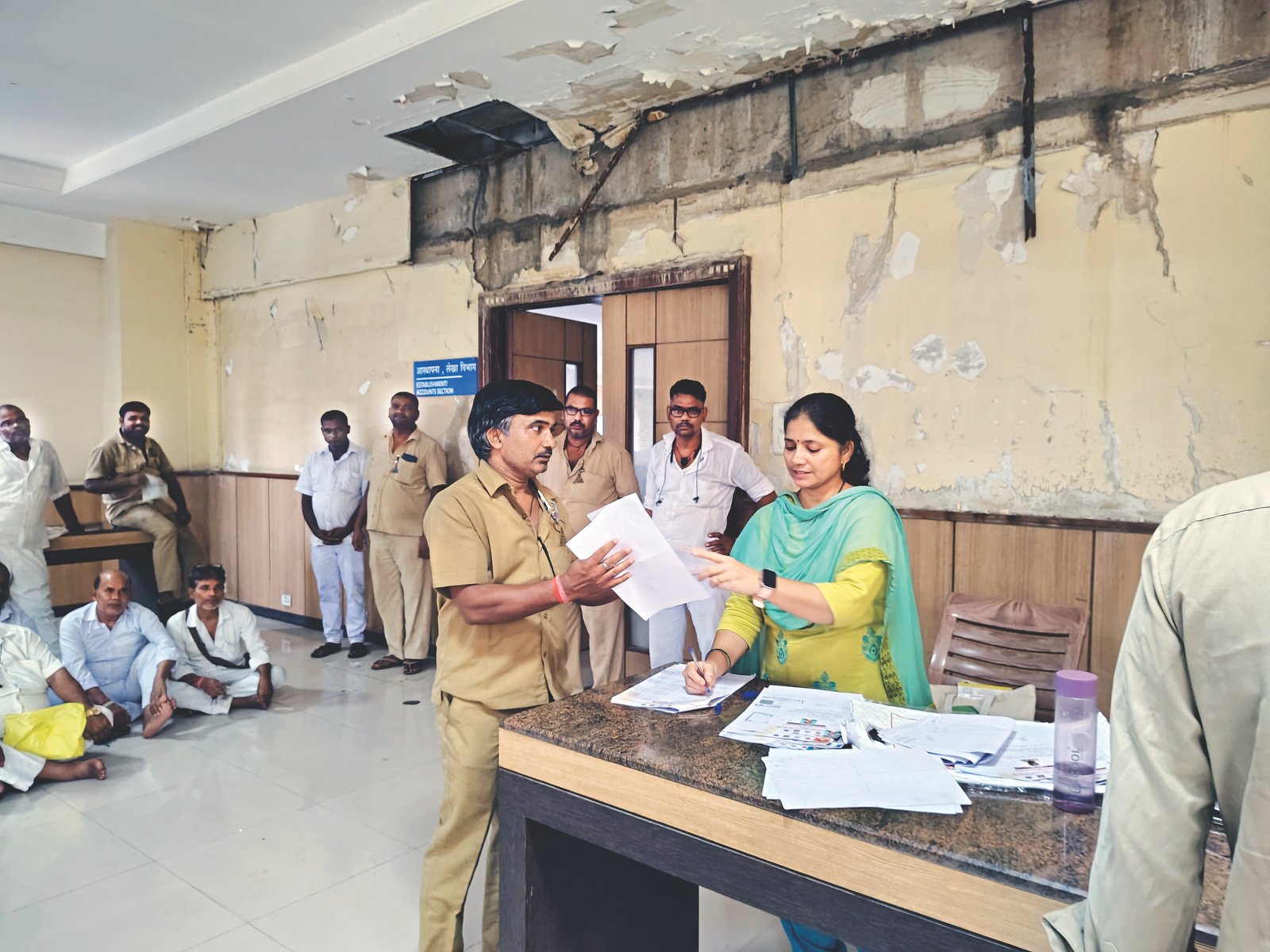
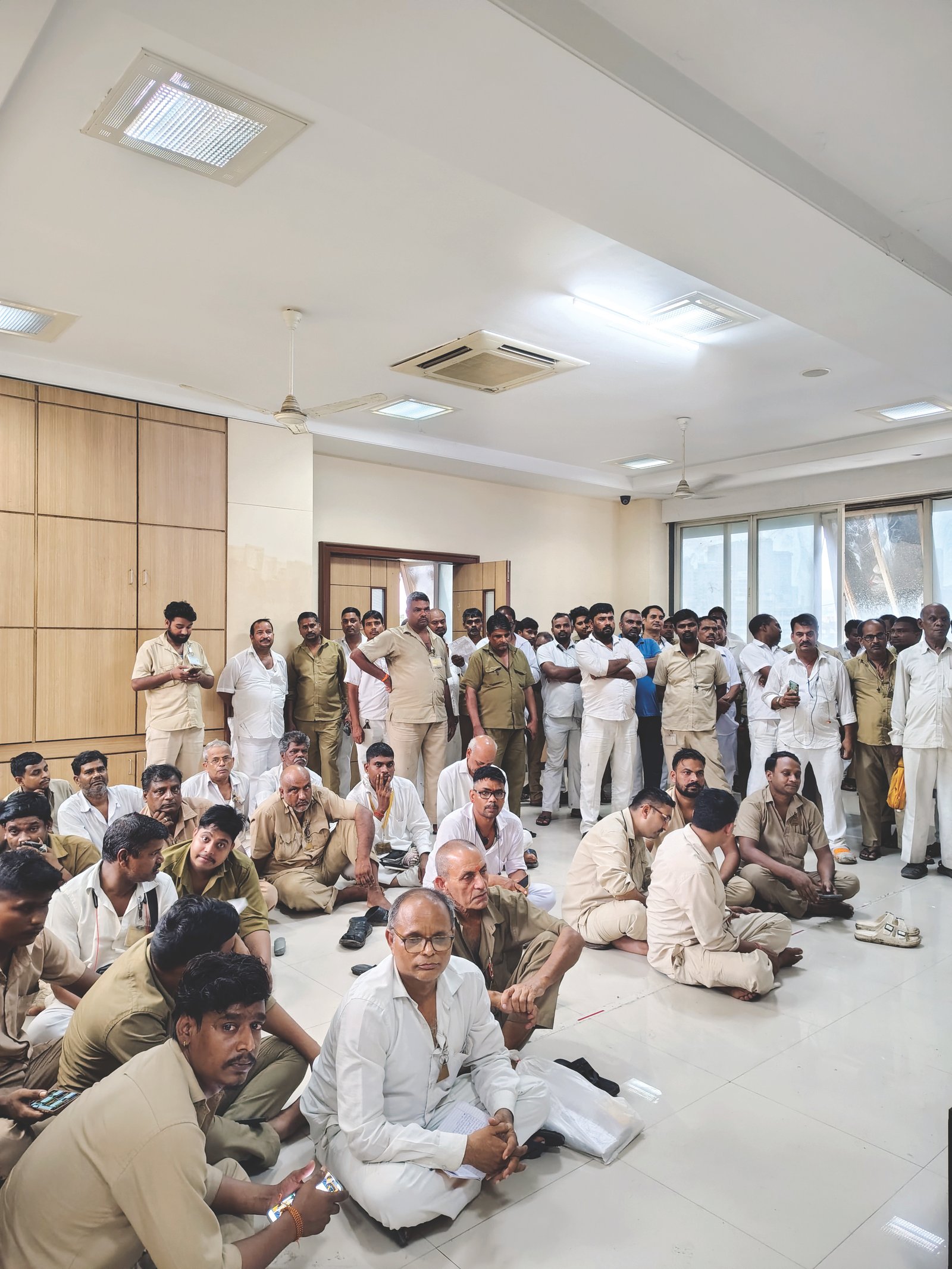
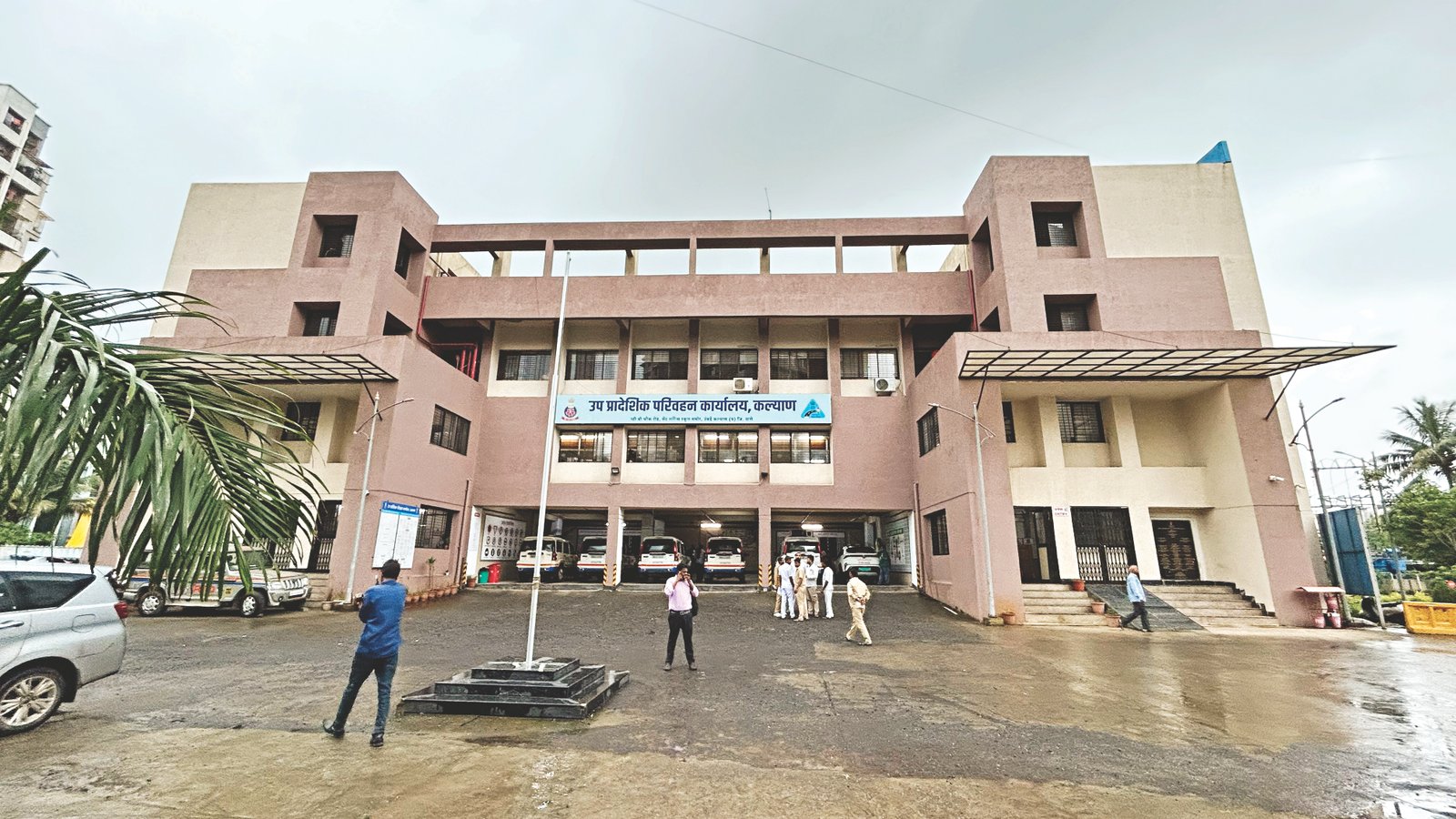
At one centre, the process appeared relatively organised, with drivers moving through the training exercise in a more structured environment. At Kalyan RTO, however, the scale of attendance was immediately more visible. The second half of the day had already brought a large number of drivers to the centre. A small room accommodated around 50-60 drivers, while roughly twice that number waited outside. The class itself was expected to begin after 4 pm, and drivers who had already completed the required forms were being called in for the second lecture of what was explained as a four-day programme.
For those inside, the conditions were far removed from the image of a conventional classroom. The room was crowded and uncomfortable, with 40-45 minutes spent in a relatively suffocating environment. Even some drivers appeared unclear about what exactly was happening around them. The teachers, however, continued with the process calmly.
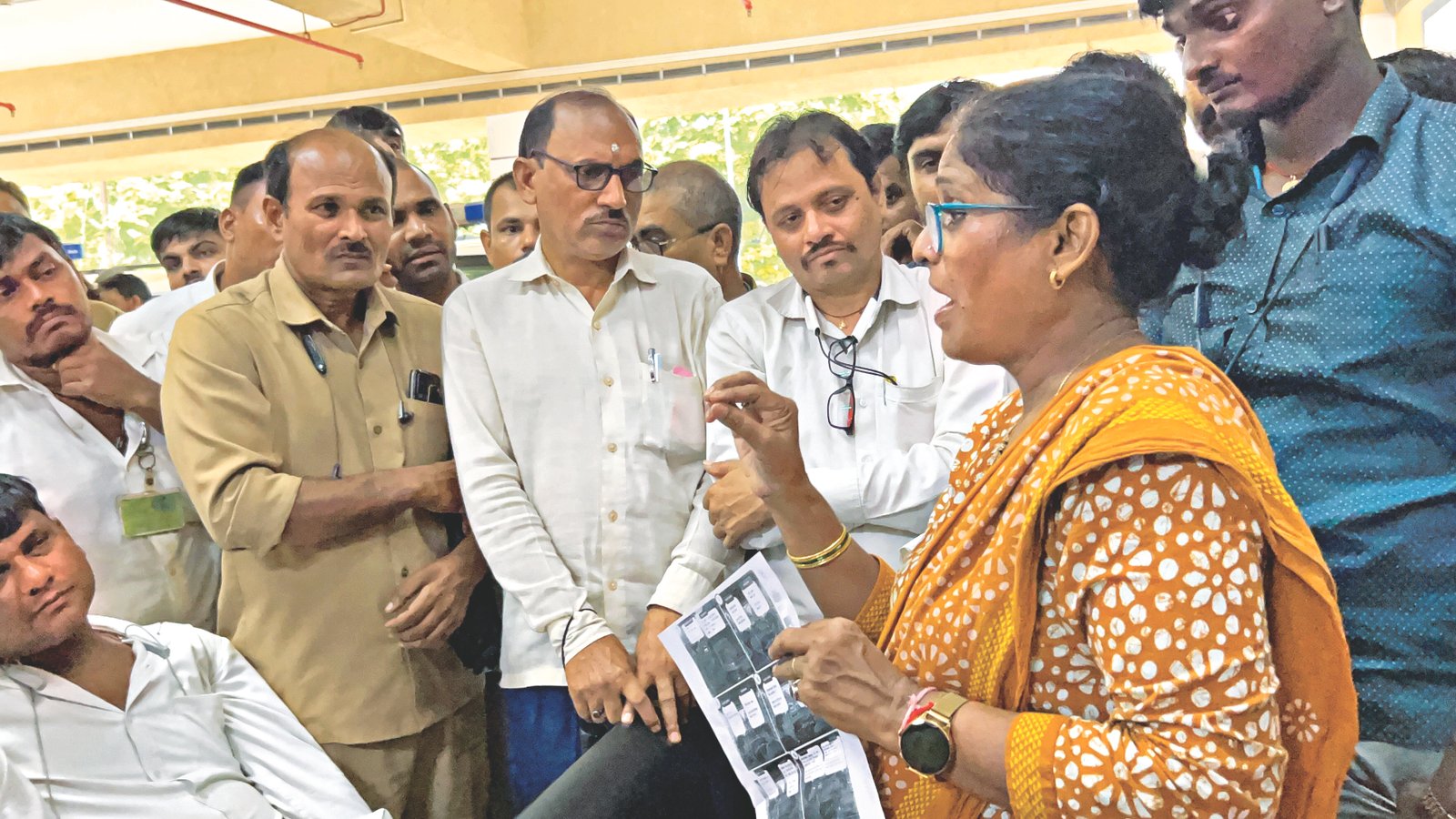
After collecting forms and signatures, the drivers were taken outside. One of the teachers, Sunita Rajput, who had around 25 years of experience teaching in schools and colleges, changed the atmosphere by moving away from the formal process and beginning with a story. It was a simple story about the importance of a mother and her sister.
The metaphor was used to explain the relationship between Hindi and Marathi. If Hindi could be considered the mother language, the teacher suggested, Marathi could be thought of as the aunt (Maa-Maasi) a language that deserved respect because it belonged to the state where the drivers were living and working. The message was not restricted to language.
If a passenger was more comfortable speaking Marathi, the drivers were encouraged to make an effort to respond in Marathi. A passenger who feels understood, the teacher explained, is more likely to feel comfortable during the journey. Better communication could therefore make the interaction between driver and passenger easier. The class then moved into something that had little to do with grammar. It was about manners.
Beyond The Language
The training is not limited to Marathi. Drivers are being exposed to situations they routinely encounter on the road: how to speak to customers, how to maintain discipline and how to deal with passengers who may require additional consideration. Senior citizens, women travelling at night and pregnant passengers are among the situations being discussed. There is also an attempt to change one of the most persistent complaints associated with autorickshaws: the quick refusal.
For a driver, refusing a ride can sometimes be a practical decision. Traffic, distance, fuel, the possibility of getting a return passenger and the driver’s working hours all influence that choice. But from the passenger’s perspective, a refusal can mean something entirely different. A woman trying to get home late at night, an elderly passenger or someone rushing to a hospital may not have the option of simply waiting for another vehicle. The training is therefore to introduce a basic principle: understand the situation before responding. Whether that principle survives beyond the classroom is something only the roads will reveal.
At Kalyan, the teacher’s approach reflected how far the course had moved from conventional language education. She explained that the original course had been much longer around 300 pages before being reduced to approximately 30 pages. Even that was considered difficult for non-Marathi speakers to absorb within four lectures. The final solution was to make it extremely simple: a two-page practical course containing 15 questions and 15 answers. That simplification says something about the purpose of the programme. The objective is not fluency. It is functional.
A driver does not need to discuss Marathi literature with a passenger. He needs to understand a destination, answer a question, respond to a complaint, explain a delay or communicate during an emergency. The same classroom also tried to introduce a more basic form of social interaction: how to make women passengers feel safe, how to treat elderly passengers and why courtesy matters even during a short journey. In that sense, the Marathi programme has quietly become a behavioural programme as well.
The Driver Response
The drivers themselves provide the most complicated picture. Conversations with around 15-20 drivers at Kalyan revealed that many had been living and working in Maharashtra for decades. For them, Marathi was not an entirely unfamiliar language. They had spent years hearing it on the streets, in markets, neighbourhoods and through passengers. Several saw value in learning it formally.
Their reasoning was practical. If they could respond in Marathi, they believed communication would become easier and the chances of a misunderstanding turning into an argument could reduce. For drivers who spend the entire day speaking with strangers, the ability to communicate in another commonly used language can provide a degree of confidence and, as some described it, a sense of safety. But there was another response as well. Some drivers viewed the classes simply as a mandatory procedure. If the government had made the training compulsory, they would attend it and complete the formalities. Beyond that, they were not particularly interested in the political dimension of the policy. That distinction is important.
A driver can comply with a regulation without necessarily agreeing with every argument surrounding it. Equally, a driver can appreciate the practical usefulness of Marathi without supporting the political narrative attached to the programme. The two positions can exist together. For some, learning Marathi is useful because it makes the job easier. For others, completing the course is simply part of continuing to do the job.
The Cost Of Learning
That difference in attitude becomes less surprising when the economic reality of the profession is considered. For an autorickshaw driver, time spent in a classroom is time spent away from the road. Earlier reports around the programme had already highlighted this concern. Drivers were attending Marathi classes while trying to maintain their daily earnings. Taking a vehicle off the road for several hours can directly affect income, particularly for drivers who work long shifts and depend on the day’s collection to meet fuel, maintenance and household expenses.
The scale of the programme makes that challenge even larger. Mumbai and the wider Mumbai Metropolitan Region have a vast autorickshaw and taxi workforce. Training a small batch is manageable. Training lakhs of drivers within a fixed deadline is a very different administrative exercise. Earlier reports suggested that a single batch could accommodate only around 50 drivers in some locations, while unions raised concerns over insufficient centres, limited capacity and the possibility that drivers would struggle to complete the course without losing working hours.
The argument from the sector was not necessarily that drivers were unwilling to learn. It was that the system needed to give them a realistic opportunity to do so. The concern also extended to passengers. If large numbers of drivers had to remain away from their vehicles to attend training, a city already dependent on autorickshaws for last-mile connectivity could experience a temporary shortage. That makes the programme more than a language policy. It becomes a question of transport management.
Two Sides Of Story
Some see value in the initiative. They believe communication problems often lead to unnecessary arguments and that learning how to handle passengers more professionally could improve the image of the entire community. For these drivers, the programme is an opportunity to make the occupation more organised and respectable. Others are asking why the responsibility for improving public behaviour appears to be falling disproportionately on them. “Why only us?” is a question being raised by drivers who point out that their working conditions are rarely discussed with the same intensity. Long hours, traffic congestion, fuel and maintenance expenses, uncertain daily earnings, passenger disputes and the pressure to complete as many trips as possible are part of their everyday reality.
Their argument is not necessarily against training. It is about fairness. If drivers are expected to behave professionally, they want the system around them to be professional too. That argument becomes difficult to dismiss when the classroom itself demonstrates the pressures of implementation.
At Kalyan, the lack of space and the absence of a clearly available helpline for drivers added to the confusion. The teachers were required to manage a large group in uncomfortable conditions, while some drivers appeared uncertain about the process. The issue is not that every training centre needs to look identical. It is that a programme expecting compliance from a very large workforce needs a system capable of explaining, guiding and supporting that workforce.
The Missing Clarity
There are still unanswered questions around the mechanics of certification, the exact consequences for those who do not comply and how the system will be monitored. During our visit, examinations were underway at Andheri RTO but even among officials there was no complete clarity on every aspect of the process beyond the immediate exercise.
The numbers also appear unclear. An anonymous figure shared with us put attendance at around 10,000 drivers, while officials indicated a figure closer to 3,000. Such a gap may appear administrative, but it matters when the programme is being presented as a large-scale intervention. A driver deciding whether to attend needs to know the rules. A government enforcing those rules needs accurate data. And the public deserves to know whether the programme is actually reaching the people it is intended to reach.
The numbers reported at the state level have also changed as the programme progressed. By August 6, the Transport Minister stated that more than one lakh non-Marathi drivers had completed the functional Marathi course, while separate reports around the same period referred to approximately 98,000 drivers whose training was in the final stage. The difference may reflect different stages or methods of counting, but it reinforces the importance of transparent data when the government is measuring the success of a programme at this scale.
The Enforcement Question
The August 15 deadline adds another layer to the exercise. The government has maintained that drivers have been given sufficient time and opportunity to complete their training and that no further extension would be granted. With the programme moving towards its concluding phase, the emphasis has shifted from encouraging participation to ensuring compliance. That changes the nature of the initiative. A training programme can be encouraged. A regulation must be enforced.
The government has a legitimate concern here. If a requirement is introduced but persistent non-compliance carries no consequence, the exercise risks becoming symbolic. But enforcement also depends on clarity. Drivers need to know precisely what constitutes compliance, what certificate they will receive, what happens after failure, whether they can retake the assessment and how the requirement will affect their licence, permit or badge. The government has indicated that the certificate will have relevance to such regulatory processes, making the outcome more significant than a simple classroom attendance record. The challenge is therefore to ensure that enforcement does not become detached from the original purpose of the programme.
The Political Doubt
Some believe the current pressure may not last and are waiting to see whether the administration maintains the same level of enforcement once the immediate deadline passes. Their attitude is essentially one of wait and watch.
This scepticism cannot simply be dismissed. Whenever a government introduces a new compliance requirement, credibility depends on consistency. Drivers are more likely to cooperate when they know precisely what is expected, why it is required and how the rules will be applied. At the same time, authorities have a legitimate concern: training has little value if it remains optional in practice and if persistent non-compliance carries no consequence. The challenge is finding the balance between enforcement and cooperation.That balance may ultimately determine whether the programme is remembered as a temporary political initiative or as a meaningful attempt to change the way a public-facing workforce operates.
The Passenger Problem
Mumbai’s autorickshaw system has always been built on an informal relationship between driver and passenger. Unlike a conventional public transport system, every journey involves a direct negotiation – where to go, whether the driver will accept the ride and sometimes how much the journey will cost. That creates room for friction.
Passengers complain about refusals, rude behaviour and disagreements. Drivers complain about unreasonable demands, fare disputes and difficult passengers. Both sides often see themselves as the victim. The training programme, intentionally or otherwise, has brought this relationship back into focus. If drivers are being asked to show greater sensitivity towards passengers, the broader transport ecosystem must also recognise the pressures under which drivers operate.
Professionalism cannot be achieved simply by giving instructions to one side. The same principle that the teacher at Kalyan attempted to communicate to drivers to understand the situation before responding can work in both directions. A driver may refuse a trip because of traffic, distance or the possibility of being stranded without a return passenger. A passenger may see the same refusal as indifference.
An elderly passenger may take longer to enter the vehicle. A driver working under time and financial pressure may see the delay differently. A passenger may expect a safe and courteous journey. The driver may expect the passenger to understand that the vehicle is also his workplace and source of livelihood.The friction exists precisely because both sides see the journey from different positions.
Mumbai Struggles
The Maharashtra Transport Department began checking drivers’ Marathi proficiency from August 20. During these checks, RTO teams ask drivers simple, everyday questions and assess whether they can communicate with passengers in Marathi.
The government says the objective is not to make drivers fluent in the language, but to ensure basic communication with passengers. The enforcement, however, has created anxiety among many drivers, particularly those who have migrated to Mumbai from other states. Some drivers say they are willing to learn Marathi but are concerned about the way the tests are being conducted. Reports have also emerged of drivers claiming that some questions asked during roadside checks were beyond what they were taught in training classes.
The impact is already being felt by commuters. Protests and a flash strike by some drivers led to shortages of autos and taxis on key Mumbai routes, particularly around railway stations and residential areas. This left passengers waiting longer or searching for alternative transport. According to reports published on August 25, RTOs had issued 4,729 notices across Maharashtra, including 2,239 in the MMR, following inspections over five days. Drivers receiving notices are being given time to improve their Marathi before stricter action is considered. At the heart of the controversy is a difficult balance: respect for Maharashtra’s regional language versus the livelihood concerns of migrant workers. For Mumbai, where people from different states live and work together, the challenge is to enforce the rule fairly while ensuring that both drivers and passengers are not caught in the middle.Will drivers get enough time and support to learn Marathi?
Will the government modify the enforcement process? Could protests and shortages of autos and taxis increase if the issue remains unresolved? And most importantly, what happens next?.