

Commercial vehicles represent a mere two to three per cent of India’s total vehicle parc, yet they shoulder a staggering burden: nearly 40 per cent of all vehicular pollution. While many acknowledge this stark disparity, few have dared to build an entire founding premise upon it, writes Ashish Bhatia.
In April 2023, Dheeraj Jhawar, Debasis Mohanty, and Sandeep Agarwal founded Transvolt Mobility to decarbonise transport across two critical fronts: electric buses for Indian cities and electric trucks for heavy industries. The company has secured backing from IFC (the World Bank Group’s private-sector arm) and more recently by Finnfund, Finland’s sovereign fund—institutional partners whose presence in Indian logistics has historically been rare. This sustainability-driven approach has generated significant stakeholder interest. “The idea was that we, along with our co-sponsors IFC and now Finnfund, could create a platform dedicated to sustainability,” says Dheeraj Jhawar, describing the company’s core mission.

Dheeraj Jhawar, Co- Founder and Managing Director, Transvolt Mobility

Debasis Mohanty, Co- Founder and CEO, Transvolt Mobility
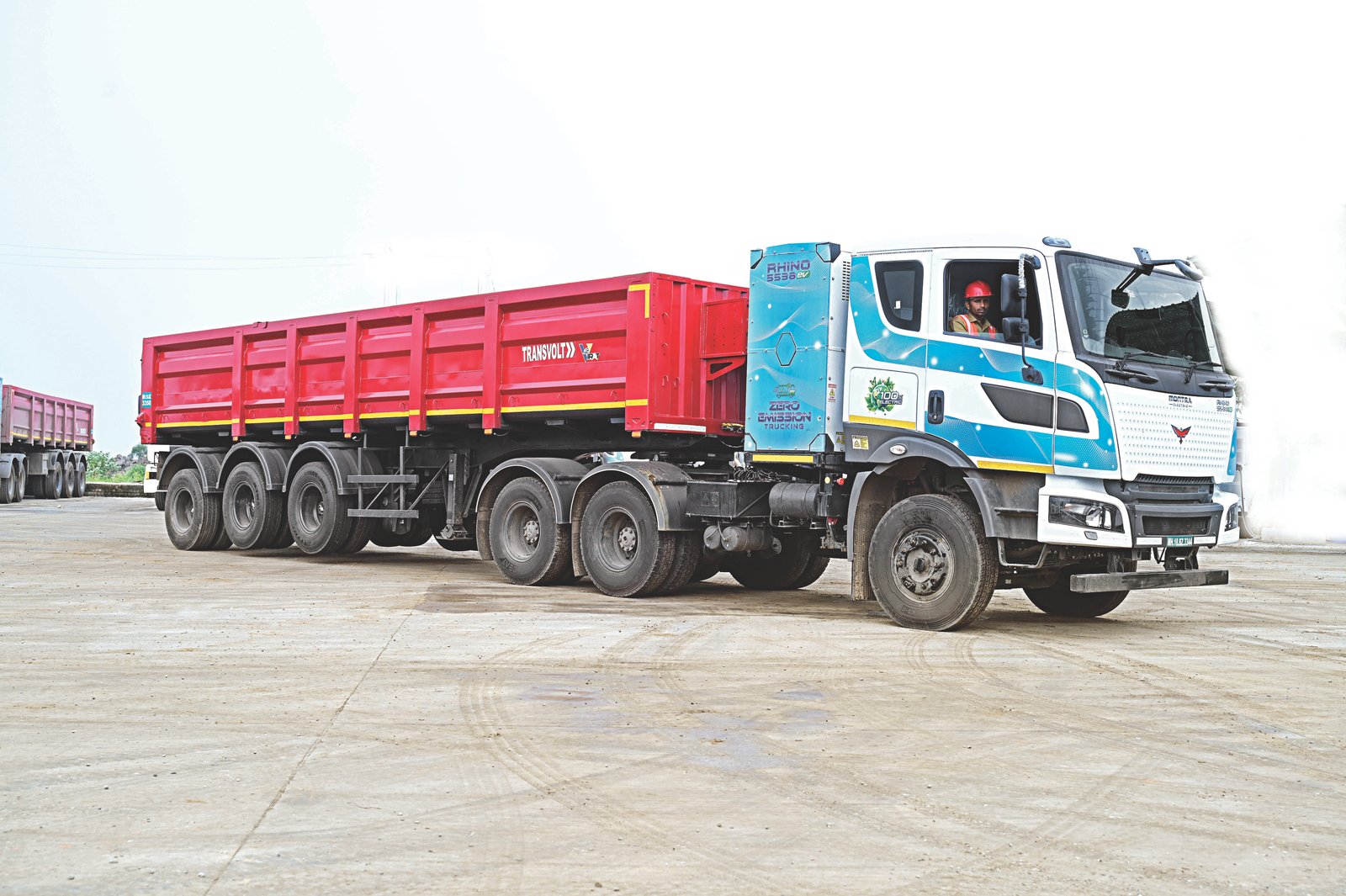
Today, that platform runs nearly 550 EVs roughly 400 electric buses and 150 electric trucks spread across five Indian states and more than 10 locations with eyes set on expanding the green fleet, including heavy trucks. The flagship of that trucking fleet is a deployment of 70 electric trucks running one of India’s most demanding industrial freight routes: hauling cement clinker for the cement major from a facility near Indore, in Dhar, to Dhule in Maharashtra. It is a punishing duty cycle by any standard — roughly 200 km one way, and up to 400 km covered by a single truck in a day, seven days a week. Before Transvolt could even begin operating on it, the company had to solve a harder problem: finding a heavy-duty electric truck that could survive that kind of mileage, and a client willing to bet an entire logistics contract on it.
GOING ELECTRIC
Having built its business case around decarbonising freight, Transvolt still needed a technology partner capable of delivering not on a pilot scale, but at full industrial scale. The company began evaluating reliable trucking partners with a specific brief: a 55-tonne tractor-trailer that could match the range, payload and duty cycle of a diesel truck on a genuinely heavy-haul route, backed by service infrastructure that could keep it running. That search led Transvolt to Montra Electric eM&HCV.
Range, payload capability, after-sales support, telematics and the Total Cost of Ownership (TCO) were the parameters that mattered most during evaluation. “Rhino Electric Truck 55-Tonner is a very good product for our business requirement,” says Hemant Velhankar, President – Engineering & Maintenance at Transvolt Mobility. “There is absolutely no cost overrun from diesel consumption, and since it’s an EV, we worry less there’s no question of pilferage.” Deploying 70 of these trucks on a single route made the Dhar–Dhule corridor one of India’s largest single-location deployment of 55-tonne electric trucks by a single operator. It was a first for the client too, so it took a sustained effort from both the Transvolt and Montra Electric teams. That effort has since evolved into something more permanent than a one-off deal: a joint operations, maintenance and monitoring team, running on a shared IT platform, tracking the fleet’s performance in real time.
The transition itself went smoother than either side had reason to expect. Drivers coming off years of diesel trucks adapted quickly to the Rhino Electric Truck’s automatic, clutchless transmission, and its strong torque proved especially valuable on the route’s hilly, winding sections terrain where a diesel gearbox demands constant attention. From the earliest weeks of deployment, the trucks met the range and payload the route required, giving both companies the operational confidence to scale the deployment to its current size.
ON GROUND EXPERIENCE & RESULTS
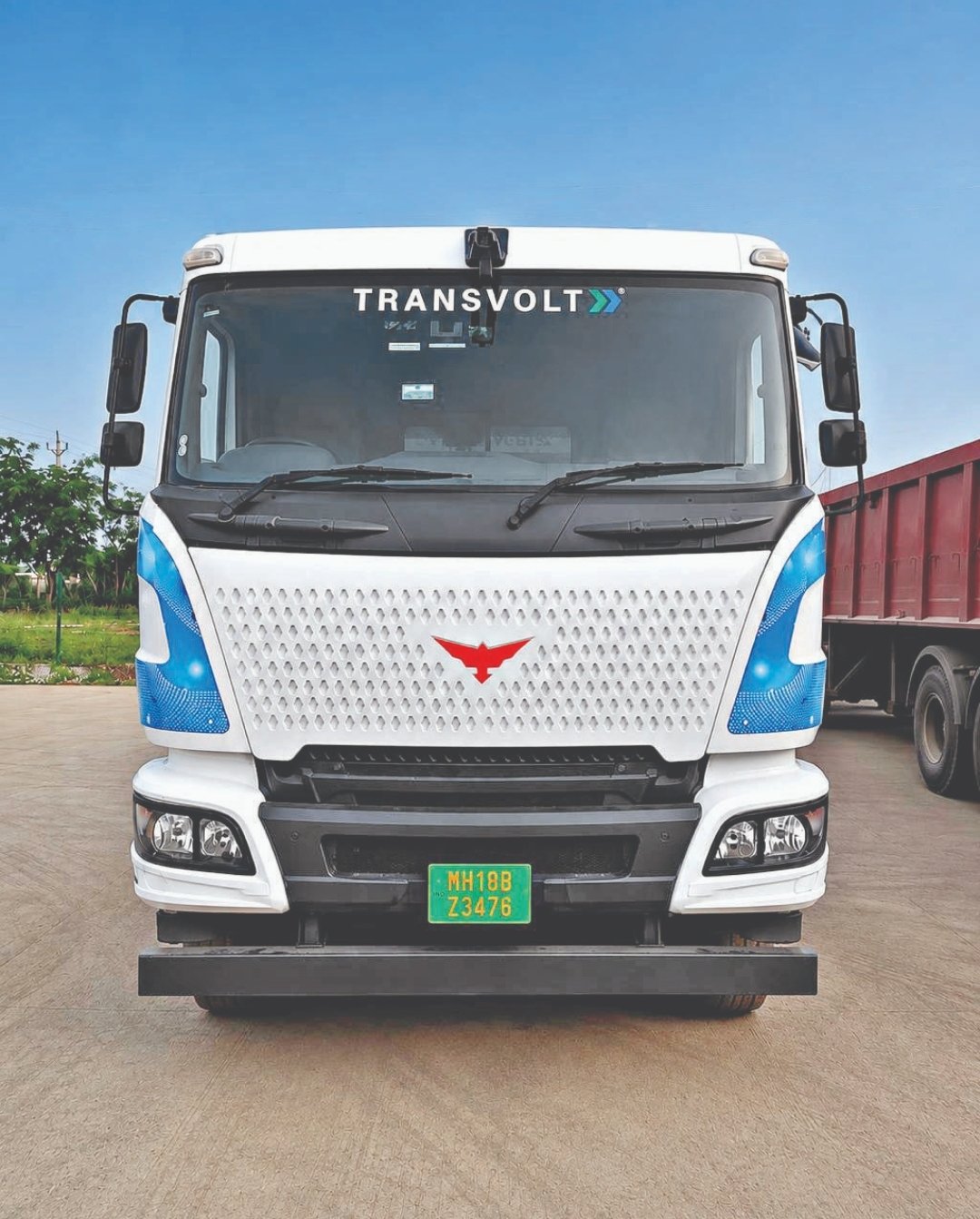
Nearly a year into full-scale operation, the deployment’s numbers speak almost as clearly as its drivers do. All 70 Rhino Electric Trucks remain in active daily service on the Dhar–Dhule corridor, each covering close to 400 km a day for a combined total of roughly 12,000 km per truck every month. Turnaround times, by Transvolt’s own account, are consistently met.
Running costs have shifted in the fleet’s favour in ways that go beyond the obvious. Maintenance, meanwhile, is anchored by an Annual Maintenance Contract (AMC) that Transvolt describes as “by far the best in the industry,” supported by 24by7 on-site maintenance and a containerised maintenance setup at the depot that keeps spare parts and technicians close to where the trucks actually run. “The spare parts, the supply chain management behind the spare parts, availability at the site are extremely satisfactory,” says Hemant Velhankar. “In most of the cases, they’re able to achieve the defined turnaround time, helping us in maintaining our own uptime,” he states.
A less visible but equally important piece of the operation is Montra Electric’s Utilisation Department a function Transvolt says is unique to the brand which works directly with drivers to plan routes and trips more efficiently, helping lift both mileage and overall fleet efficiency. That works alongside an in-built telematics system that reports each vehicle’s State of Charge (SoC), health status and predictive fault alerts, feeding a management information system the operations team uses to track trip and vehicle-level efficiency continuously.
Three charging stations, i.e. Manawar (Dhar), Julwania, and Dhule near the plant house, with 21 chargers, with each charge taking about an hour- 60 minutes- timed to fit within the truck’s lading and turnaround windows without disrupting the daily schedule.
It is the drivers, though, who make the strongest case for the switch. Several came to the Rhino Electric Truck after 10, 14, even 15 years behind the wheel of a diesel truck and the comparison, for them, isn’t close. “I have been driving a diesel vehicle for 14 to 15 years and an electric vehicle for the past six months,” says one of the drivers. “In comparison to a diesel vehicle, you don’t have to work the gear with your hands and feet. If you drive 200 kilometres, you don’t get tired.” Others echo the same point about reduced fatigue, easier pick-up, and a cabin that stays comfortable through a full day’s run the cumulative effect of an automatic, clutchless drivetrain built for exactly this kind of heavy duty haul, high-frequency use. So, it is but natural for Debasis Mohanty, Co-founder & CEO, Transvolt Mobility, that Montra Electric eM&HCVs are one of the best trucks he can think of till date. He adds that other than the quality of the truck, the team that provides and stands by as an operator gives a lot of confidence for the long-term relationship.
LOOKING AHEAD – A GREENER FLEET
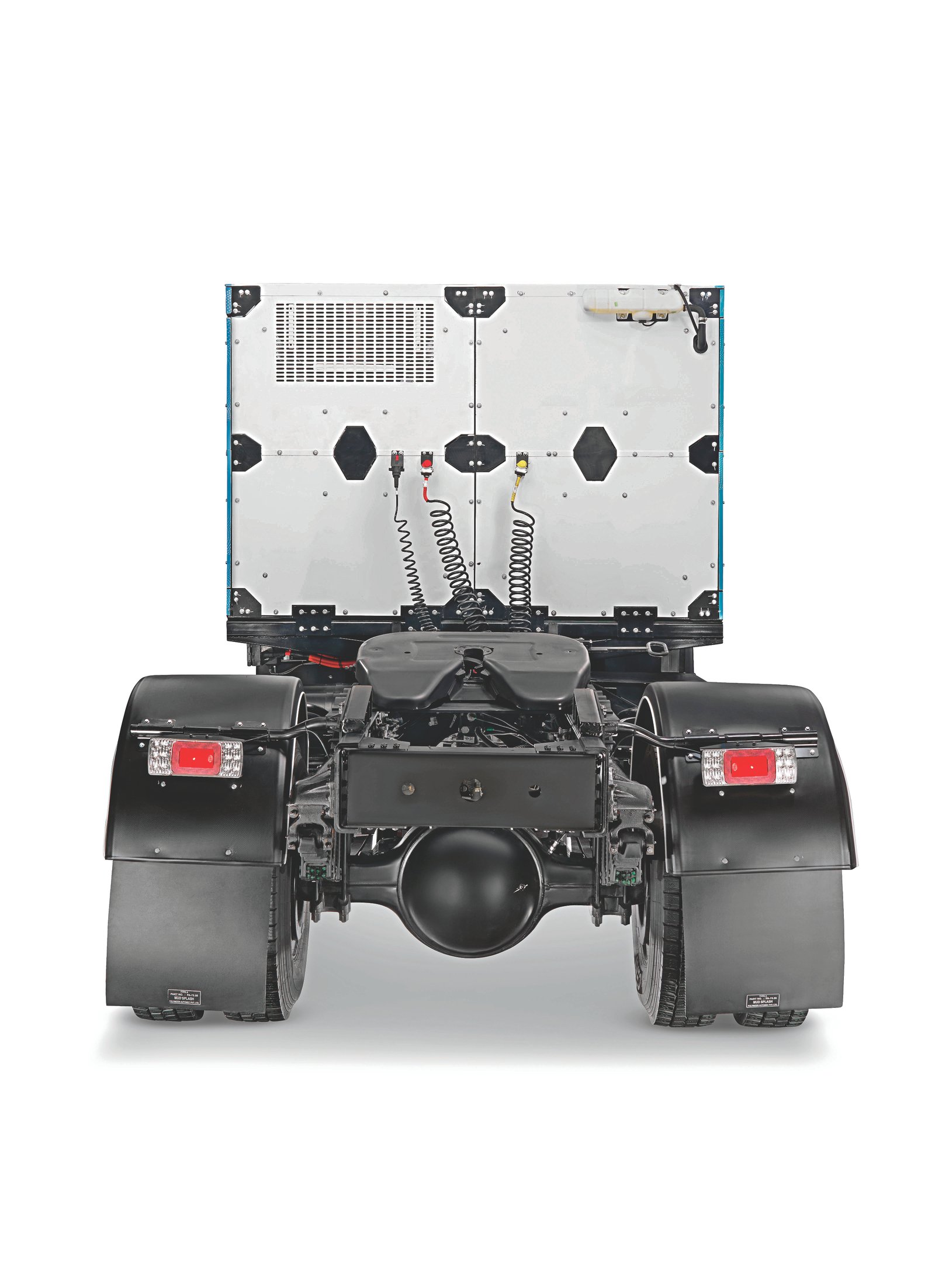
Transvolt’s overall assessment of the Montra electric eM&HCV partnership is unambiguous: the Rhino Electric Truck has delivered the range, payload and reliability the business needed, backed by a maintenance and support structure the company rates among the best it has encountered, and has done so while meeting the ESG and carbon-footprint benchmarks its international financing partners require. The deployment stands as IFC’s first global investment in an EV mobility operator a first for the institution, and by extension a template for what a bankable, ESG-compliant electric-trucking contract can look like elsewhere in the market. It has done what pilot projects rarely manage: shown international development finance that heavy commercial EVs are not just an environmental aspiration, but a financeable asset class.
Transvolt is not treating this deployment as a ceiling and is working towards more deployments and is actively evaluating new heavy-haul segments beyond cement logistics, including ports, airports, mining and general haulage, alongside a first look at international markets. The joint operations, maintenance and monitoring process of the eM&HCVs it has built with the Montra Electric is, in the company’s own words, something both sides intend to deepen rather than simply repeat at scale.
As Debasis Mohanty puts it, the confidence built over 18 months of daily operation makes recommending the Rhino Electric Truck to other fleet operators “very natural.” The broader vision a cleaner, more organised, more professional logistics sector, built one electrified route at a time is precisely what the Green Trucking & Decarbonisation movement is asking the industry to deliver. Transvolt Mobility and Montra electric eM&HCV, between them, are showing what that delivery actually looks like on the ground.