

Ashok Leyland is investing in electrification, battery localisation and hydrogen powertrains to drive a green portfolio expansion, writes Richa Tyagi.
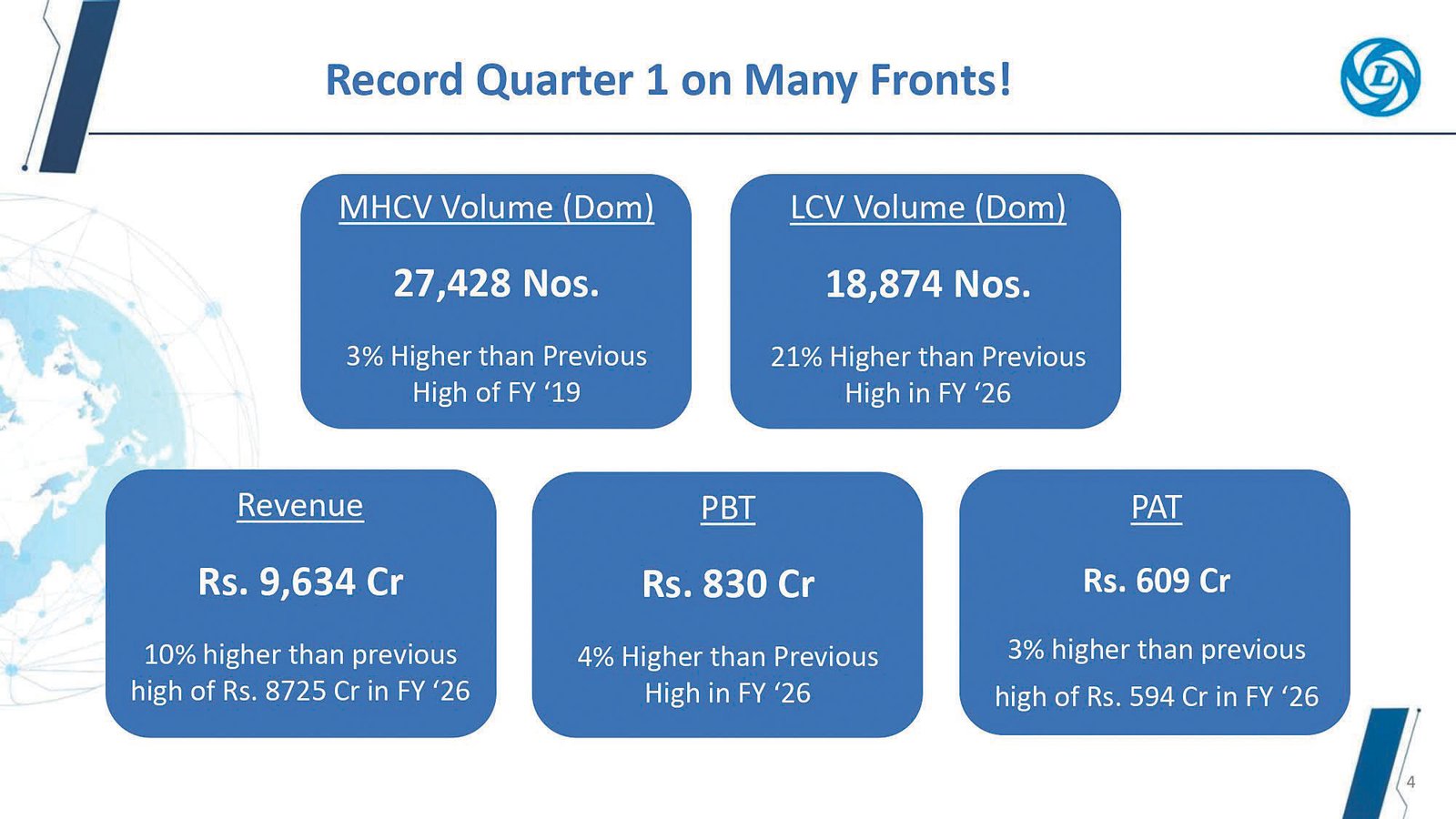
Ashok Leyland, the flagship company of the Hinduja Group, reported record first-quarter (Q1-FY27) standalone revenue and profitability for the current fiscal year, underpinned by robust domestic demand across its Medium and Heavy Commercial Vehicles (M&HCV) and Light Commercial Vehicles (LCV) segments, selective commercial bidding, and disciplined cost control.
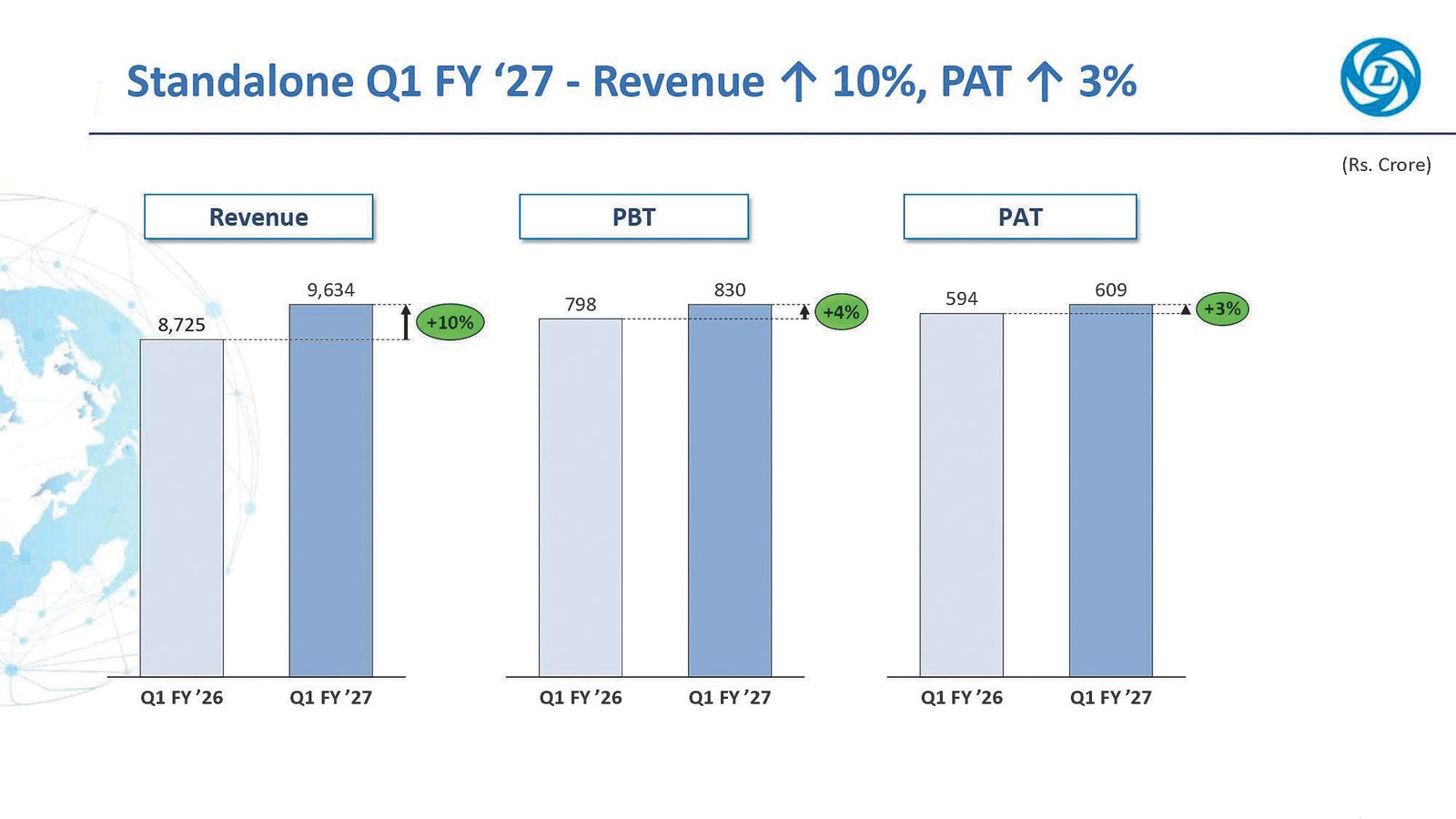
Despite headwinds driven by geopolitical volatility led by the West Asia conflict, the company maintained a double-digit EBITDA margin for the fourteenth consecutive quarter. Standalone revenue rose 10 per cent year-on-year to Rs. 9,634 crore in Q1 FY’27, compared to Rs. 8,725 crore in Q1 FY’26. Standalone Profit Before Tax (PBT) grew four per cent to Rs. 830 crore, while standalone Profit After Tax (PAT) edged up three per cent to Rs. 609 crore. On a consolidated basis, quarterly revenue climbed 12 per cent to Rs. 13,070 crore, with consolidated PAT settling two per cent higher at Rs. 668 crore.
Addressing media representatives during the post-earnings conference, Chairman Dheeraj Hinduja emphasised the resilience of the company’s operating model amid broader industrial friction. “We all witnessed the widespread challenges the industry went through during recent months. The business environment tested the robustness of our processes and resilience of our teams and partners. Ashok Leyland has come out stronger, achieving new peaks reaffirming our strategy of growing profitably,” he stated.
Domestic MHCV Dynamics
The domestic commercial vehicle sector demonstrated resilient consumption-led volumes during the quarter. Overall domestic M&HCV industry volumes expanded 14 per cent Year-over-Year (YoY) to 93,968 units. Ashok Leyland outpaced segment baseline growth in freight haulage, delivering a 15 per cent increase in domestic volumes. Total volumes reached 27,089 units, representing an overall growth of six per cent and translating to a market share of approximately 29 per cent (excluding defence and electric bus dispatches).
The company saw a contraction in passenger bus volumes, which management attributed to state assembly elections across key operating regions and a deliberate commercial strategy to avoid unremunerative tenders. “Bus volumes were lower on account of two factors: the impact of state elections in some of our important markets, and our conscious decision not to pursue some of the unprofitable orders during the quarter,” explained K. M. Balaji, Chief Financial Officer. “We remain committed to expanding market share, but we will not pursue volume at the cost of acceptable commercial returns. Our objective is to grow in a manner that is sustainable and value accretive,” he emphasised.
VAHAN Market Share Expands
The primary volume outperformer during the quarter was the LCV division. Based on registered vehicle data on the government’s VAHAN platform for the zero to 7.5-tonne category, total industry registrations grew 17 per cent to 1,40,792 units. Ashok Leyland’s LCV registrations outpaced the broader market, advancing 20 per cent to 18,543 units. This lifted the company’s retail LCV market share by 30 basis points to 13.2 per cent. Management noted that broadening the LCV footprint is central to mitigating commercial vehicle cyclicality, diversifying the addressable user base, and deepening distribution channels across semi-urban and rural hubs.
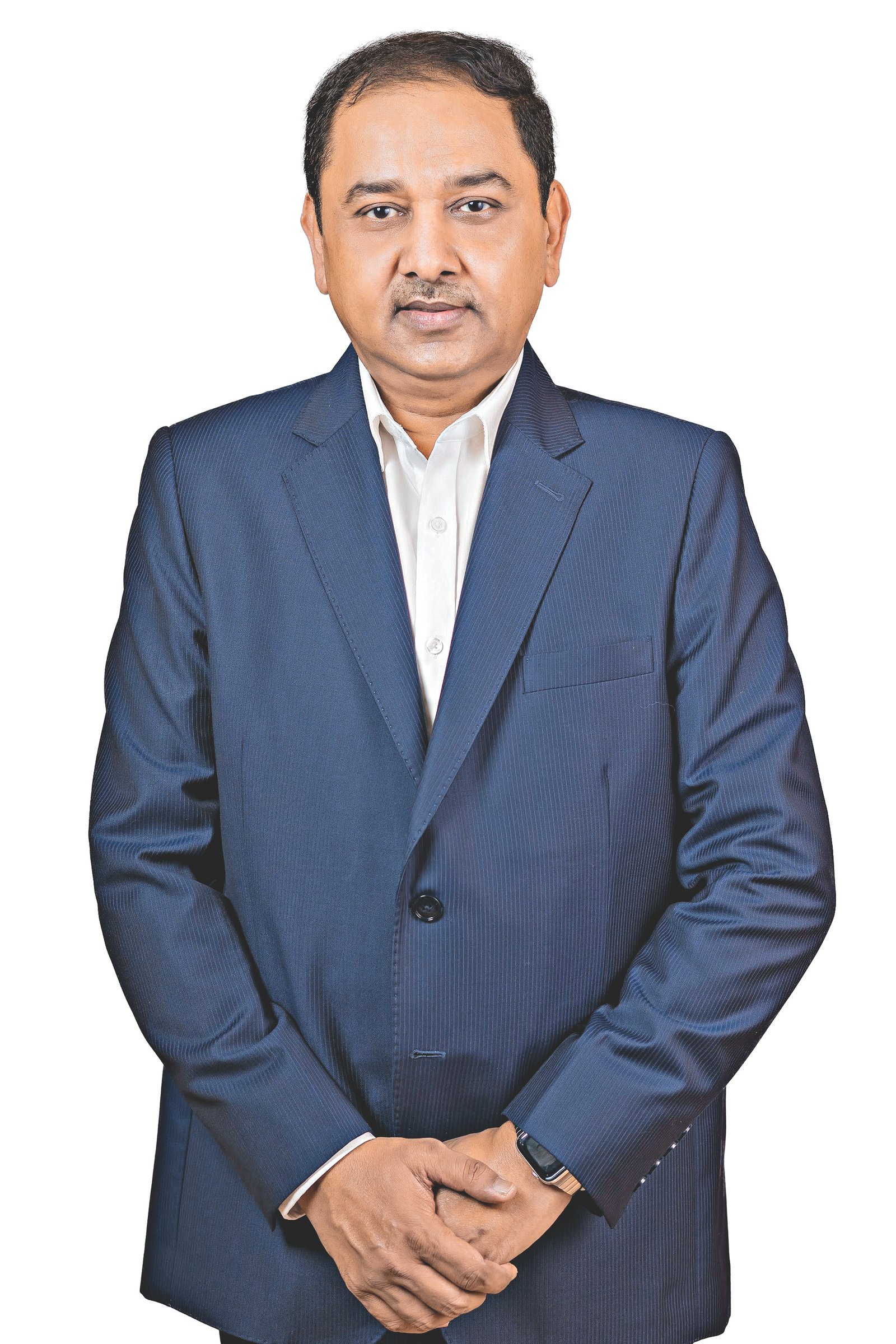
Shenu Agarwal, Managing Director and Chief Executive Officer
Fleet Replacement Triggers
Commercial vehicle demand continues to receive structural support from an ageing operational fleet across India. In response to a query from CV Magazine regarding the underlying drivers of the 15 per cent truck volume growth and the balance between replacement demand and fresh capex from logistics and infrastructure, Shenu Agarwal, Managing Director and Chief Executive Officer, explained that fleet modernisation remains the central growth engine. “This replacement demand, which was a kind of a potential demand waiting for a trigger, happened and will continue to happen because there are still huge amounts of BS-II, BS-III, and BS-IV trucks in fleets in the country,” Agarwal said, noting that the average fleet age had stretched past 10 years compared to the historical norm of seven to 7.5 years. “All other macroeconomic factors are also favouring the growth potential of the CV industry: interest rates, availability of finance, infrastructure investments from the government and private sector, and e-commerce demand,” he pointed.
Margin Sustainability
To counter elevated commodity costs and metal inflation, Ashok Leyland implemented two successive price increases across vehicle categories, resulting in cumulative hikes of between two per cent and 2.25 per cent. Agarwal indicated that the manufacturer is evaluating both list-price revisions and discounting discipline to protect margins. “We have already taken a couple of price increases, and given the headwinds on commodity cost, we are looking at either taking a price increase or optimising our discounts so that we get into a better situation on price realisation,” Agarwal mentioned.
Regarding whether sustainable margin growth remains viable despite these cost headwinds, CFO K. M. Balaji emphasised that cost recovery relies on three operational levers: “This volume growth is happening not only for Ashok Leyland, for all the players in the industry, and similarly the commodity cost pressure is faced by everyone,” Balaji stated. “The success depends on how much we will be able to recover. One is by way of recovery from the customers; the second one would be to contain these commodity costs by way of commercial negotiations and turnover discounts; and the third could be by way of reduction in the material cost per se by way of value engineering, e-sourcing, etc,” he explained.
In line with this strategy, the company has institutionalised a dedicated material cost optimisation program. Balaji confirmed that a targeted internal team is working to extract Rs. 2,000 crore in cost reductions over the next 18-24-months, over and above historical recurring annual savings of Rs. 500 to Rs. 600 crore. Agarwal added that this initiative is a broader value engineering and feature-enhancement program targeting Rs. 1,500 to Rs. 2,000 crore in cumulative value over the next three to four years.
Exports and Alternative Powertrains
International vehicle shipments declined to 2,461 units in Q1 FY’27 from 3,011 units in Q1 FY’26, primarily due to geopolitical disruptions in West Asia. However, stronger volumes across SAARC nations and African markets partially offset this deficit, with export momentum showing initial signs of recovery by the quarter’s end. On the technological front, Ashok Leyland is directing its Rs. 1,000-crore capital expenditure for the fiscal year toward new product platforms, electric vehicles, and battery systems, steering clear of conventional capacity expansion. Within its EV portfolio, Switch India recently secured an order for 650 electric buses and continues to operate independently without direct parent funding. Simultaneously, OHM Mobility is scaling through an asset-light structure, typically backed by 15 per cent to 20 per cent equity from Ashok Leyland with the remainder financed via project debt.
Looking ahead, the company plans to operationalise in-house battery pack and proprietary Battery Management System (BMS) production by 2027 to serve both internal automotive needs and external Battery Energy Storage Systems (BESS). Furthermore, Ashok Leyland is actively validating alternative powertrains, highlighted by a pilot fleet of 23 hydrogen-powered commercial vehicles currently deployed in Gujarat.