

FADA summit bring dealer, financiers,insurers and technology leaders together to shape a more connected, digital and sustainable retail ecosystem, writes Niharika Singh.
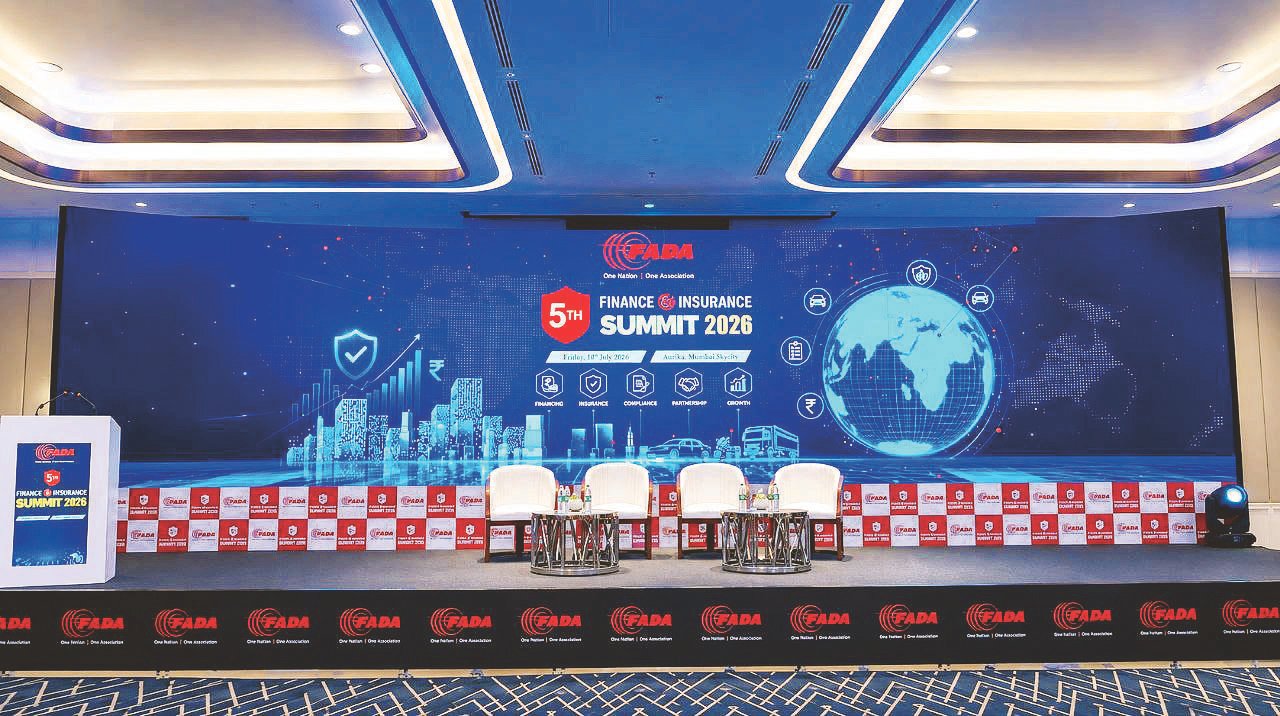
At FADA’s 5th Finance & Insurance Summit 2026, dealers, financiers, insurers and technology providers confronted a changing automotive retail landscape where access to capital, digital intelligence, insurance integration and stronger partnerships are becoming as important as the vehicle itself. India’s automotive retail ecosystem is entering a phase where selling a vehicle is no longer the end of the transaction. It is increasingly the beginning of a much larger financial and service relationship. Credit, insurance, digital processing, customer experience and after-sales engagement are now deeply intertwined with dealership performance.
That evolving reality formed the central narrative at the 5th Finance & Insurance Summit 2026, organised by the Federation of Automobile Dealers Associations (FADA) at Aurika, Mumbai Skycity on July 10. Bringing together automobile dealers, banks, non-banking financial companies, insurers, technology providers and policymakers, the summit examined one of the most critical questions facing automotive retail today: how can finance and insurance partnerships evolve fast enough to support a rapidly changing customer and vehicle market?
With India’s annual vehicle sales approaching the 30-million mark, the scale of the opportunity is considerable. Vehicle financing has expanded substantially, while motor insurance has become an increasingly important component of dealership revenues and customer engagement. For dealers, therefore, finance and insurance are no longer support functions operating alongside vehicle sales. They are increasingly central to the economics of the dealership itself.
Bottlenecks to Breakthroughs
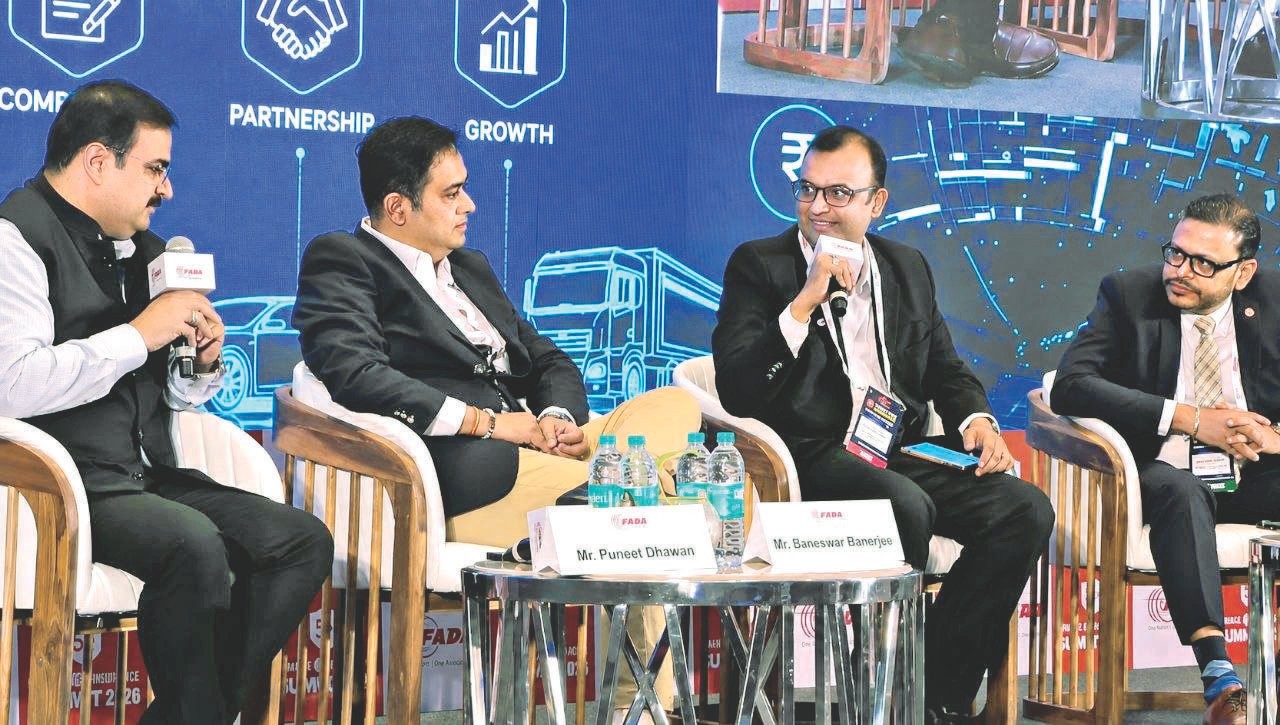
The summit’s discussions reflected this shift particularly strongly during the session “Auto Finance & Dealership Growth: Turning Bottlenecks into Breakthroughs.”
The panel brought together Abhinav Garg, Head – Product & Partnership Governance, AU Small Finance Bank; Puneet Dhawan, Business Head – Two-Wheeler & Car Loans, Tata Capital; and Baneswar Banerjee, SVP &Business Head – Automotive Loans,, Mahindra & Mahindra Financial Services, with the discussion moderated by Dr Sachin Hubli, Governing Council Member, FADA.
The conversation moved beyond the conventional lender-dealer relationship and examined the practical constraints affecting automotive finance. Supply-chain issues, elevated used-vehicle valuations, interest rates, the rising cost of funds and changes in MISP guidelines are all influencing the way dealers and financiers operate.
Finance Meets Technology
Addressing the gathering, Dr Rajan Pental, Executive Director, YES Bank, highlighted the changing financial landscape and the role of technology and partnerships in supporting the automobile retail ecosystem. The traditional financing process-often dependent on multiple documents, physical verification and lengthy approval cycles-is increasingly being replaced by digitally enabled workflows. Al-led underwriting, automated document checks and real-time data are helping reduce the time required for loan decisions. For customers accustomed to instant digital transactions in almost every other part of their lives, a slow vehicle-financing process can become a major friction point. The challenge for financial institutions and dealerships is therefore not simply to digitise existing processes, but to redesign them around the expectations of the modern customer.
A view From the Leadership
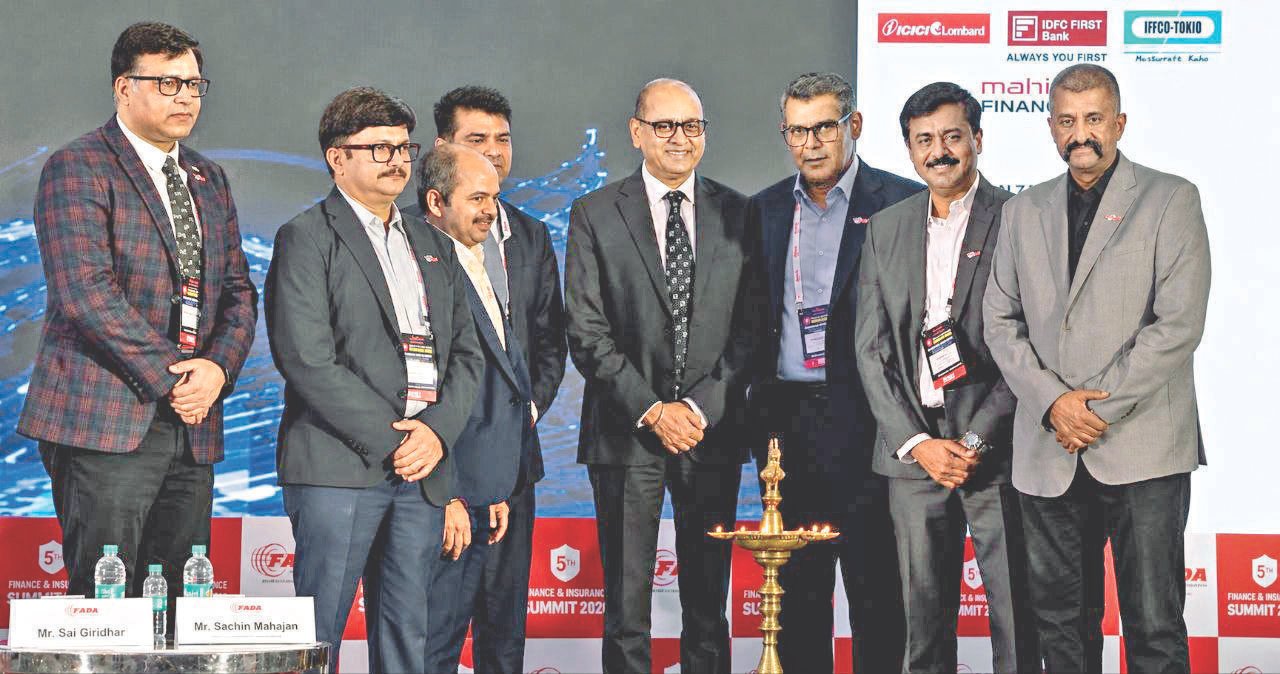
FADA President CS Vigneshwar set out a broader vision for the automotive retail ecosystem, emphasising deeper partnerships, innovation and customer-centric growth. His message reflected the changing role of the dealer. Dealerships are no longer simply physical points of sale. They are becoming important customer touchpoints for financing, insurance, service and mobility solutions.
Sai Giridhar, Vice President, FADA, and Saharsh Damani, CEO, FADA, were also among the key FADA leadership figures associated with the summit, alongside Amar Jatin Sheth, Secretary, FADA. The summit’s leadership presence underlined FADA’s growing role as a bridge between dealerships and the wider financial ecosystem. The event also brought together stakeholders including Manish Raj, Ashish kale and Sanghini Kunj, reflecting the broader network involved in the summit and its engagement with the dealer community.
The dealer’s Voice in the Data
Perhaps one of the most significant developments at the summit was the release of the 3rd edition of the FADA Dealer Satisfaction Study for Finance and Insurance.Based on responses from more than 700 dealerships across India, the study indicated improvement in dealer satisfaction across wholesale finance, retail finance and insurance disbursements.
Commercial vehicles emerged as an area where dealers continue to seek better training and support, while the used-vehicle segment requires greater funding attention. These are particularly important areas because commercial and pre-owned vehicles represent significant components of India’s mobility and transportation ecosystem. The study therefore provides more than a snapshot of dealer sentiment. It offers lenders and insurers a roadmap for where partnerships need to become stronger. For financiers, understanding dealer pain points can help improve product design. For dealers, the findings reinforce the importance of developing stronger relationships with multiple financial partners and improving internal processes.
A New Generation of Automotive Retail
The summit also looked beyond immediate financing challenges towards the next phase of dealership evolution. Rishabh Sanghi, Chairperson, FADA GenX, represented the perspective of the next generation of automotive retail leadership, bringing attention to changing consumer expectations and emerging retail trends.
This perspective is particularly relevant as younger customers increasingly expect digital-first experiences. They compare financing options online, research insurance products digitally and expect immediate responses. The dealership of the future will therefore have to combine the trust and physical presence of a traditional retail outlet with the speed and convenience of a digital platform. That transition will require investment not only in technology, but also in people and training.
Partnerships as the New Competitive Advantage
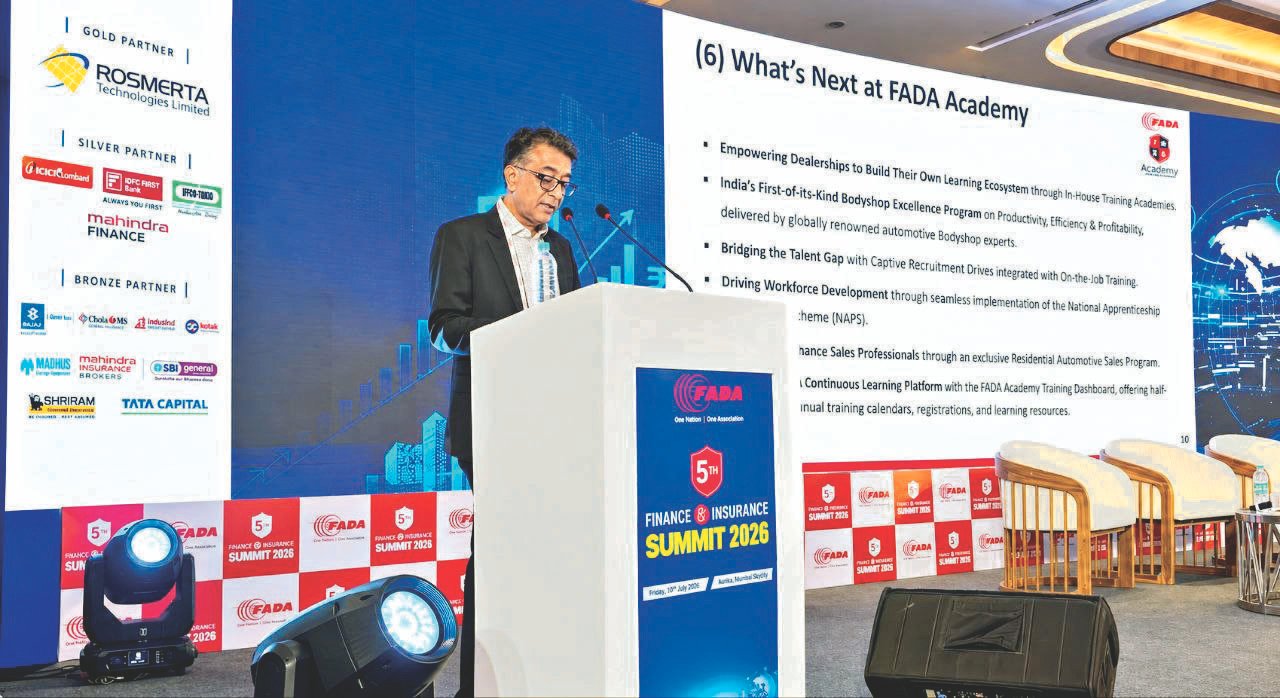
One of the strongest messages emerging from the summit was that no single stakeholder can navigate this transformation alone. Banks require dealers to reach customers. Dealers require financiers to support vehicle purchases. Insurers need both dealers and digital platforms to distribute products and deliver service. Technology companies provide the infrastructure that increasingly connects these participants. The summit’s extensive partner ecosystem reflected this interconnected structure. Spinny was the Platinum Partner, while Rosmerta Technologies was the Gold Partner. ICICI Lombard, IDFC FIRST Bank, IFFCO-TOKIO General Insurance and Mahindra Finance participated as Silver Partners.
The Bronze Partner ecosystem included
Bajaj General, Chola MS, Indusland General Insurance, Kotak Mahindra Prime, Madhus Garage Equipment, Mahindra Insurance Brokers, SBI General, Shriram General Insurance and Tata Capital. The presence of such a broad mix of financial, insurance and technology organisations demonstrated how dealership finance is becoming an ecosystem rather than a two-party relationship between a dealer and a bank.
Policy, Protection and the Road Ahead
Shri Pratap Sarnaik, Maharashtra’s Minister of Transport, attended as Chief Guest, while Dr Pankaj Kanchan Rajesh Bhoyar, Minister of State for Home (Rural), Maharashtra, was the Guest of Honour. Their presence highlighted the importance of aligning industry growth with regulatory oversight, consumer protection and the broader objectives of mobility development. As vehicle ownership expands and financing penetration increases, the responsibility of every stakeholder also becomes greater. Faster approvals must be accompanied by responsible lending. Digital convenience must be matched by data protection. Insurance distribution must remain customer-focused, while dealers must continue to strengthen their own capabilities.The rise of electric vehicles and the continued growth of used-vehicle sales will further test conventional financing and insurance models. EV valuations, battery-related risks, residual values and evolving customer profiles will require new underwriting approaches.
Beyond the Summit
FADA’s 5th Finance & Insurance Summit ultimately reflected an automotive industry in transition. The conversation was not simply about increasing the volume of loans or insurance policies. It was about building a more efficient, connected and sustainable automotive retail ecosystem. For dealers, the message is to become more digitally capable, strengthen lender and insurer relationships and invest in training, particularly for emerging segments. The summit also demonstrated why collaboration is becoming a competitive advantage in automotive retail. India’s journey towards 30 million annual vehicle sales will not be defined only by how many vehicles are sold. It will increasingly depend on how efficiently customers can access finance, how seamlessly they can obtain insurance, how quickly their claims are resolved and how effectively dealers can serve them throughout the ownership journey. That makes the future of automotive retail considerably bigger than the showroom. The next generation of dealerships will be financial gateways, insurance touchpoints, technology enabled service centres and long-term customer relationship hubs. FADA’s 5th Finance & Insurance Summit 2026 offered a timely glimpse into that future-and, more importantly, brought the industry together to begin shaping it.
m