

Axalta outlined how low-cure, waterborne and heat-reflective coatings are evolving alongside India’s bus industry, with lightweighting, electrification, productivity and asset protection increasingly shaping the paint shop, writes Ashish Bhatia.
The transition of India’s bus industry has bus manufacturers and body builders also dealing with evolving customer expectations around appearance, durability, productivity and lifecycle economics. For coating suppliers, this is creating a need to look beyond the traditional role of providing colour and surface protection. Axalta Coating Systems is banking on technologies aimed at the changing requirements of bus manufacturing. The company, regarded as a leading global coating supplier to the commercial vehicle industry and the number one coatings supplier to India’s bus industry, brought together its propositions around light weighting, lower energy consumption, sustainability and electrification. “Buses are, first of all, one of the largest carriers of people in India. It’s such a sustainable mode of transport. It’s an essential mode of transport,” said Dr Prameela Susarla, Vice President & Managing Director, Axalta India.
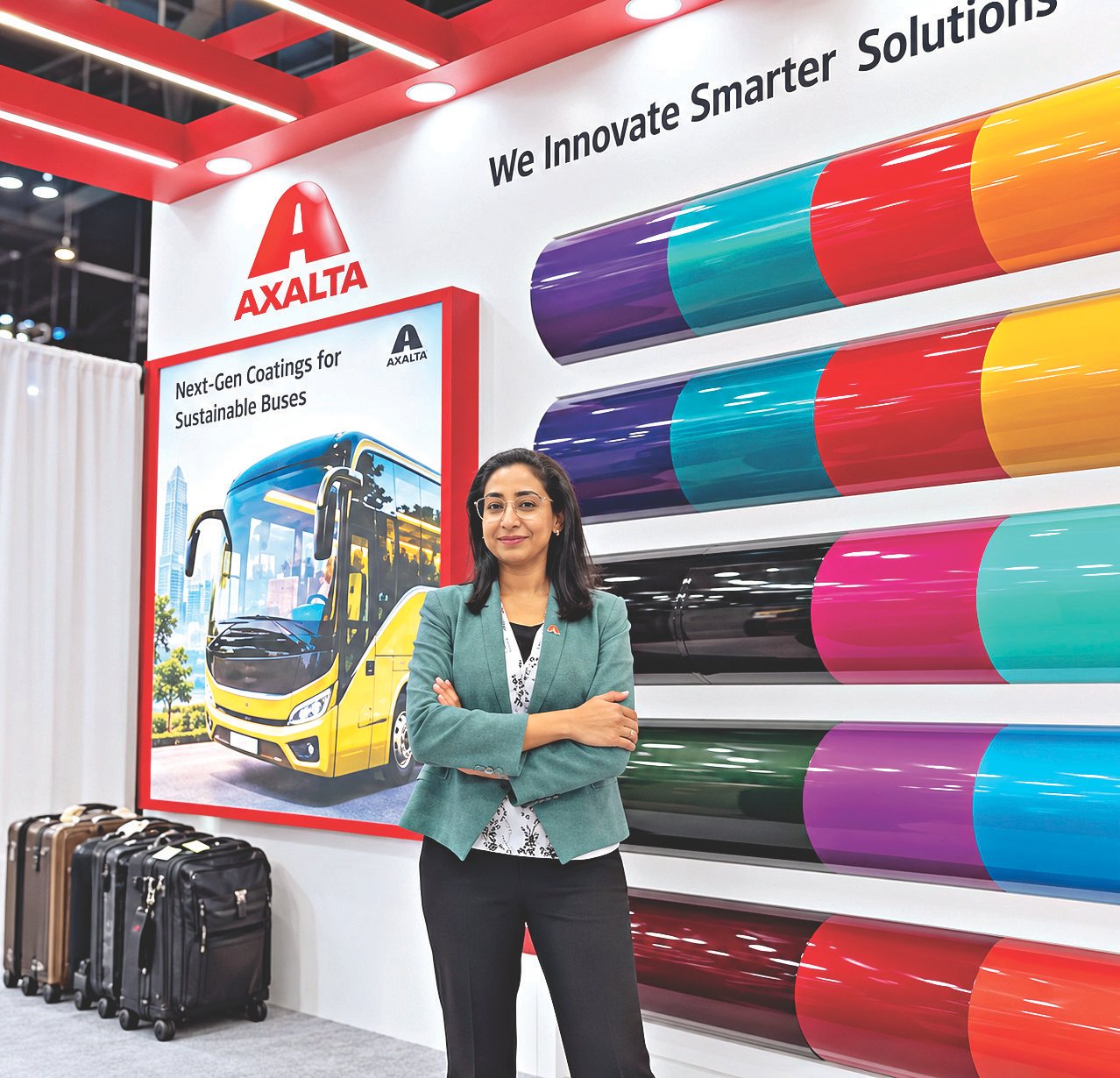
Dr Prameela Susarla, Vice President & Managing Director, Axalta India
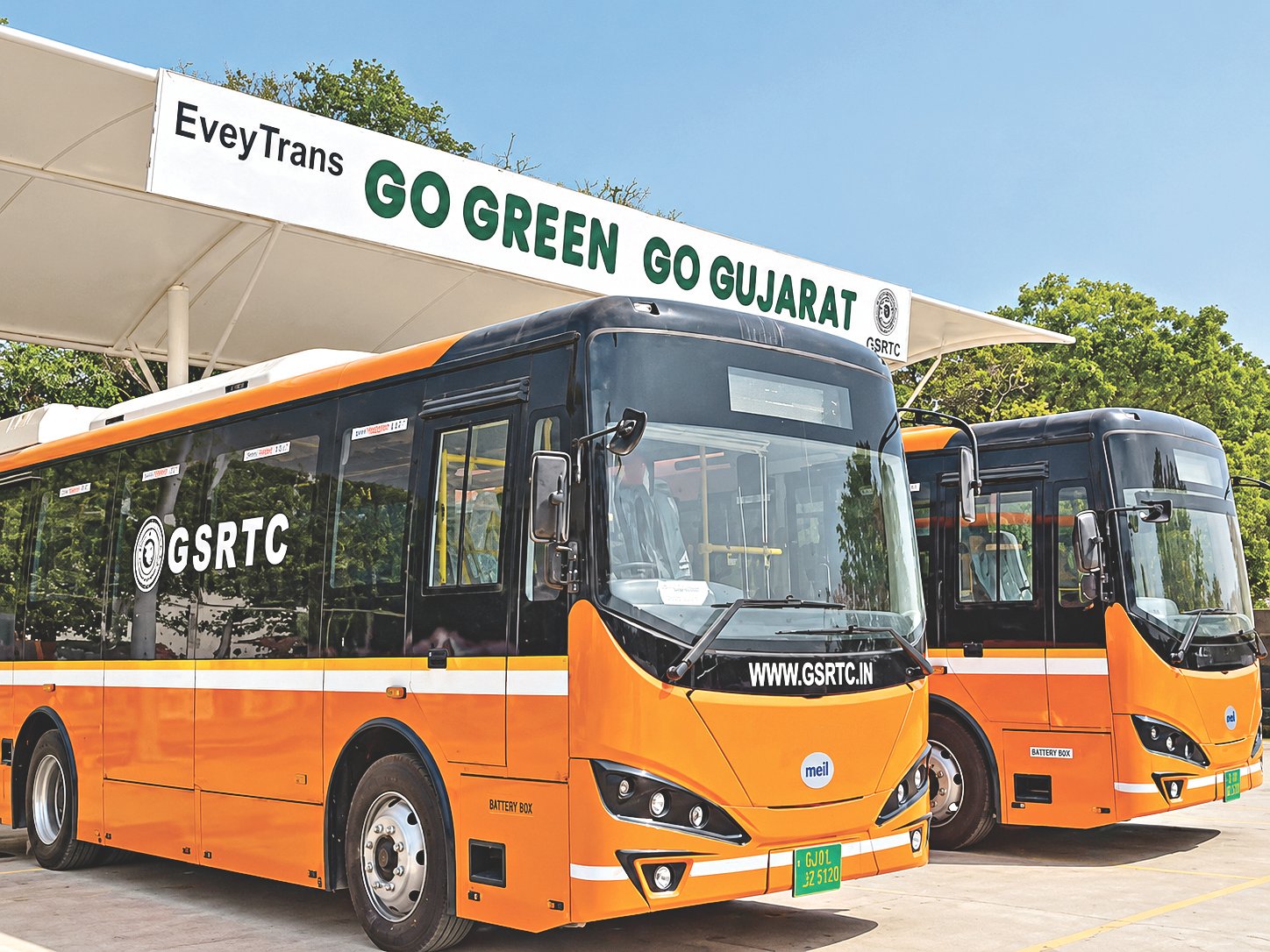
She added that Axalta is engaged with leading bus OEMs in India, providing coatings designed to combine finish and performance with productivity and sustainability benefits. The significance of the coating process is becoming more pronounced as bus manufacturers look to improve overall manufacturing efficiency. A coating system has to meet increasingly demanding requirements for aesthetics and durability, while also fitting into the productivity targets of a modern paint shop. The association is already visible on the road. During the interaction, Dr Susarla pointed to the bright orange GSRTC buses as an example of Axalta’s contribution to the public transport ecosystem. “Those beautiful bright orange buses, that’s Axalta paint,” she said, referring to the GSRTC buses.
Axalta’s range of low-cure coatings is designed to be compatible with Fibre-Reinforced Plastic (FRP) substrates. FRP is increasingly relevant in vehicle construction where lightweight components can contribute to overall weight reduction. The proposition goes beyond the weight of the component itself. Lower curing temperatures can potentially reduce energy consumption during the paint process, while shorter cycle times can improve paint-shop throughput. For bus manufacturers, this becomes particularly relevant as production volumes increase and electrification changes the economics of vehicle weight and energy use.
Axalta’s team pointed to the potential for significantly reducing curing temperatures. Conventional baking temperatures can be around 80-90°C, while newer low-cure technologies can bring this down substantially. The company is working towards systems that can operate at much lower temperatures, with the potential to reduce cycle times as well. “If we can drop down to 50-60 degrees, and if it is kind of ambient and if we can reduce the cycle time by 15-20 minutes, then the productivity will increase multiple times,” explained Susarla, referring to Axalta’s focus on low-cure technologies for the bus sector. The emphasis on productivity is important. In a high-volume manufacturing environment, even a relatively small reduction in the time taken for a coating cycle can have a cumulative impact on throughput, energy consumption and paint-shop utilisation. Axalta says its low-cure technologies are intended to deliver these benefits without compromising finish quality or productivity, while also enabling compatibility with lightweight FRP substrates.
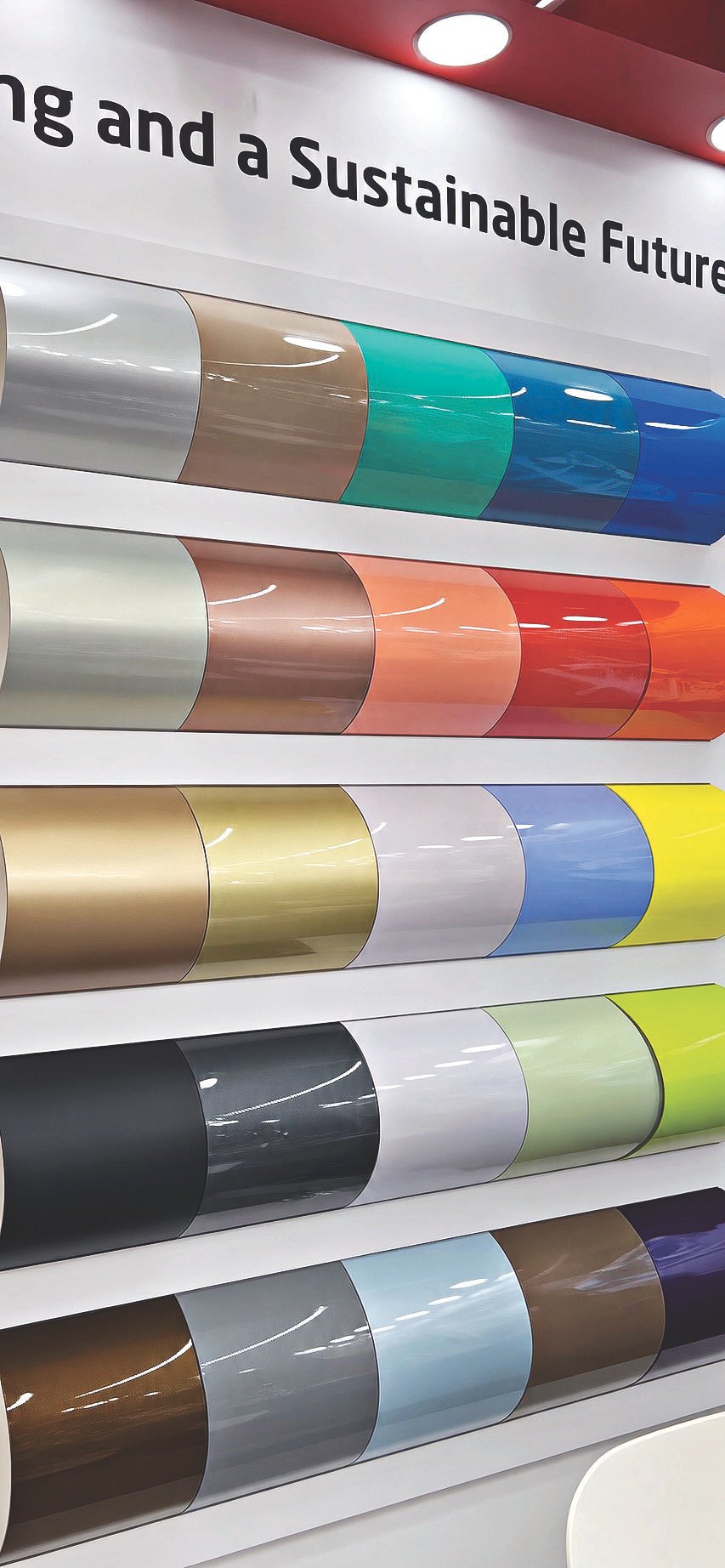
Axalta’s coating solutions combine colour, finish and durability
Higher expectations for durability are also driving the evolution of the bus coating proposition. Dr Susarla noted that Indian customers and OEMs are increasingly demanding higher levels of finish quality, while durability expectations have also increased. “There is a trend towards premiumisation in India happening as well, and you see more and more consumers demand and expect high finish quality,” she said. That premiumisation is not confined to aesthetics. Axalta says it is increasingly developing its coating systems around the complete asset lifecycle, including corrosion resistance, durability, and paint-shop productivity. “For every one of our offerings, we are partnering directly with the OEMs in developing these specifications for the products and then in developing our products to meet those specifications without sacrificing aesthetics, durability and cost,” Dr Susarla said.
The company works with OEMs on coating specifications and testing, including assessments of salt resistance, solvent resistance and petrol resistance. The objective is to develop systems capable of meeting increasingly demanding OEM requirements while balancing performance with cost. That relationship becomes particularly relevant as manufacturers offer longer warranties and seek greater confidence in the durability of factory-applied coatings. “We are the backbone of that confidence that the OEMs have,” Dr Susarla said, explaining Axalta’s role in working with manufacturers to establish coating specifications and validate performance. For the OEM, the coating therefore becomes part of the broader Total Cost of Ownership (TCO) equation rather than simply a cosmetic layer applied at the end of vehicle production.
Sustainability is another area where the Indian bus industry is gradually moving towards the technologies already gaining traction in other markets. Axalta’s waterborne coatings can help reduce Volatile Organic Compound (VOC) emissions. The company already has waterborne offerings for the commercial vehicle ecosystem and says it is prepared to support Indian OEMs as the market moves further in that direction. Dr Susarla, however, pointed to a difference between India and some overseas markets. “Europe and China have shifted more towards waterborne. India hasn’t quite gotten there yet,” she said.
The pace of adoption can be influenced by regulation, but also by individual companies’ sustainability targets. Axalta sees itself as being prepared for that transition rather than waiting for a regulatory mandate. For the bus industry, the shift towards lower-emission coating technologies adds another dimension to the sustainability credentials of public transport. While the focus of electrification is naturally on the powertrain, reducing emissions and energy consumption across the manufacturing process offers another opportunity to improve the overall environmental footprint.
Electrification presents another coating challenge and opportunity. Axalta is developing and promoting heat-reflective coatings that can help reduce thermal load on electric buses. The technology is particularly relevant in markets such as India, where ambient temperatures can be high and thermal management can directly influence the operating environment of an electric vehicle. Reducing the amount of heat absorbed by the vehicle can potentially ease thermal loads and support the energy efficiency of an e-bus. Axalta confirmed that heat-reflective technology is among the products being piloted in India.
The company is also looking at the wider electrification ecosystem. Its e-bus proposition extends beyond body coatings to include motor insulation technologies such as wire enamels, impregnating resins and electrical steel coatings, as well as battery assembly materials. This positions Axalta to participate in multiple layers of the electric vehicle value chain rather than limiting its role to the exterior finish. Dr Susarla sees India’s bus electrification journey as particularly significant. “The Indian e-mobility push in buses is not something that you see very easily in the West,” she said, pointing to the strong penetration of electrification in India’s public transportation sector. For Axalta, this makes India an important market not only for deploying global technologies but also for influencing the company’s wider technology roadmap.
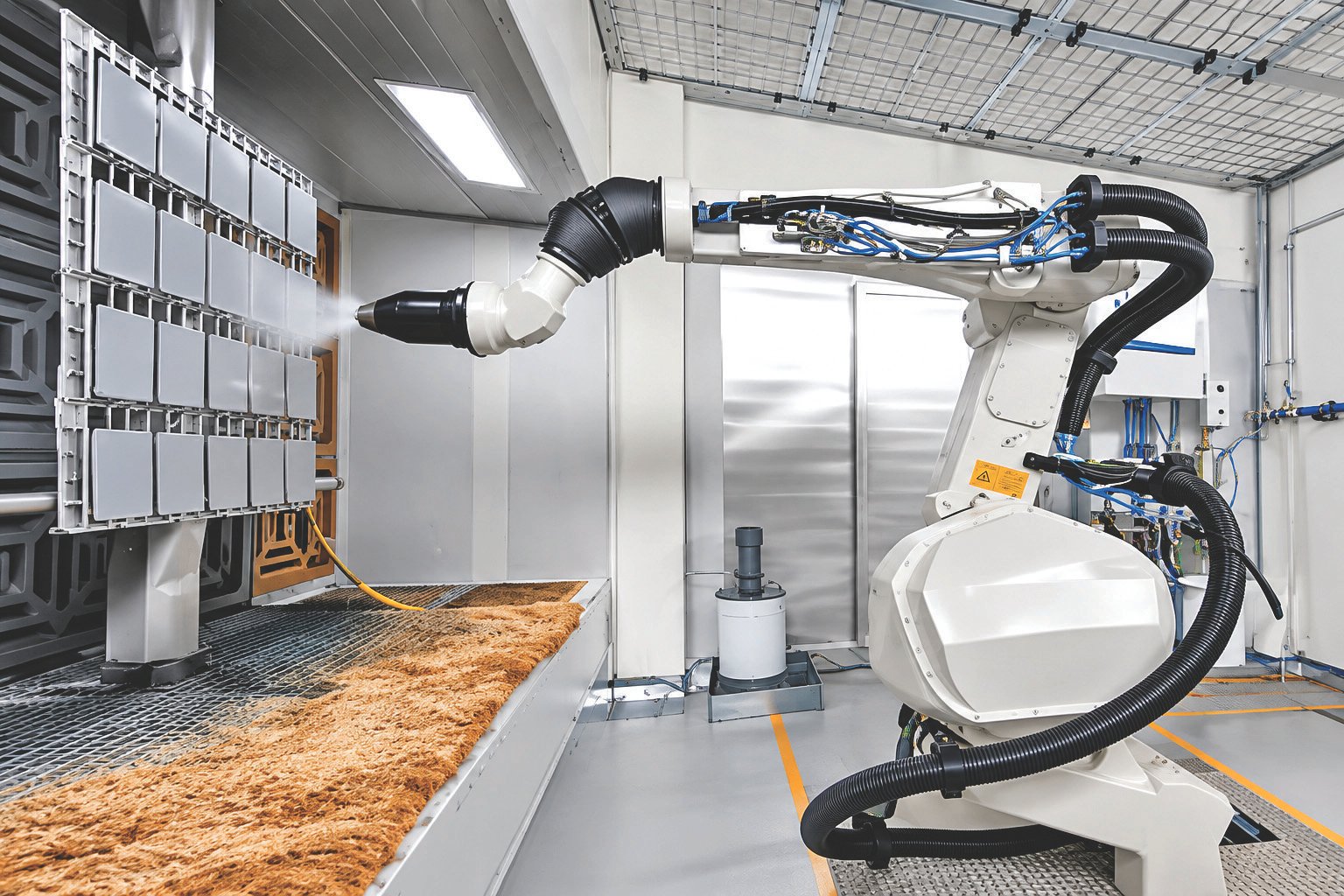
From formulation to application, coating technology is becoming an integral part of the evolving commercial vehicle paint shop
India’s importance to Axalta extends beyond its domestic growth opportunity. Dr Susarla said the company sees a two-way exchange between its Indian operations and its global organisation. The Indian market has specific requirements arising from its climate, operating conditions, customer expectations and vehicle mix. These requirements can feed into Axalta’s global R&D activities, while technologies developed globally can be adapted for India. “We will bring our needs to the global headquarters, and we will be bringing technologies that are relevant, that are important for India from our global team,” she said. That two-way flow could become increasingly important as India develops solutions for its own mobility transition.
The company is also pursuing a high degree of localisation. According to Dr Susarla, approximately 99 per cent of what Axalta supplies into the mobility industry is made in India, although certain raw materials may continue to be sourced internationally where that makes sense from a cost or sustainability perspective. Localisation, she said, remains a critical part of the company’s strategy as it expands its presence in India.
Supporting a changing fleet
The changing lifecycle of commercial vehicles is another factor influencing the coatings business. Vehicle replacement and scrappage policies could accelerate the introduction of newer buses, while extending the life of existing assets continues to require effective refinishing solutions. Axalta is deliberately neutral on which model India ultimately adopts. “As a company that provides coatings, I’ll say that we don’t necessarily take a position on the replacement piece,” said Dr Susarla. “We support where there are factory-painted, factory-applied coatings; we support that. Where there is repainting, there is refinishing, we support that,” she mentioned. For the broader commercial vehicle ecosystem, a faster replacement cycle could therefore create opportunities at both ends, new vehicle production and the aftermarket.