

By integrating established engineering principles with practical technology, client-focused services, and tailored innovation, VE Commercial Vehicles is effectively readying the brand for the forthcoming expansion in India’s commercial vehicle industry, writes Ashish Bhatia.
While the industry increasingly discusses software-defined vehicles, connectivity, automation and alternate fuels, the leadership at VE Commercial Vehicles is of the firm belief that technology is only valuable when it strengthens the fundamentals that customers value the most—fuel efficiency, uptime, productivity and lifecycle profitability. That philosophy has become increasingly visible over the last three years, during which VECV has not only outpaced industry growth but has also reinforced its presence across light, medium and heavy-duty trucks, premium buses and emerging mobility solutions.
The momentum was evident during FY26, a year that saw the company cross the milestone of one lakh commercial vehicles while continuing to expand its service footprint, introduce customer-focused technologies and deepen its manufacturing investments. S.S. Gill, Chief Commercial Officer, VE Commercial Vehicles Ltd., (VECV), outlined how the company intends to build on this momentum without losing sight of the fundamentals that have defined the Eicher brand.
For Gill, the recent performance is not an isolated achievement but the outcome of a consistent strategy executed over several years. He noted that while the overall Indian commercial vehicle industry has grown by roughly 12 per cent over the last three years, VECV has expanded by close to 30 per cent during the same period, reflecting strong customer confidence in its products, services and overall value proposition. The milestone of one lakh units, therefore, signals growing acceptance across multiple commercial vehicle segments.
Building On Segment Leadership
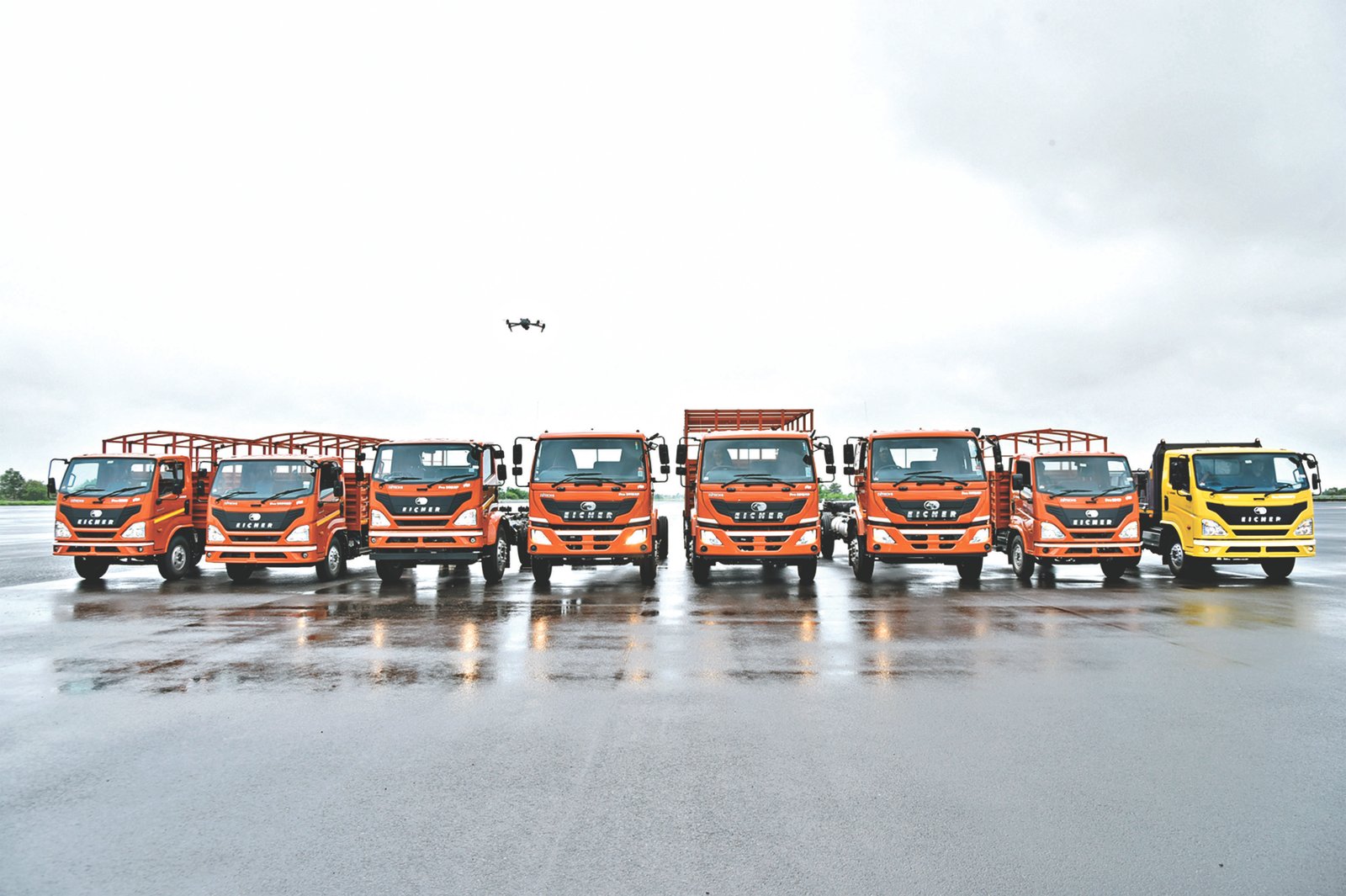
The company’s strongest foundation remains the light- and medium-duty truck segment, where Eicher has steadily consolidated its leadership. Gill highlighted that the category has reached historic highs, with industry volumes touching nearly 132,000 units, while Eicher commands around 35 per cent market share. According to him, customers increasingly value vehicles that improve logistics efficiency while delivering dependable operating economics.
Growth has also continued on the heavy-duty front. Rather than relying on isolated product successes, Gill explained that Eicher has expanded “segment by segment, geography by geography,” steadily strengthening its presence over five consecutive years. In entry heavy-duty trucks, the company has built a market share approaching 28 per cent, while its premium Pro 8000 mining tippers, powered by the 350 hp offering, enjoy market leadership with nearly 40 per cent share.
The bus business has mirrored this upward trajectory. Industry demand has remained buoyant over the past three years, and VECV has capitalised across school buses, staff transportation, intercity coaches and premium Volvo offerings. Volvo coaches, Gill observed, continue to establish new benchmarks by combining safety, comfort and convenience, helping elevate bus travel into a preferred mobility option rather than merely an economical alternative. He emphasised that true modal shift towards buses requires safety to become an integral part of the ecosystem, a philosophy that has shaped Volvo’s success globally and in India.
While digitalisation dominates industry conversations, Gill repeatedly returned to a simple principle. Technology must enhance business fundamentals rather than exist as a feature checklist. “We promise three important things,” he explained while describing the company’s philosophy. The first is best-in-class fuel efficiency—a critical consideration when diesel still accounts for nearly half of fleet operating costs. The second is superior uptime, an area where VECV has invested consistently since 2018 by combining Volvo Group processes with connected technologies, predictive maintenance and lifecycle support. The third is the continuous introduction of modern features that are genuinely relevant to Indian operating conditions rather than technology for its own sake.
This approach explains why Eicher became the first manufacturer in India to offer factory-fitted advanced telematics across its entire commercial vehicle range. Gill pointed out that the connected platform is continuously evolving, with fresh features introduced every few months based on feedback from customers, workshop technicians, field engineers, parts suppliers and dealers. Rather than treating connectivity as a standalone product, the company integrates insights gathered from its ecosystem to improve vehicle performance, diagnostics and customer productivity.
Equally important has been the transformation of the service network. Gill believes one of the biggest organisational shifts over recent years has been moving the focus from selling vehicles to supporting them throughout their lifecycle. Since 2020, VECV has expanded its service network relentlessly, opening approximately two new touchpoints every week. The objective is straightforward: to ensure customers have confidence that parts, repairs and technical assistance are always within reach. That confidence, he argued, directly influences purchase decisions and long-term brand loyalty.
Bus Business Enters A New Growth Phase
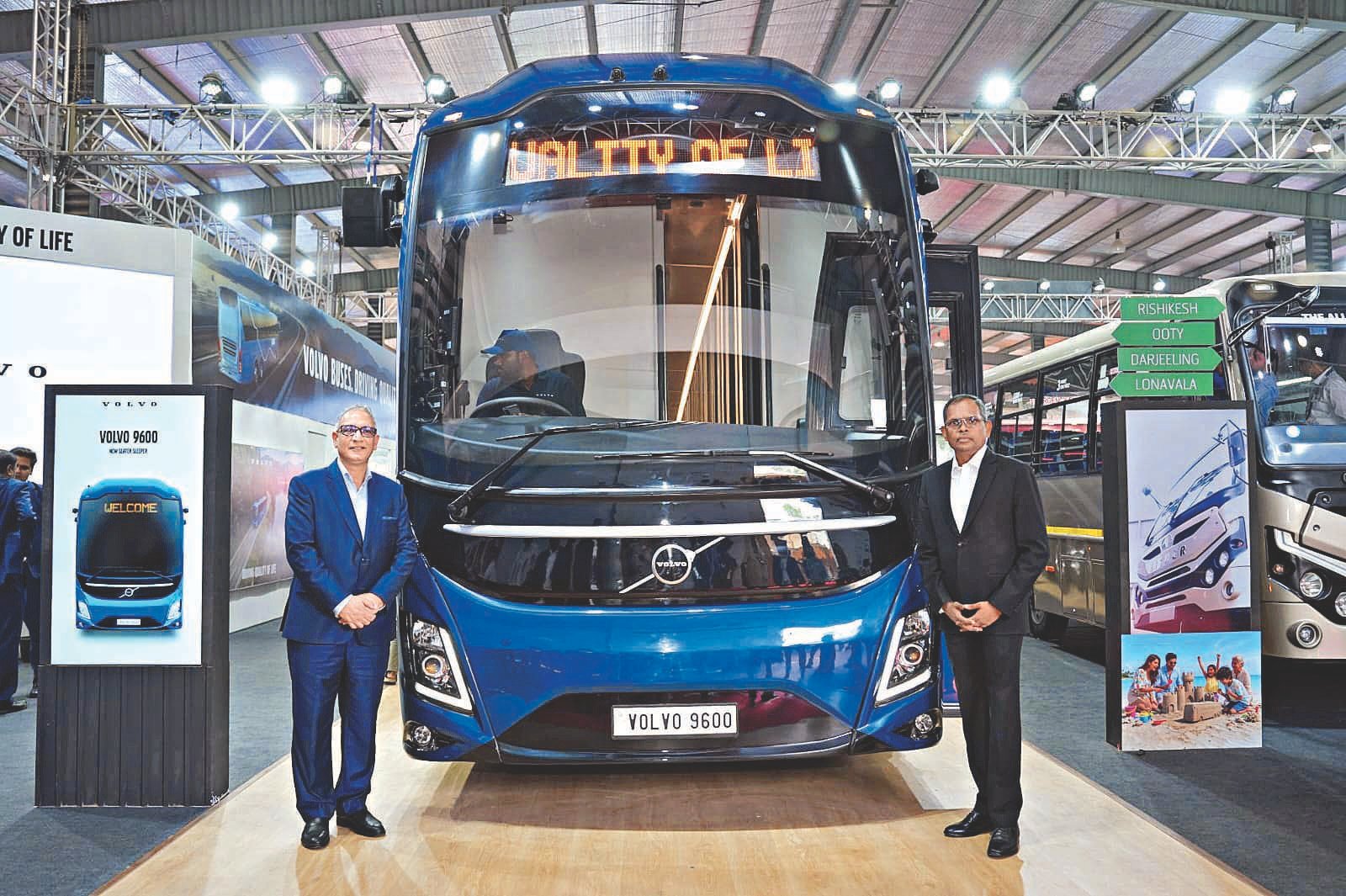
If Gill’s focus remained on technology-enabled fundamentals, Suresh Chettiar, Executive Vice President – Bus Division, VECV, highlighted changing customer aspirations in the bus industry. He believes the success of the Volvo 9600 range illustrates a broader transformation underway in Indian passenger transport. The premium coach has become an industry benchmark not only because of rising volumes but because passengers and operators now expect significantly higher standards of comfort, refinement and safety. According to Chettiar, those expectations are finally aligning with what manufacturers can deliver, creating sustained momentum for premium intercity mobility. Volvo’s order book, he noted, remains robust, providing confidence for future growth.
Beyond premium coaches, VECV continues to maintain a strong presence across light and medium-duty buses. Chettiar attributed this performance to the company’s fully built buses manufactured at its Indore facility, products that continue to gain acceptance across multiple applications. The strategy, however, extends beyond defending existing segments. “The good thing,” Chettiar explained, “is that we are a full-range player.” That comprehensive portfolio allows the company to participate across school buses, staff transportation, intercity coaches, premium Volvo buses and electric mobility while selectively strengthening areas that offer the greatest growth potential.
Among the immediate priorities is expanding the mainstream intercity coach portfolio, where new Eicher long-distance coaches will complement Volvo’s premium positioning. Simultaneously, the company continues to strengthen its electric bus portfolio, including electric tarmac coaches, while pioneering new categories such as 13.5m buses. Combined with rear-engine premium coaches and larger platforms, Chettiar believes the company is well-positioned to address virtually every segment of India’s evolving bus market.
Investing Ahead Of Demand
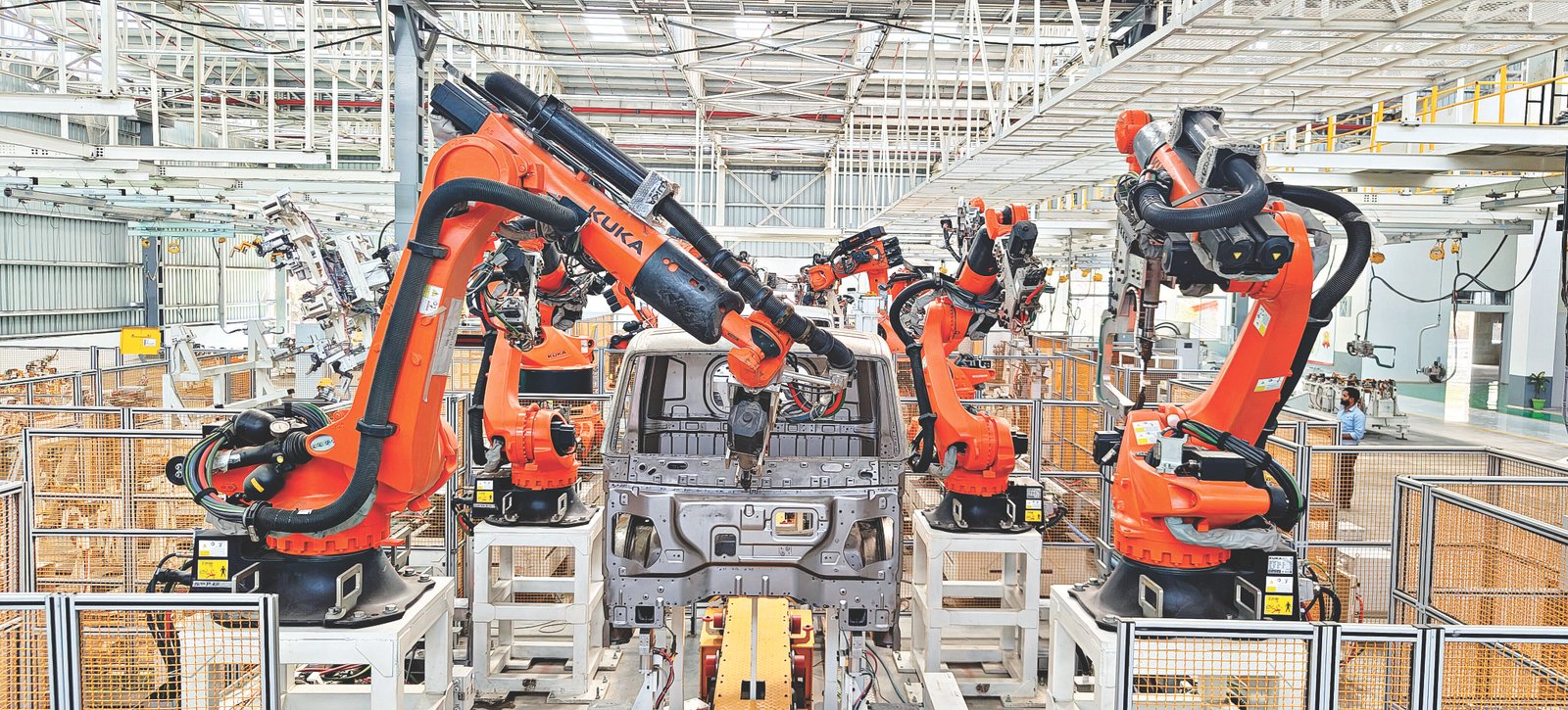
Manufacturing capacity remains another pillar of VECV’s long-term strategy. Responding to discussions around India’s need to substantially expand commercial vehicle manufacturing, Gill explained that the company has consistently invested ahead of demand rather than reacting after capacity constraints emerge. During the pandemic, when much of the industry adopted a cautious approach, VECV proceeded with investments, including its Bhopal facility.
Today, the company has significantly expanded chassis manufacturing capacity while complementing it with dedicated bus body manufacturing facilities for both Eicher and Volvo products. According to Gill, capacity planning typically stays two to three years ahead of projected market requirements because industrial investments require long lead times. This proactive philosophy ensures that VECV remains prepared for domestic demand while simultaneously serving global Volvo Group requirements.
The same forward-looking mindset has guided investments in components and powertrains. Gill pointed to the company’s earlier investments in Euro VI engine production, well before Indian regulations required the technology. More recently, fresh investments are being directed towards Automated Manual Transmission (AMT) production for exports within the Volvo Group, reinforcing India’s role as a manufacturing hub within the global organisation.
Relevant Modernisation
Innovation has long been associated with Eicher, but Gill is careful to distinguish meaningful innovation from novelty. “Modernisation for the sake of modernisation is not the objective,” he remarked. “The objective is relevant modernisation.” That philosophy is evident in products such as AMT for mining applications. Rather than introducing AMT because the technology is fashionable, VECV focuses on productivity gains, reduced driver fatigue and improved operational efficiency. Gill believes India will increasingly follow global markets where automated transmissions have become the preferred choice across multiple commercial vehicle categories.
The company also takes pride in a long history of industry firsts. Gill cited examples ranging from fully built trucks and 8×2 configurations to safe school buses incorporating more than 40 safety features. He also highlighted early introductions of advanced telematics, 24×7 roadside assistance and sophisticated parts distribution systems that proactively replenish dealer inventories using predictive algorithms. These initiatives, supported by the shipment of nearly 70,000 stock-keeping units every month, reflect a culture where operational excellence extends far beyond vehicle manufacturing.
Lifecycle Support
Underlying all these initiatives is an understanding that commercial vehicle customers judge manufacturers over years rather than months. Connected technologies, predictive maintenance, expanding service infrastructure and intelligent parts logistics ultimately converge around one objective—maximising vehicle uptime. Gill repeatedly emphasised that uptime is influenced not merely by engineering quality but also by driver behaviour, service practices, availability of trained technicians and efficient spare parts distribution. Technology therefore, acts as an enabler connecting each stage of the ownership lifecycle.
This lifecycle orientation also explains why customer feedback remains central to product development. Inputs collected from workshops, dealers, suppliers and fleet operators are systematically incorporated into future telematics updates and product improvements, allowing VECV to refine solutions continuously rather than relying solely on periodic model changes.
Beyond FY26
While geopolitical uncertainties, commodity inflation and crude oil price fluctuations remain immediate concerns for the industry, Gill remains optimistic about the medium and long-term outlook. India, he observed, continues to be fundamentally a consumption-driven economy. Infrastructure development, replacement demand, expanding e-commerce, growing intercity travel and broader economic activity collectively provide structural support for commercial vehicle demand. Even amid global uncertainties, bus demand has remained resilient, reinforcing confidence in the sector’s long-term trajectory. Price revisions may occasionally become necessary to offset input cost inflation, but Gill believes the broader roadmap remains intact. Chettiar echoed similar optimism from the bus perspective. Premium travel continues to gain acceptance, operators increasingly demand higher standards, and the company’s diversified portfolio allows it to respond across applications without relying on any single segment. New product introductions during FY27 are expected to further strengthen Eicher’s participation in mainstream intercity mobility while reinforcing its premium and electric offerings. Whether through fuel efficiency, connected diagnostics, predictive service, manufacturing investments or premium buses, every initiative is measured against its contribution to customer productivity and business performance. VECV continues to embrace digitalisation, automation and advanced engineering, but always through the lens of operational fundamentals.