

As supply chains move from efficiency-led models to resilience-led ecosystems, Daimler India Commercial Vehicles is using India’s manufacturing, engineering and supplier capabilities to support both domestic requirements and a growing global mandate. The DICV shift is strategic and driving the industry at large, writes Ashish Bhatia.
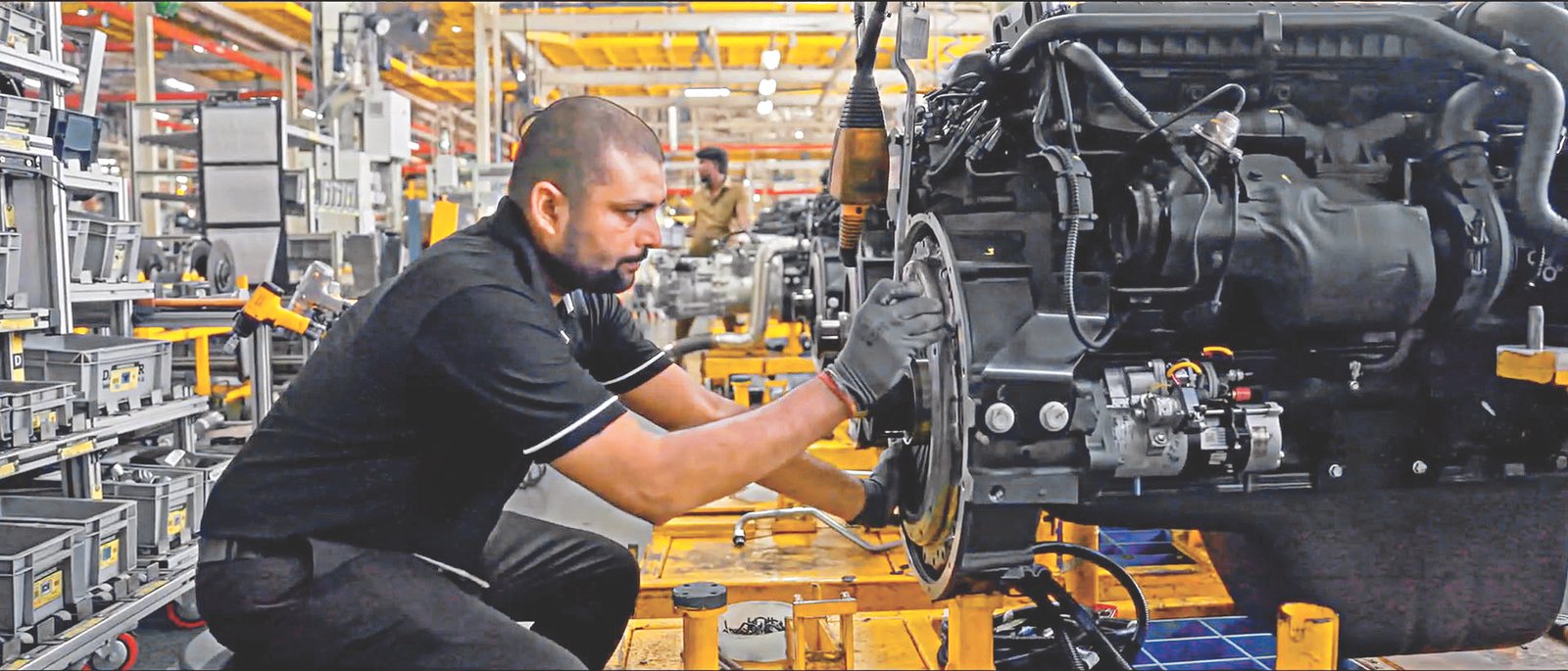
Every truck carries within it a chain of decisions spanning engineering, sourcing, supplier capability, logistics, quality, inventory and increasingly, digital visibility. When that chain is disrupted, the impact is not limited to a missing component. It can stop production, delay deliveries and, ultimately, affect the earning potential of the customer. That equation has become considerably more complicated over the past decade. For Daimler India Commercial Vehicles (DICV), this is translating into a broader role for India within the Daimler Truck ecosystem. The company’s journey from establishing a new operation and brand in India to supplying vehicles and components beyond the domestic market has created a platform on which procurement, engineering and supplier capabilities can increasingly work for a global requirement.
At the heart of this evolution is a deceptively simple idea: resilience is becoming as important as cost. The traditional procurement question was relatively easy to frame: where can the required component be sourced at the most competitive cost while meeting the necessary standards for quality and delivery? Today, that question has several more layers. A commercially attractive source can become strategically expensive if a geopolitical event disrupts the route, a trade relationship changes, or a supplier cannot maintain continuity. The objective, therefore, is no longer simply to identify the best sourcing country. It is to understand the complete risk around that decision. For Michael Moebius, President and Chief Procurement & Supply Chain Officer at DICV, this represents a fundamental shift in thinking. “Our job is to make the uncertainty as certain as possible,” he says. The key word, according to Moebius, is resilience. The procurement function now has to consider economic conditions, political tensions and the relationship between countries, including trade agreements, alongside the traditional parameters of cost, time and quality. “Basically resilience beats cost,” he says.
The distinction is important. Cost efficiency remains necessary, but a part that cannot be delivered when required can cause damage far greater than the saving achieved through a lower purchase price. That has turned procurement into an increasingly strategic function, one that has to anticipate rather than merely react. The system behind the product. Moebius’ experience across different continents has reinforced his belief that robust systems ultimately determine how organisations perform. “No matter in which part of the world I’ve worked, what really beats everything is a robust system,” he says. Processes, policies, clear rules and defined responsibilities create the structure. But the system still needs people who are engaged and passionate about the product. That combination has particular resonance in India, where Moebius sees a young workforce with an unusually strong appetite for change. His own experience with the founding team of DICV provides an illustration. He recalls having 10 people in a room with 11 different opinions. The diversity of opinion, however, was not the problem. Everyone was trying to bring the best solution to the table. For an industry undergoing simultaneous changes in propulsion, digitalisation and regulation, that mindset can become an important competitive advantage.
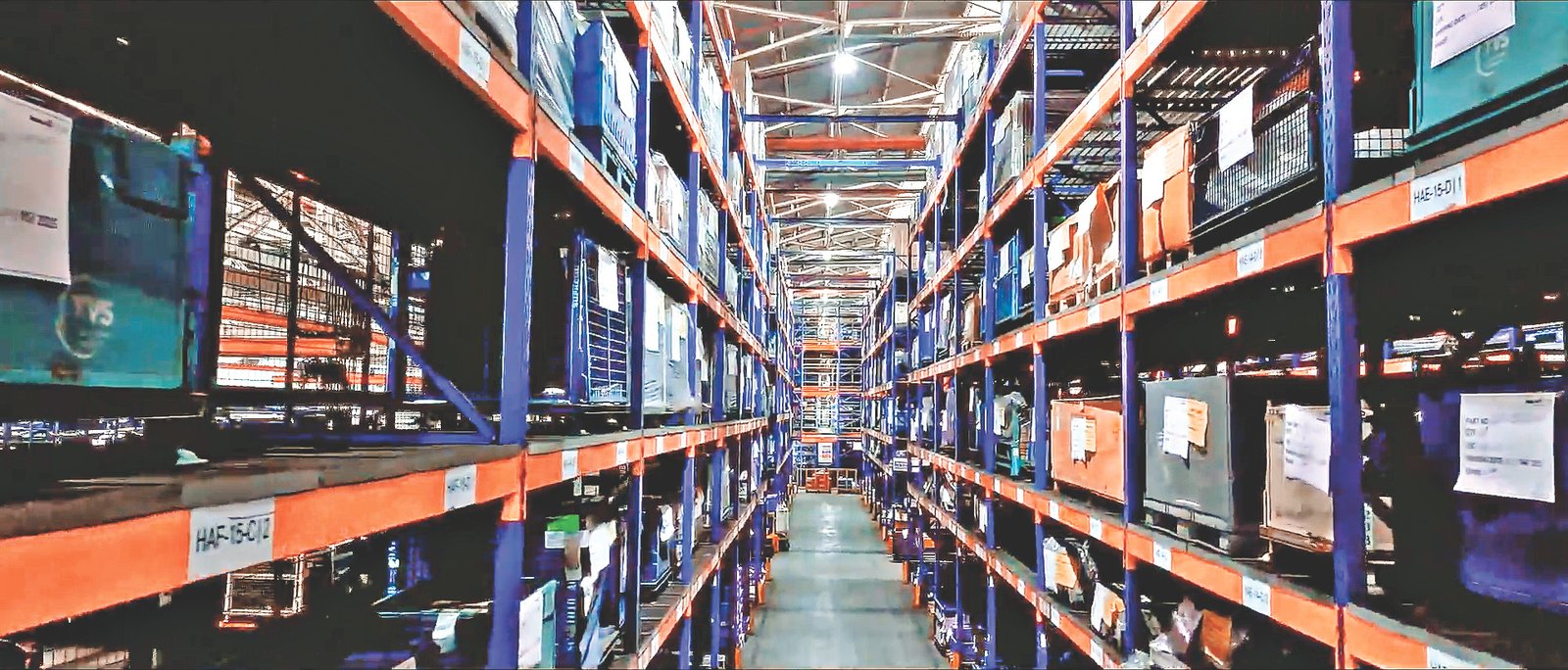
The global ambition was embedded into the DICV strategy from the outset. When the operation was established, the intention was never for products manufactured in India to remain confined to the domestic market. But a global role cannot simply be assigned to a new facility. It has to be earned. A new brand and a new manufacturing operation must demonstrate that it can deliver consistently to customers as well as to the wider organisation. That journey has progressed from the first export product, introduced within two years of DICV’s inception, to a much broader global contribution. Moebius points to a much larger component-sourcing role for India within the wider Daimler Truck organisation. He cites 300 million parts supplied from India to the world as a measure of that contribution.
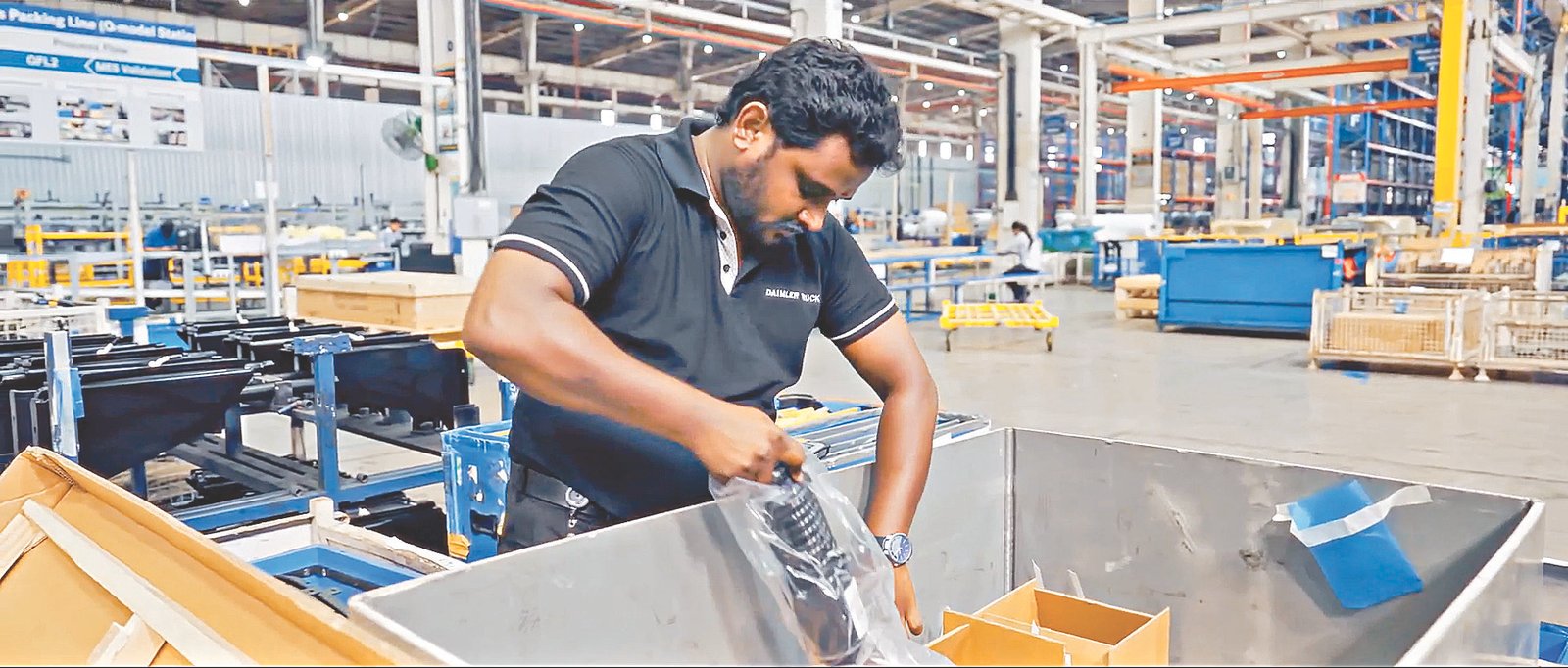
The next challenge is that the future of commercial vehicles is unlikely to be defined by a single powertrain. Daimler Truck is looking at multiple zero-emission and alternative technology pathways, including battery-electric vehicles, fuel cells and hydrogen internal-combustion engines. Different markets, however, will adopt those technologies at different speeds. That makes technology selection a market-intelligence exercise. Markets differ in their regulatory environments, infrastructure, economics and customer requirements. As Moebius explains, even emission norms do not evolve at the same pace everywhere. The question is therefore not simply which technology is best? It is which technology is right for which market, and when?
That has a direct consequence for procurement. The supply chain needs to understand future component requirements before the technology reaches mass adoption. Suppliers need to be identified, evaluated and, where appropriate, developed early enough to support the eventual programme. This is why DICV’s sourcing strategy increasingly extends beyond its established supplier base. Moebius points to start-ups as an important part of the search, particularly where emerging technologies could become commercially relevant five or 10 years into the future. The logic is straightforward: if the future is going to arrive quickly, preparing for it cannot begin when it arrives.
Changing Supplier Relationships
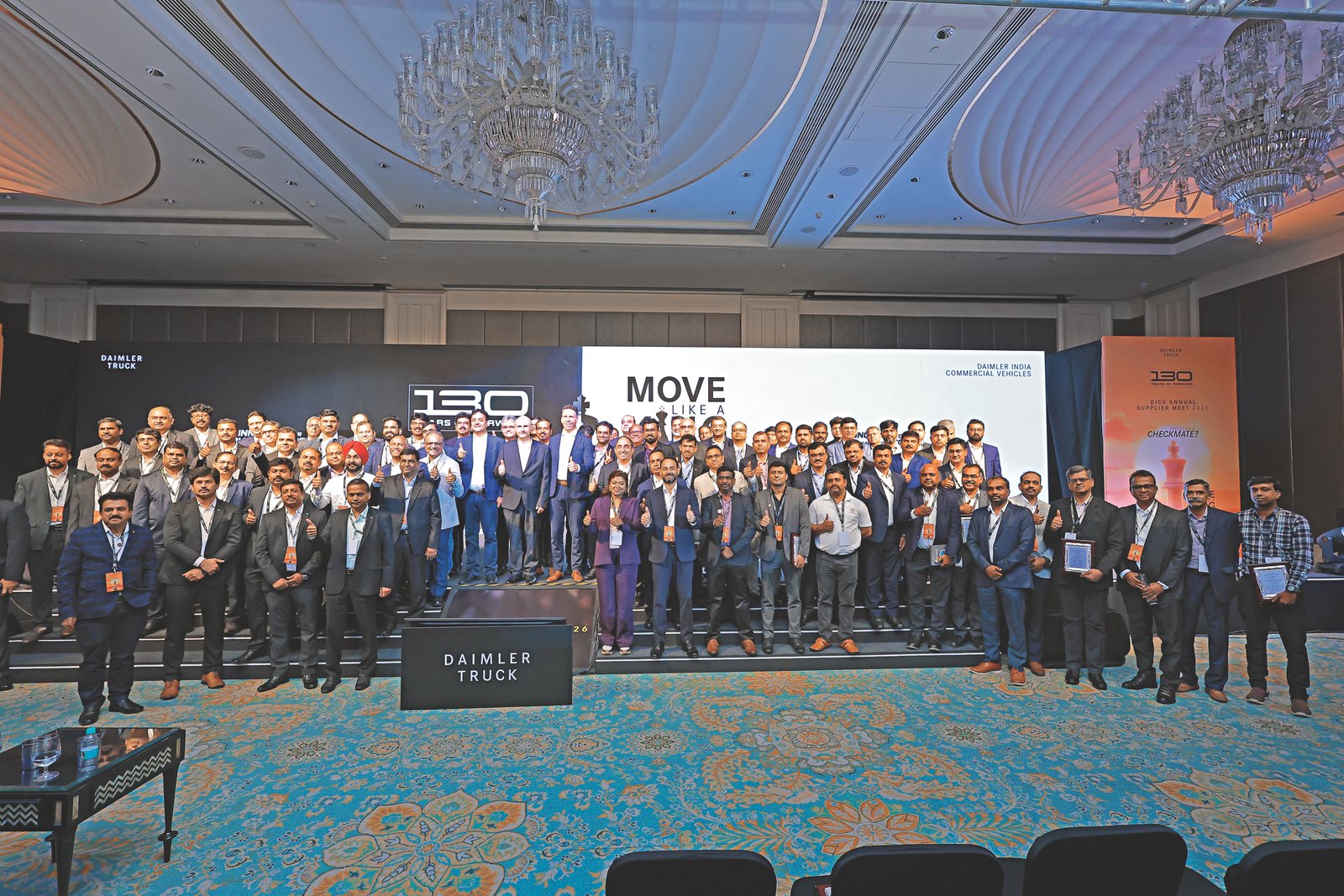
This forward-looking approach also changes the relationship between an OEM and its suppliers. DICV has a sizeable supplier ecosystem, but supplier selection is not simply a matter of adding another company to a database. Potential partners are evaluated against technological and programme requirements; at the same time, the company continues to look for new capabilities through supplier registrations, industry events and interactions with emerging businesses like the one it concluded recently in Chennai.
The relationship also extends beyond the purchase order. Moebius’ view of quality illustrates why. “Quality is the argument which sells,” he says. But quality, in his formulation, is not produced by one department. It begins with R&D, where the product is designed; moves through engineering and manufacturing; depends on suppliers to produce the required components; and reaches procurement and the supply chain, which must deliver those parts in the required quantity, on time, at competitive cost, and at the required quality. The sales organisation can only deliver the right product to the customer when the entire chain works together.
Digital Visibility
As the supplier network becomes more complex, visibility becomes critical. Traditional supply chains could operate through relatively distinct interfaces: a part was awarded, produced, shipped and received. Today, those interfaces are becoming increasingly interconnected. Moebius describes a move towards process automation, automated reporting, traceability and real-time data transmission between DICV and its suppliers. The purpose is not digitalisation for its own sake. It is to make the physical supply chain visible enough to support faster decisions.
Knowing where a component is before it reaches the plant can make a significant difference when inventory is being reduced, and just-in-time or just-in-sequence deliveries are required.
The same thinking extends into product development. As technology changes faster, design and testing cycles have to shorten. Moebius compares today’s enthusiasm and anxiety around artificial intelligence with the earlier arrival of computers in engineering. Computerisation did not eliminate engineering; it helped reduce development cycles. The next generation of tools, he believes, should do the same accelerate development and testing without compromising safety, quality or reliability.
Absorbing volatility
The supply chain’s ability to absorb shocks becomes particularly important when commodity prices rise. Raw-material inflation affects everyone in the chain, but a manufacturer cannot simply pass every increase directly to the end customer. “If raw material prices are going up by 10 per cent, we cannot increase the price for the truck by 10 per cent,” Moebius says. That puts greater emphasis on collaboration with suppliers, planning and efficiency. Material-price trends can be monitored, sourcing decisions can be made jointly, and longer-term arrangements can provide some degree of protection. But the larger answer lies in finding efficiencies throughout the value chain. The objective is to absorb as much volatility as possible without compromising the customer proposition. That requires the relationship between OEM and supplier to become less transactional. As Moebius puts it, the old “black and white” interfaces are no longer sufficient. The relationship is increasingly interconnected. Supplier programmes therefore need to address not only cost but efficiency, quality, reliability and delivery performance.
The customer is the final measure. “A truck is a tool, and a tool as a truck needs to earn money,” Moebius says. The implication is powerful. A commercial vehicle manufacturer cannot consider the job complete when the truck leaves the factory. Parts availability, service capability, supply-chain responsiveness and the ability to minimise downtime all become part of the customer proposition. The same thinking explains the importance of a global parts ecosystem and an expanding network of customer touchpoints. The objective is to ensure that when an operating asset needs attention, the customer can get it back to work. It also explains why procurement cannot be treated as a purely back-end function. The part that arrives late can affect production. The part that fails can affect quality. The part that is unavailable can affect uptime. The unnecessarily expensive part can affect the customer’s total cost of ownership. DICV’s evolution therefore reflects a larger shift in how India can participate in the global commercial vehicle industry.
Resilience Beats Cost

Michael Moebius, President & Chief Procurement & Supply Chain Officer, Daimler India Commercial Vehicles, in conversation with Ashish Bhatia.
Q. You bring a very rich experience across continents and roles, with a strong focus on quality assurance, procurement and supply chain. What are the key learnings you bring to the table?
Michael Moebius: I bring broad experience across continents. What is very astonishing is that, no matter in which part of the world I’ve worked, what really beats everything is a robust system. You always have local heroes who want to dominate, but at the end, what makes it is the system behind. That means robust processes, policies, clear rules and responsibilities, combined with performing people who are engaged and passionate about the product.We are celebrating 130 years of forward, and that is also an obligation for us to drive this even more forward into the future. I am now 35 years with the company, and I identify myself with the company. I grew in this company, and that passion for the brand and the company is what I spread across the organisations where I work.
Q. We are looking at sentiment, energy transition, geopolitics and the impact of politics on the automotive industry. How do you look at the current environment, where volatility means that nothing is certain?
Michael Moebius: Our job is to make the uncertainty as certain as possible. The key word is actually resilience. The times have changed over the last 15 to 20 years. In the past, we were looking at getting parts cost down, getting cost efficient in time and quality. But now we have to look beyond that. Basically, resilience beats cost. With all these geopolitical tensions and uncertainties in politics and the economy, resilience is even more important than cost. You can have a part quite good at cost, but if you don’t get the part because of tensions across the globe, then the damage to the company is even higher.That’s why we started shifting our mindset from looking at the best sourcing country to taking into account all the facets around it — the economy, political tension and interaction between different countries, including free-trade agreements. The perspective became multifold. We are looking from different angles to ensure that resilience is kept.
Q. You also say that strategies don’t fail; it is the people and lack of commitment that can cause them to fail. What does commitment mean to you?
Michael Moebius: Commitment is multifold. It’s a commitment to your family, to your job and to your company. But the most important one is the customer. Everything we do in our company is to make the customer successful every day. That is the mindset and spirit we follow in our company. At the end, the customer is who pays our salary, who makes our brand image and who makes our company successful. I share exactly the same with our supplier partners. There is only one goal, which is the end customer who enjoys our product every day and is successful with it. Our products should be the most desirable products that the customer wants to have.
Q. You have brought experiences from markets such as Vietnam and Brazil. What have those markets taught you, and how do you look at India?
Michael Moebius: In India, there is one thing which astonishes me every day. We have a very young, edgy workforce, and the passion to change something is unbelievable. This is definitely more than I have seen in other regions.I have visited many start-ups and seen how they are burning to get their idea from an initial thought really to a finished product. That same spirit I saw when I first came to India.I was part of the founding team of DICV, and it was quite challenging because we had people from different parts of the industry. I had 10 people in the room and we had 11 different opinions. But they were not contradicting opinions. Everybody was burning to bring the best to the table. That made it very easy for us to sort out what was best for the company and what fitted into the strategy. This is why we could build up a very good reputation and brand in India in a very short period of time. It’s the passion to succeed, and that’s definitely different from other regions.
Q. DICV has crossed major milestones and has built a significant export contribution from India. Was this always part of the roadmap?
Michael Moebius: When DICV entered in 2012, it was already clear and part of our strategy that the products we produce in Oragadam would not stay only in India. It was part of the strategic roadmap.But when you build a new brand in a new market, you need to earn the trust. You need to gain the trust of customers and also within our own organisation. Are we able to deliver what we have promised?That happened quite fast. Even after two years after the inception, we already had the first product for the export markets. Today, we are delivering products out of Oragadam to markets around the globe. That would not have been possible if we had not proven that the brand, facility and team are capable of delivering. I always call it walk the talk. We walk the talk.But that’s the journey. This is not just a one-time event. We need to prove and earn the trust every day within our organisation and with the customer.
Q. Procurement and supply chain are the foundation behind the product. What does that role look like from the back end?
Michael Moebius: Before, when you asked me about my experience across the globe, I told you that we always have local heroes. I’m not a local hero. I’m a spark to the team, with ideas and direction.The heroes are actually the entire team. This is not limited to procurement and supply chain. This is for the entire DICV organisation. We all are local heroes because we celebrate together. But if we fail, we also fail together. When we started DICV, I was in the role of building up quality. Building quality from scratch is a challenge. But the spark I gave to the team was that quality is the argument which sells.Quality is not produced only by the quality department. It is produced by everybody in the value chain. It starts with R&D, which designs the quality; manufacturing and engineering, where quality is produced; the supplier partner, which brings the quality parts; and procurement and supply chain, which has to bring the parts cost-competitive, in time, in quantity and in quality.If you combine all of this together, the sales force has the right quality product to sell to the customer. That is the sum which makes the customer experience.
Q. The industry has gone through GST, BS-IV to BS-VI, Covid and now geopolitical uncertainty. How do you navigate one disruption after another?
Michael Moebius: Covid, you cannot plan. Covid came. The same applies to a financial crisis — you could predict a little bit, but its impact was to a certain degree unpredictable.When you talk about emission norms or safety regulations, these are things policymakers decide, and you have an outlook. You can get prepared for them. This is exactly where our strength is — looking forward.We don’t want to participate just in the industry. We want to lead the industry. We want to be the best truck manufacturer in the world. That’s why you need to look always upfront.For uncertainty, you need resilience. You can set up your processes, but you will learn every day when a new uncertainty comes. You also need the courage to make a bold step ahead into uncertainty.Uncertainty is actually not something which should scare you. It’s an opportunity to learn.
Q. How do you look at India’s evolution within Daimler Truck’s global portfolio?
Michael Moebius: I would call it market intelligence. Markets around the globe behave differently because they develop at different pace.If you look, for example, at Africa, the emission norms are not at the same level. Markets are not developing at the same speed according to norms and regulations.But we are a global player, so we have to look into all these different markets. Market intelligence is very important because that intelligence defines how you plan your product portfolio and when is the right time to enter which market with which technology.We need to be on the global stage and look at all the different areas. That’s a challenge, but we know what we want.
Q. What is the technology mix you see emerging, and how does that translate into procurement and supply-chain strategy?
Michael Moebius: We are looking into zero-emission vehicles with technologies such as H2 ICE, battery-electric vehicles and fuel cells. That is the future.But to be ready for the future, you need to understand which parts you need and where the right sourcing opportunities are.India has always been attractive because of its cost advantage, and that hasn’t changed. We have been delivering out of India to the world for more than 10 years through our consolidation centre.Till date, we have supplied 300 million parts out of India to the world, not only into DICV but across Daimler Truck globally. These are 300 million arguments that India is a strategic hub of importance, not only for engineering capabilities but also for sourcing.For future technologies, we are already looking for the best sourcing country where we can get the parts right.Q. Finally, how do you see the role of suppliers evolving as technology and product cycles accelerate?Michael Moebius: We need to reduce the design lead time for new products. But that is also a consequence of new technologies.Everybody speaks now about AI, where there is uncertainty and even some fear. But let’s look back to the 1980s and 1990s, when computers were introduced. At that time, products were designed by many people with drawing boards, pencils and rubber. Then the computer came, and people said computers would take over our jobs.What did the computer do? We still have our jobs. The computer helped us to be faster and reduce the development cycle.
Q. The same cycle needs to continue because technology changes are extremely rapid. We need to reduce development and testing times, but without compromising quality, safety and reliability.What is the final measure of all these efforts?
Michael Moebius: The key is customer uptime. We have to coordinate all the functions within our organisation, and transparency is critical. I’m not speaking about Excel sheets. I’m speaking about process automation, automated reporting, traceability and real-time data transmission with our supplier partners.We need data in real time. We need to know where the truck bringing the part to the plant is. We need just-in-time and just-in-sequence delivery. Only this will work successfully if you have the data and work with it in real time. Our objective is to ensure that the customer has the uptime that he needs.