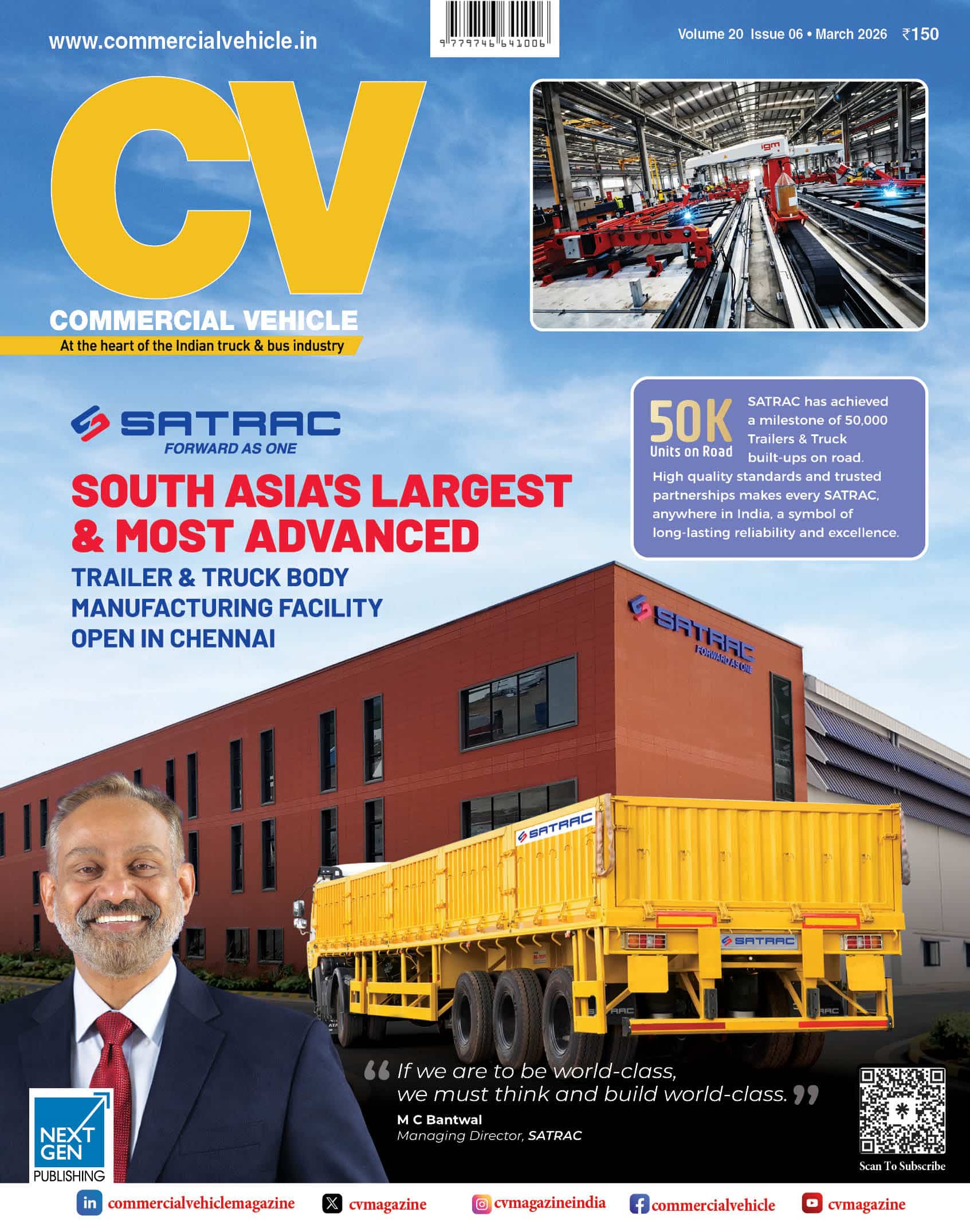


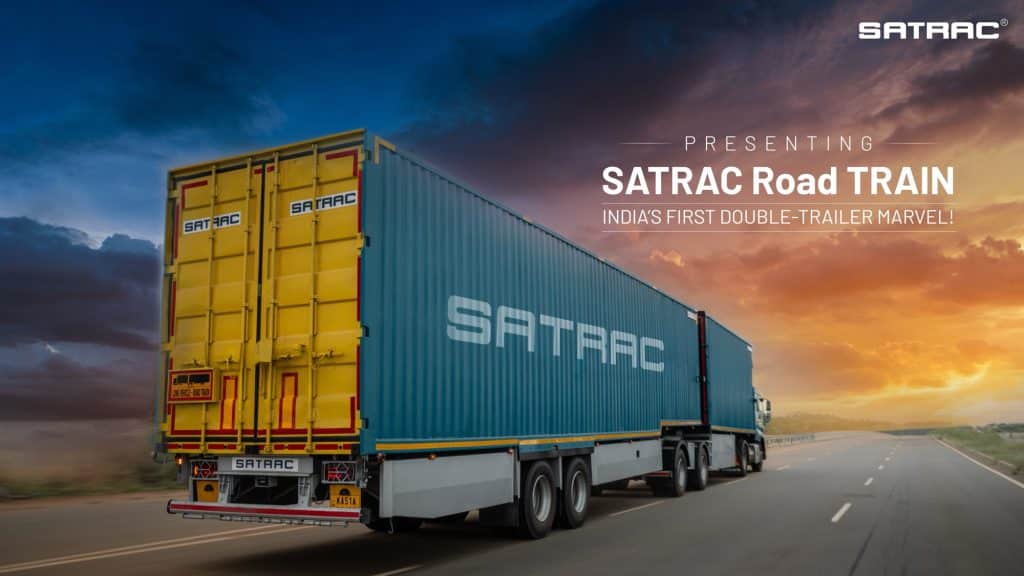
The Indian logistics and transportation sector is standing on the threshold of a transformative shift. With the government’s PM Gati Shakti Programme and the National Logistics Policy acting as catalysts, the industry is poised to achieve new levels of efficiency and productivity. The ambitious goal of reducing logistics costs from the current 14 percent of GDP to just 8 percent has set the tone for innovation-led progress. Among the most striking developments aligned with this vision is the launch of SATRAC’s Road Train Trailers an engineering leap that promises to reshape long-haul freight movement in India.
Aligning with National Priorities
The government’s focus on infrastructure development, multimodal connectivity, and efficiency optimisation has created the right ecosystem for innovative transport solutions. SATRAC, one of India’s leading trailer and truck body manufacturers, has stepped into this moment with a product that not only aligns with national policy objectives but also directly addresses the industry’s pressing challenges. The Road Train Trailer concept offers a way to carry more freight, reduce operational costs, and bring India’s logistics efficiency closer to global benchmarks.
What is a Road Train?
The concept of a Road Train is borrowed from the railways in spirit but designed for highways in form. Multiple trailers are physically linked together and hauled by a single prime mover, creating a “train” on wheels. This configuration significantly increases payload capacity, allowing operators to move almost double or even triple the cargo volume of a conventional trailer in a single trip. In the Indian context, where freight volumes are rising but road infrastructure is still evolving, such a solution presents enormous potential to bridge the efficiency gap.
Redefining Load Capacity and Efficiency
SATRAC’s Road Train Trailers are engineered to deliver unparalleled load capacity. By coupling two trailers, operators can transport a much higher volume of freight without increasing the number of trips. This directly translates into fewer journeys for the same cargo tonnage, resulting in substantial savings on fuel, manpower, and time. Over large operational cycles, these savings add up to significantly lower cost-per-tonne-kilometre figures a key metric in freight economics.
The reduction in trips also means less wear and tear on vehicles, reduced traffic congestion, and a lower carbon footprint. For fleet operators, these advantages go beyond cost reduction; they enhance operational reliability and improve the competitiveness of Indian businesses in the global supply chain.
Lowering the Cost of Logistics
India’s high logistics costs have long been cited as a hurdle to manufacturing competitiveness. The increased payload efficiency of Road Train Trailers directly addresses this challenge. By enabling operators to move larger consignments per trip, SATRAC’s innovation reduces fuel consumption per tonne, optimises driver deployment, and lowers maintenance requirements per tonne moved. This efficiency gain is exactly the kind of operational improvement envisioned under the National Logistics Policy.
Engineering for Safety and Control
Transporting heavier and longer vehicles on Indian roads requires precision engineering and advanced safety features. SATRAC has prioritised safety in the Road Train’s design, integrating multiple technologies that ensure stability, manoeuvrability, and driver confidence.
One of the standout elements is the CAN Router Technology, which facilitates seamless communication between the prime mover and all connected trailers. This ensures that vital performance and safety data is instantly shared across the convoy, enabling coordinated control.
The Road Train is also equipped with a 360-degree camera system, eliminating blind spots and providing drivers with comprehensive situational awareness. This is particularly important on India’s diverse and often unpredictable road networks, where visibility can be compromised by traffic density, weather conditions, and infrastructure constraints.
Enhanced Road Visibility
In addition to driver-assist features, SATRAC has incorporated beacon lamps and side marker lamps into the trailer design. These lighting systems provide high visibility to other road users, ensuring that the Road Train is easily identifiable in varying light and weather conditions. Enhanced visibility is not just a safety measure it also facilitates smoother interaction with traffic enforcement and highway management systems.
Precision Braking for Heavy Loads
The Road Train’s synchronised braking system represents another leap in safety engineering. Brakes across all trailers are electronically coordinated to ensure smooth, stable deceleration even when carrying full loads. This prevents the “push effect” that can occur when trailers are not in sync, thereby reducing the risk of accidents and enhancing driver control during emergency braking.
Improved Manoeuvrability with Steerable Axles
A common concern with multi-trailer configurations is manoeuvrability, especially on tighter roads or while navigating urban peripheries. SATRAC addresses this challenge through steerable axles, which reduce the turning radius and improve handling. This feature enables the Road Train to negotiate curves and junctions more efficiently, broadening its operational usability beyond straight highways.
Meeting the Demands of Modern Supply Chains
The modern supply chain demands speed, flexibility, and scale. SATRAC’s Road Train Trailers have been developed with these requirements in mind. They enable faster response to surges in demand, allow for bulk transportation of goods over long distances without intermediate stops, and reduce downtime caused by vehicle turnaround constraints. These capabilities are vital for industries such as automotive, FMCG, retail, agriculture, and e-commerce, where delivery schedules are critical.
An Industry First with Global Potential
By launching India’s first Road Train Trailers, SATRAC has positioned itself as an innovation leader in commercial vehicle engineering. The technology and design principles behind the product have relevance not just for the Indian market but also for other geographies facing similar freight challenges. With India becoming a manufacturing hub for global supply chains, solutions like the Road Train can help the country export efficiency alongside goods.
A Step Towards Sustainable Logistics
While the immediate benefits of the Road Train are economic, the long-term implications are also environmental. Fewer trips mean lower fuel consumption, reduced greenhouse gas emissions, and less stress on road infrastructure. In an era where sustainability is becoming a business imperative, such innovations align with both corporate and national environmental goals.
The Road Ahead
The introduction of SATRAC’s Road Train Trailers comes at a time when the Indian logistics industry is seeking breakthroughs that combine efficiency with safety. As infrastructure improves and regulations evolve to accommodate such vehicles, the Road Train concept could become a cornerstone of long-haul freight transport in the country.
By merging advanced engineering with a deep understanding of India’s logistics landscape, SATRAC has not only delivered a product but also set a benchmark for innovation. Whether this becomes the new standard will depend on how quickly operators and regulators embrace the model, but the potential for transformation is undeniable.