

During the Punjab floods, commercial vehicles transformed from transport medium to lifelines, delivering essentials, rescuing families, and providing shelter, writes Richa Tyagi.
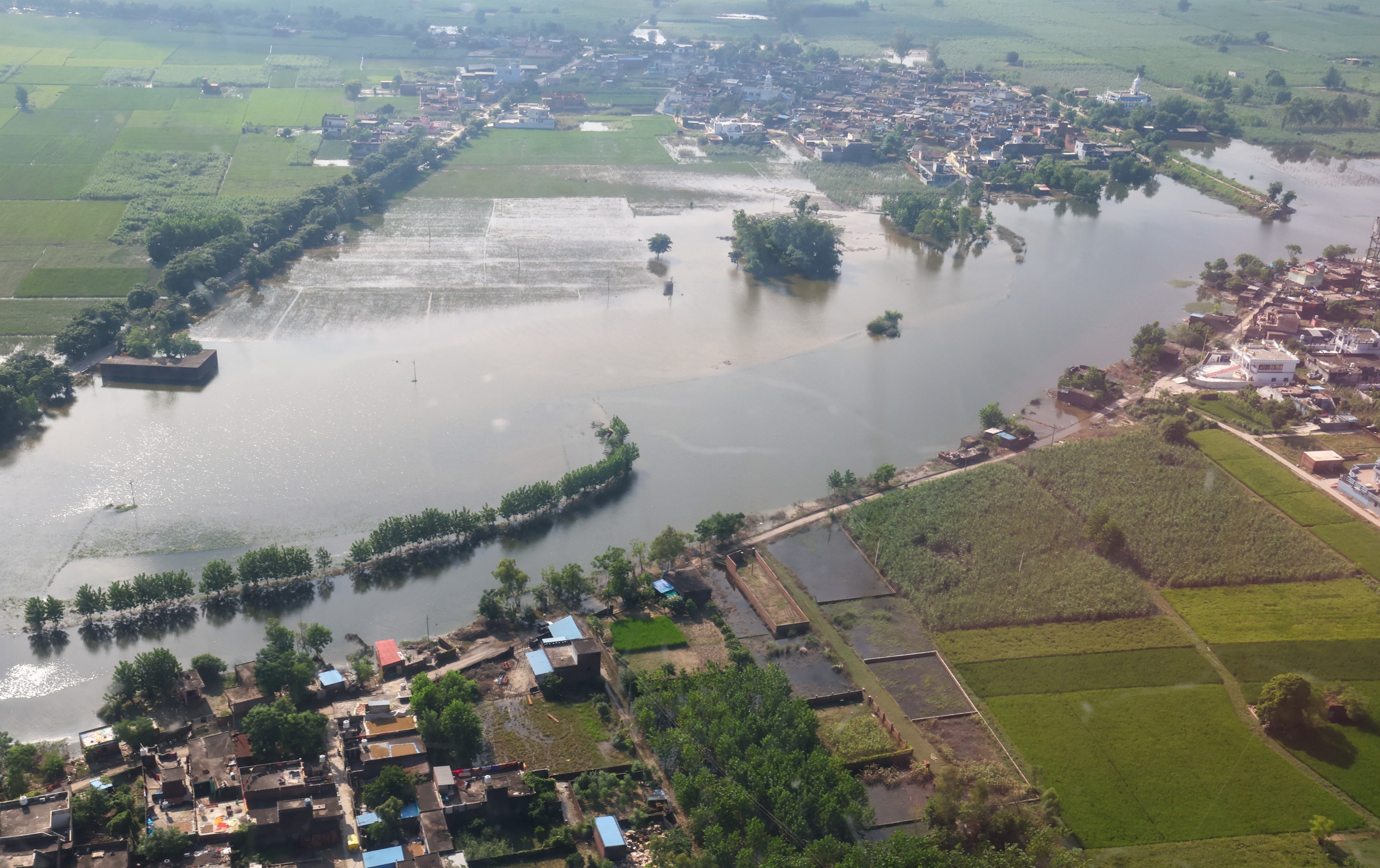
In August 2025, over 1,400 villages in more than 13 districts of Punjab, India, were hit by severe floods, the worst the state had seen in nearly four decades, since 1988. The floods were caused by an unusually heavy downpour in the higher altitude regions, especially Himachal Pradesh and Jammu & Kashmir, along with a large inflow of water from dams like Pong, Ranjit Sagar, and Bhakra. The opening of flood gates worsened the catastrophe downstream, particularly along the Ravi, Beas, and Sutlej rivers. The heavy rains and overflowing rivers broke embankments, flooding fields, villages, and towns that came in the way. Agricultural plots witnessed crops being ruined, homes collapsing, and highways, the main arteries of the state, being submerged to look like rivers. Thousands of families were left stranded without essentials like food, clean water, or medical help.
Amid this disaster, the commercial vehicles came across as saviours. While army boats and helicopters were shown in the news, trucks, buses, pickups, amphibious all-terrain vehicles, and even small tempos were often the first to reach the people who needed help. They carried food and supplies to flooded areas, rescued families, and even became temporary kitchens, clinics, and shelters. In Punjab’s hardest time, these vehicles showed they are more than just transport; they can save lives.
The Road To Rescue
When water levels began rising in low-lying areas of Ludhiana, Jalandhar, Ropar, and Patiala, official agencies scrambled to respond. But blocked highways and washed-out rail links created bottlenecks. Supplies piled up in warehouses, cut-off from the people who needed them most. The local truck drivers and transport organisations mobilised and delivered essential supplies to affected regions. While official government and NGO convoys were organised, individual drivers and community groups also used their own vehicles to help with distribution.
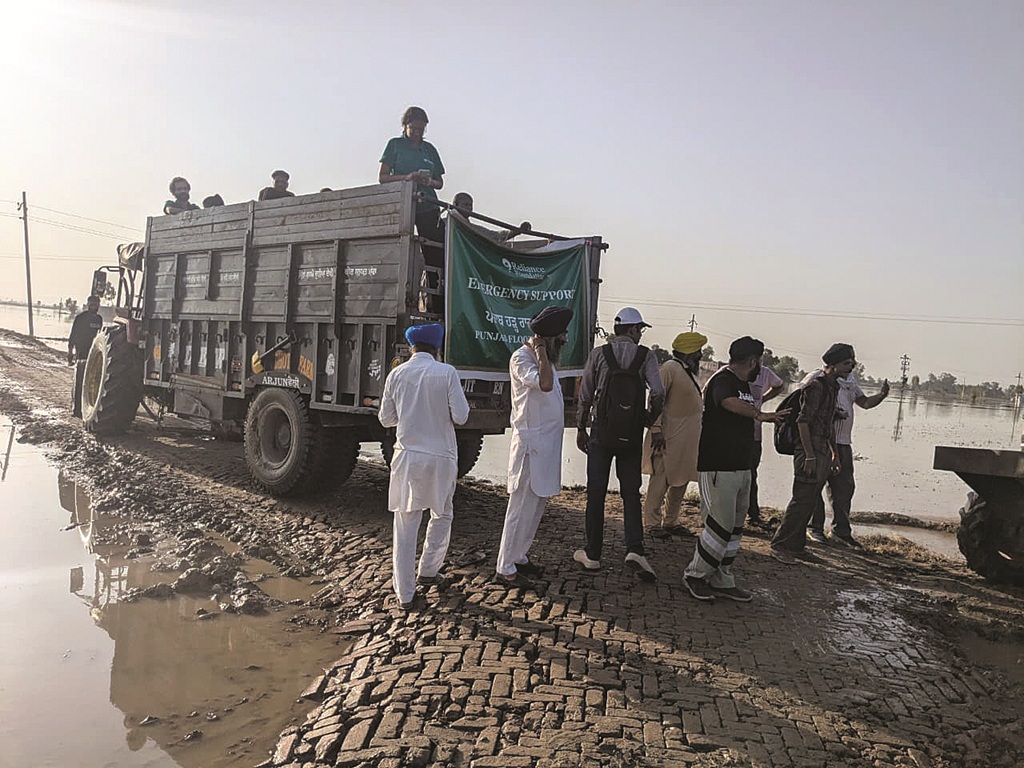
Fleet operators collaborated with various charitable and religious organisations to ensure efficient aid delivery. The Delhi Sikh Gurudwara Management Committee (DSGMC) ran a major relief drive, dispatching trucks daily. A Muslim community in Ambala sent three trucks and seven pickup vans carrying relief material. The Punjab Red Cross Society organised truckloads of relief supplies with the help of local volunteers. Commercial vehicles were used to transport critical goods, including food grains, milk powder, drinking water, clothes, blankets, sanitary kits, tarpaulins, and tents for temporary shelter. Many truck drivers used their local knowledge and expertise to navigate difficult, waterlogged roads and reach cut-off villages that larger, unfamiliar convoys might have avoided.
A Community United
As commercial vehicles and their drivers battled the odds on flooded roads, the scale of the disaster continued to unfold. In Ferozepur and neighbouring districts, local volunteers joined hands with transporters and relief agencies. Together, they ensured that no stranded family was left without food, shelter, or medical care. Meanwhile, the state government sounded the alarm on the gravity of the situation. Punjab Chief Minister Bhagwant Singh Mann described the floods as the “most severe natural calamity in decades,” which had already affected nearly 1,000 villages and lakhs of people across Gurdaspur, Kapurthala, Amritsar, Pathankot, Ferozepur, Fazilka, and Hoshiarpur.
In his appeal to Prime Minister Narendra Modi, the Chief Minister urged the immediate release of Rs.. 60,000 crore in pending central funds to help the state cope with the devastation. His letter detailed how incessant rainfall and excess water released from dams had submerged over three lakh acres of farmland, mostly paddy fields, destroying crops and killing livestock, plunging rural families into distress.
The CM also underlined the financial strain Punjab faces due to cumulative revenue losses since the implementation of the GST regime, estimating an Rs.49,727 crore shortfall, in addition to over Rs. 8,000 crore pending under the Rural and Market Development Funds. Several infrastructure projects, including those under the Pradhan Mantri Gram Sadak Yojana worth Rs. 828 crore have also been cancelled, worsening rural connectivity at a time when access is most critical as per reports. Calling the situation extremely delicate, the Chief Minister urged the Centre to not only release funds immediately but also revise State Disaster Response Fund (SDRF) norms, which he termed grossly inadequate for the scale of destruction Punjab faces.
Amid this appeal, solidarity poured in from beyond Punjab’s borders. In Delhi, Chief Minister Rekha Gupta, along with Delhi BJP chief Virendra Sachdeva and senior party leaders, flagged off 52 trucks loaded with relief materials bound for flood-affected regions of Punjab. Aam Aadmi Party (AAP) MP Raghav Chadha announced the allocation of Rs. 3.25 crore from his MPLADS funds to support relief and rehabilitation efforts in flood-hit regions of Punjab. Through a video appeal, Chadha expressed solidarity with the affected communities, prayed for the safety of everyone, and followed with an in-person visit to assess the widespread damage. Of the total amount, Rs. 2.75 crore has been earmarked for strengthening and repairing flood-protection embankments in Gurdaspur to safeguard villages from future calamities, while Rs. 50 lakh has been allocated for relief and rehabilitation work in Amritsar, two of the worst-affected districts.
Innovation For The Frontline
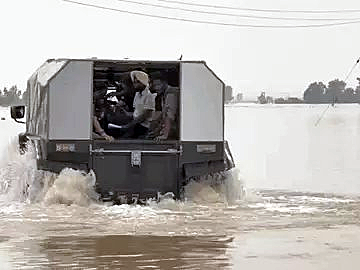
While traditional fleets formed the backbone of the relief response, an amphibious saviour too found its way onto Punjab’s flooded roads. For the first time, four JSW Gecko Motors’ SMV N1200 ATOR all-terrain vehicles made headlines as they were deployed for rescue operations in severely affected areas. Seen diving into flooded fields, these amphibious vehicles, manufactured by the JSW Group subsidiary, are well known as engineered for extreme off-road and waterlogged conditions, making them particularly effective in search-and-rescue missions during natural disasters. According to Jaskirat Singh Nagra, Director of JSW Gecko Motors, the deployment came directly in response to requests from local district administrations. “In response to a request for assistance from authorities in Amritsar and Sultanpur Lodhi, the senior management of JSW Group decided to send four of its own vehicles,” Nagra shared on social media.
Industry Steps In
Even as fleets and innovators took to the roads and waters, the wider commercial vehicle and agri-machinery industry extended its support through large-scale relief contributions. Agriculture machinery manufacturer Sonalika Group contributed Rs. 4.50 crore to assist those affected by the floods in Punjab. According to Industry Minister Sanjeev Arora, the company donated Rs. 50 lakh towards the Chief Minister’s Rangla Punjab Vikas Fund under Mission “Chardi Kala”. In addition, Sonalika handed over 12 fully equipped ambulances, worth around two crore rupees, to be used for conducting medical camps across flood-affected districts. The company’s senior vice presidents, J.S. Chauhan and Rajnish Jain, presented the cheque to Minister Arora in a symbolic show of industry-government partnership. The Group also provided tractors valued at two crore to farmers whose machinery and livelihoods were destroyed by the floods, a move aimed at restoring agricultural operations once the waters recede.
Building From Scratch
The waters had receded, but the damage remained. Punjab’s paddy fields were brown and wilted, covered in silt, and the air carried the stench of rotting crops and drowned livestock. In Toor, a village near the Ravi River, homes lay in ruins and fields were buried under mud. “The water came past midnight on August 26,” said Surjan Lal, a farm worker stranded on his roof for nearly a week. “It rose so quickly that we could do nothing. The water took everything, our animals, our beds, our tools.” In village Lassia, farmer Rakesh Kumar surveyed his ruined fields. “I had leased extra land this year,” he said. “Everything I invested is gone.” He feared the winter wheat crop would fail. “All the muck has to dry before the machines can clear the silt. By then, it might be too late to plant.” Even for heavy machinery, reaching these areas was difficult. The only pontoon bridge connecting the village to the mainland operated only in lean months and remained submerged during the floods.
Landless labourers faced even greater challenges. Mandeep Kaur, whose home was washed away, had to sleep under a tarpaulin in the courtyard. “We used to work in the landlords’ fields, but now they are gone too,” she said. Punjab supplies a large portion of India’s rice and wheat under the national food security programme, which feeds more than 800 million people. With crops destroyed and basmati exports under pressure from US tariffs, the floods worsened the state’s food and economic crisis. Recovery would be difficult. Punjab had opted out of the federal crop insurance scheme, relying on its irrigation network. With thousands of acres of paddy lost, farmers were left without a safety net, forced to restart from scratch.
From Cargo to Compassion
The floodwaters have finally gone, but the damage leaves a trail. Fields are brown and muddy, homes show signs of water damage, and families are slowly trying to rebuild their lives. Even in this destruction, stories of courage and helping each other stand out. The 2025 Punjab floods reminded how commercial vehicles go beyond the economic barometer of the country. A single 16-tonne truck alone could bring enough food for a whole community. Many vehicles were also used as mobile kitchens, shelters, or medical units. Beyond carrying supplies, these vehicles brought hope. In rural India, seeing a familiar truck driven by someone from their community gave people comfort as much as aid, turning ordinary vehicles into lifelines during the crisis.