

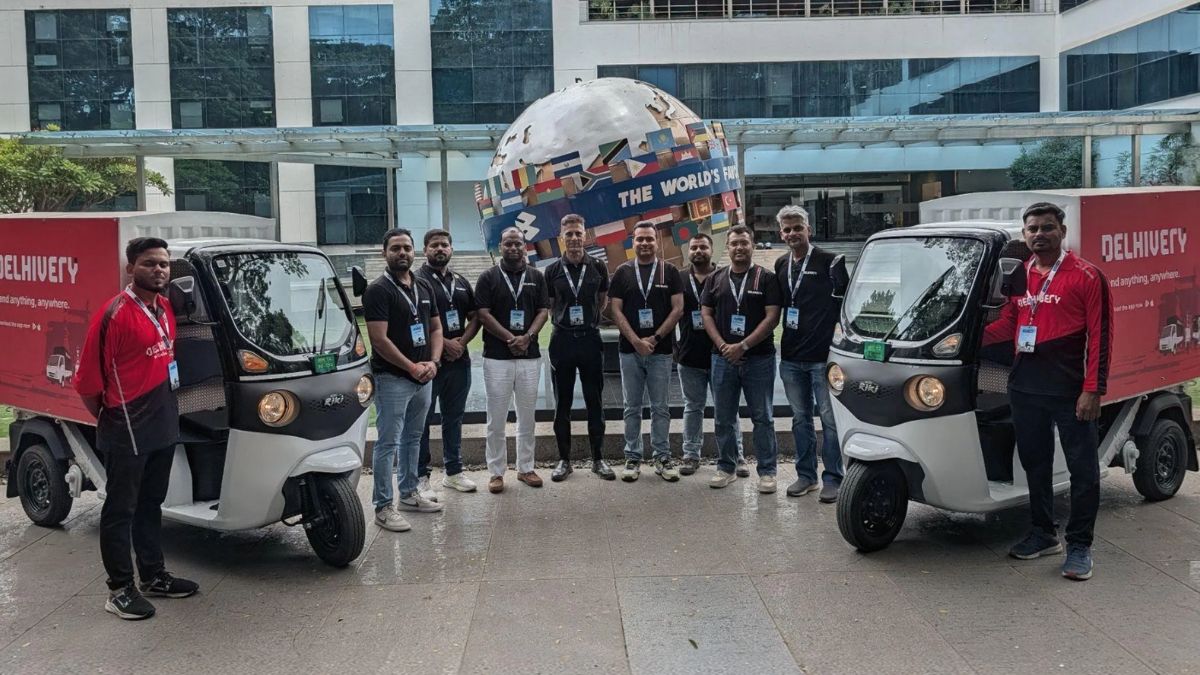
Bajaj Auto has entered into a commercial partnership with Delhivery to deploy up to 1,500 RIKI eCarts across the logistics company’s last-mile delivery network, marking a significant step in the electrification of regional logistics operations in India.
The rollout will begin with the deployment of 200 Bajaj RIKI C4005 eCarts across Delhivery’s operations in metro, Tier-2 and Tier-3 cities. The first batch of vehicles was flagged off from Bajaj Auto’s manufacturing facility in Akurdi, Pune. The second phase, scheduled between 2026 and 2027, will see the fleet expand to around 1,500 electric cargo three-wheelers, including both L3 and L5 cargo models.
The partnership reflects the growing demand for electric commercial vehicles in the logistics sector, where fleet operators are increasingly focusing on lowering operating costs while meeting sustainability targets. By integrating the RIKI eCart into its last-mile network, Delhivery aims to improve delivery efficiency and accelerate the transition towards cleaner transportation.
Purpose-built for urban cargo movement, the Bajaj RIKI C4005 eCart offers a driving range of over 100 km on a single charge, while combining high payload capability with low operating costs. The vehicles will also be integrated with Delhivery’s route optimisation platform to enhance fleet utilisation and operational efficiency.
Commenting on the partnership, Prashant Gazipur, Chief Operating Officer – In-City Operations, Delhivery, said the deployment supports the company’s sustainability goals while improving the earning potential and working conditions of delivery partners. He added that the adoption of electric cargo vehicles will help create a cleaner and more efficient delivery network.
Samardeep Subandh, President – Intra-City Business, Bajaj Auto, said the partnership combines Delhivery’s logistics expertise with Bajaj Auto’s electric mobility solutions to transform last-mile cargo transportation. He noted that the RIKI eCart has been engineered to deliver reliability, efficiency and driver comfort for commercial fleet operators.
The collaboration is expected to improve delivery productivity, enhance driver safety and comfort, reduce carbon emissions and further strengthen the adoption of electric cargo vehicles across India’s rapidly evolving logistics ecosystem.