

The concept of the motor and differential being used as a stressed member in a chassis can have several benefits for optimising the strength-to-weight ratio while maintaining the elusive weight balance of the car, writes Raunak Dhoot.
The integration of rear-mounted motors and differentials as stressed members in electric race car chassis represents a groundbreaking evolution in EV engineering. The entirety of the rear bulkhead housing the powertrain makes it not only modular but also hot-swappable under most scenarios, this means lesser downtime for repairs as assemblies can be swapped out without opening them up completely, meaning part changes will have fewer components that need to be manually replaced, mitigating human error during the swap over operation.
Form Follows Function
Since the early 1900’s the ICE has been used as a stressed member, bringing significant changes to chassis stability, weight, and overall performance. All the subassemblies are then bolted onto these stressed member engines or motors, centralising the weight-mitigating body roll as well. This has the added benefit of making the rear section of the body extremely slender. It leads to the possibility of shaping the body in a teardrop shape, minimising the drag coefficient of the car itself.
Shedding Those Extra Kilos
Weight is of prime concern when it comes to EVs, range is inversely proportional to the weight of the vehicle. Traditionally these vehicles have separate frames. By integrating these components into the monocoque structure the redundant materials and reinforcements are eliminated. Lower weight translates directly into improved acceleration, energy efficiency, and cornering performance.
Keeping It All Cool
The motor and differential are housed such that an optimal connection is made between the two, this makes them very close to each other. With these high heat output components being housed so close together, heat soaking is a real concern. The consistency of the motor at these temperatures drops considerably causing periodic losses in torque. The motors have to be actively cooled in such scenarios with the lack of air flowing across these components. The components being closer together means the cooling lines can be shorter, allowing pumps to quickly move the coolant to and from the motor to the radiators, keeping the temperatures in check.
Iterative Design
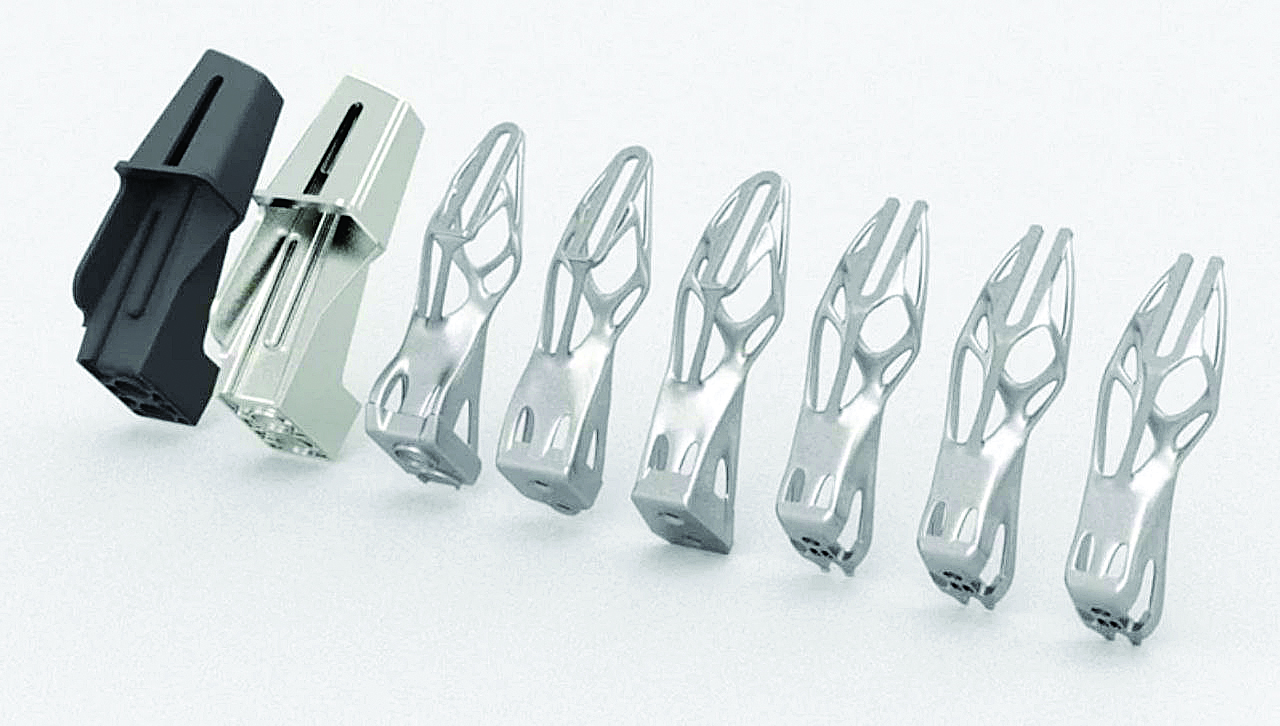
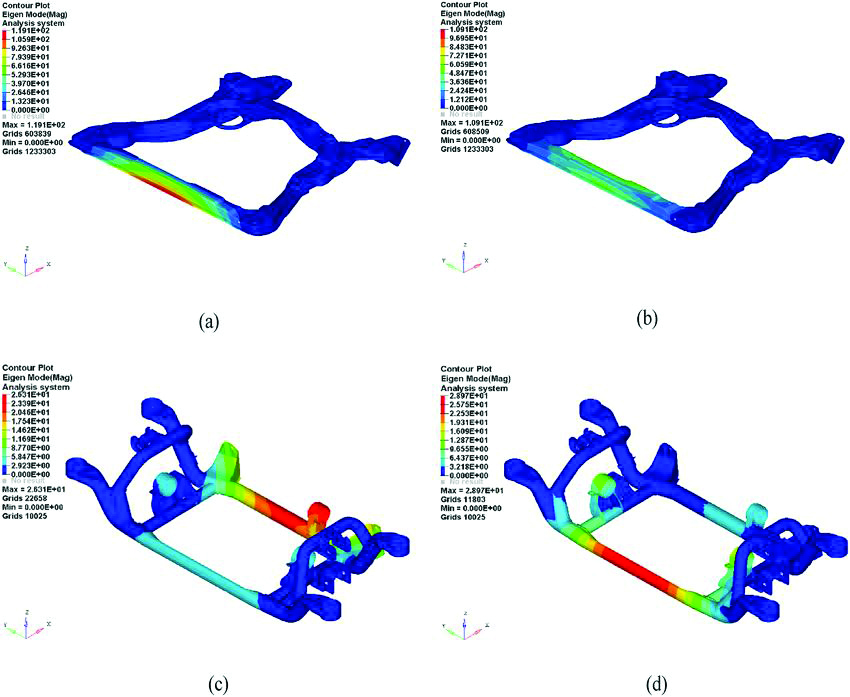
The design is studied with what loads are to be transmitted through the structure and the mount can be designed using 3D modelling software. It has to be analysed using simulation software wherein the additional materials can be shed via subsequent iterations. No one stressed member arrangement would be best for all applications. Different use cases need different setups as their suspension and stiffness requirements differ significantly from one to another, hence iterations have to be made to adjust for these scenarios
How The Load Is Transmitted
The loads running through the chassis can be dynamically optimised with topological simulations, The path from which the vibrations and chassis loads are transferred can be analysed and the reinforcing components and trellising of the frame can be designed to ensure the load is distributed. No stress concentration occurs made possible by the nontraditional design of topologically optimised components and all the loads passing through the motor and differential assemblies increasing structural rigidity, and torsional stiffness by increasing the load-bearing structures area and connection points.
Managing Material
With less material being used for chassis systems and fewer assembly components, the carbon footprint of the vehicle is offset from manufacturing aligning with the sustainability goals of the EV industry.
In Conclusion
The integration of rear-mounted motors and differentials as stressed members, augmented by topological optimisation, represents a paradigm shift in EV engineering. Inspired by the successful application of stressed-member engines in motorcycles and race cars, this approach blends advanced materials, computational design techniques, and innovative mechanical integration. By leveraging these engineering principles, EV race cars can achieve unprecedented performance and efficiency, redefining the future of motor sport.