

In a city as dense and dynamic as Mumbai, an unhindered water supply is quintessential, writes Upendra Kasbekar.
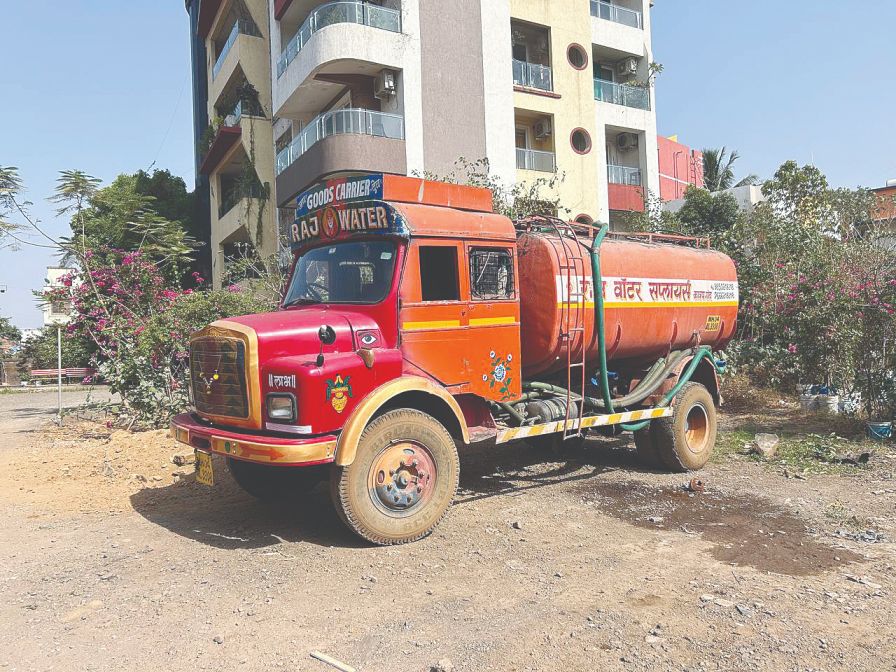
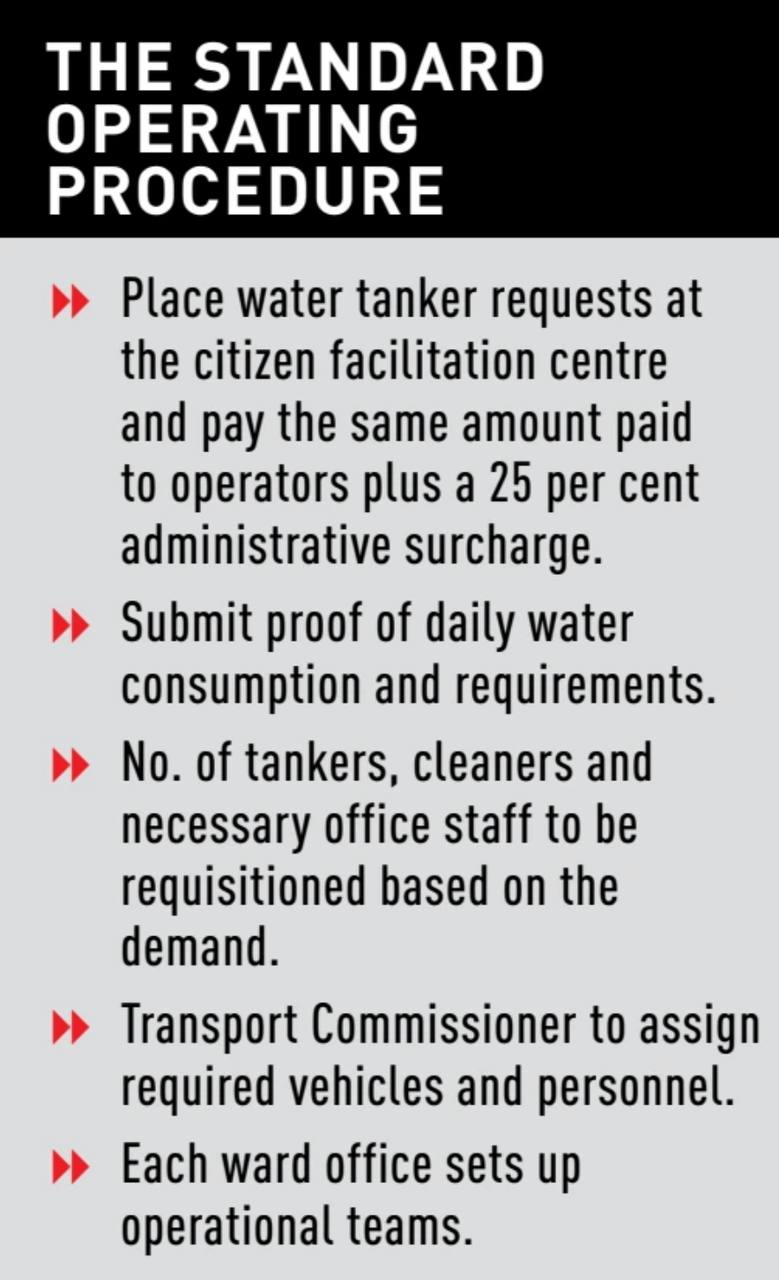
It’s also a complex logistical challenge especially if you are not regularised. From filling in for civic infrastructure gaps to catering to construction, hospitality, and residential societies, water tankers are synonymous to Mumbai’s concrete jungle and its growing pressures on the city infrastructure. Recently, this critical water tanker segment found itself in the eye of a storm due to regulatory actions by the Central Ground Water Authority (CGWA), leading to members of the Mumbai Water Tankers Association (MWTA) going on strike. After seven days of mediation, the strike was force withdrawn when the Brihanmumbai Municipal Corporation (BMC) invoked the Disaster Management Act 2005 and threatened to take over the unauthorised borewells and step in the operations by establishing a SOP.
It opened up a larger conversation around policy, sustainability, operator rights, the need for checks and balances and the real value water tankers bring to the table. Looked at as a means to compensate for the insufficient BMC supply in areas, nearly 900 water tankers are known to do daily rounds.
Impact on the City
Mumbai’s daily requirement of potable water is known to be approximately 4,200 million litres per day (MLD), with the BMC supplying around 3,850 MLD. The remaining 350 MLD is sourced from private tankers, which are essential for sectors like road concretisation, metro projects, public space maintenance, and emergency services.
The suspension of tanker services disrupted these critical operations, leading to widespread inconvenience. It also meant that tankers, the drivers and the helper staff were idling. Residents of areas like Royal Palms, MHADA in Goregaon, Kanakya Rain forest society located in Marol, girls hostel of Mumbai University which depend solely on private water tankers, were left scrambling for water. Sandip Gadhave, a resident, shared, “We have been living here for many years and the majority of residents rely on private water tankers. Since the tanker owners have gone on strike, we wrote a letter to the BMC P South Ward office requesting a municipal tanker. The ward officer informed us that they cannot supply a BMC tanker as there is only one for the entire P South Ward.”
The water situation in other societies within the Royal Palms township was equally dire. Biju Augustine, who has a commercial establishment in the Main Frame IT Park building at Royal Palms, noted that the strike severely affected them as the entire commercial building is fully dependent on private tankers, with no BMC water connection.
Who Are the Tanker Operators?
The Mumbai Water Tankers Association (MWTA), with over 1,800 to 2,000 registered members, represents a wide base of water suppliers. These operators manage thousands of trips daily across the city and suburbs, working under tight timelines and high operational costs of diesel, permits, maintenance, and staff wages. Many are small or medium enterprises, often family-run, that have been active for decades. Their network is decentralised but efficient. Tankers often source water from privately owned wells and borewells on the outskirts of Mumbai or from sites where construction activity or housing societies have surplus borewell water. On reaching out to these, many were tight lipped and spoke on the condition of anonymity.
Understanding the Strike and CGWA’s Crackdown
The recent standoff arose after the CGWA initiated action against private borewell owners who supplied water to tankers without proper registration or metering, citing violations of environmental rules under the Environment (Protection) Act, 1986. The CGWA’s push for registration under its new online system aims to regulate groundwater usage more strictly and avoid over-extraction.
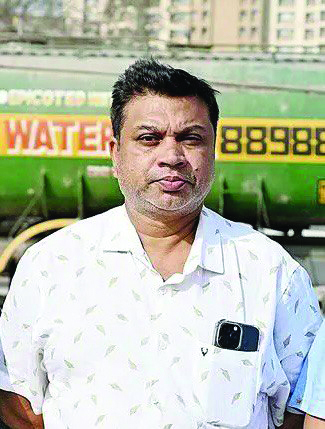
However, operators argue that the central guidelines framed with a pan-India view do not consider Mumbai’s unique urban environment. In response, MWTA declared a strike that threatened to bring Mumbai’s water logistics to a standstill.In an urgent meeting with the BMC Chief Bhushan Gagrani, MWTA demanded more time and clarity on compliance. The BMC intervened and assured a balanced approach, leading to the strike being called off. As per reports, Rajesh Thakur,General Secretary , Mumbai Water Tankers Association (MWTA) cited that MWTA was not against regulation. But the guidelines must be city-specific. Tanker operators ensure Mumbai doesn’t suffer water scarcity despite unpredictable rainfall or infrastructure gaps.
Striking a Balance: Regulation vs. Reality
While the CGWA’s intent to monitor and curb overuse of groundwater is essential for long-term sustainability, it must be harmonised with the needs of urban centers like Mumbai. Tanker operators feel targeted, especially since many source water from legally permitted wells, and others function under municipal oversight.
From their perspective, the sudden crackdown threatened their livelihood without providing a workable roadmap for compliance. Several operators claim that while they are ready to follow rules, they lack access to technical documentation, metering systems, and time to meet deadlines set by authorities.
“If the government wants operators in Mumbai to register borewells and install meters, then BMC must help operators with technical know-how and financial aid. Don’t criminalise people’s livelihood overnight,” said Aditya Patil, Tanker Operator, Badlapur.
Drivers are the Backbone of the System
Any conversation about tankers is incomplete without acknowledging the drivers, many of whom work 12-14 hours a day under intense pressure. They navigate narrow lanes, congested traffic, and often deal with frustrated customers during water shortages.
Most drivers are migrants or from lower-income backgrounds. Their income depends on the number of trips, with some earning Rs.12,000 to Rs. 18,000 per month. During the strike, many drivers were anxious as their daily income came to a halt. “There’s no security. If there’s a crackdown, we don’t earn. If there’s a strike, we don’t earn. And yet, we are expected to deliver water like clockwork,” said Suraj Kumar, a tanker driver Badlapur.
Cons of Tankers: Environmental and Logistical Challenges
While water tankers are a blessing for many, they also pose challenges. One of the primary concerns is over-extraction of groundwater, especially from unregulated borewells. This could lead to falling water tables and damage to aquifers. Additionally, the high number of water tankers on Mumbai’s roads adds to traffic congestion and emissions. Many tankers are outdated diesel vehicles that do not meet BS-VI emission standards. Spillage and unsafe loading practices further raise safety concerns. From an infrastructure planning standpoint, water tankers are considered temporary solutions, not substitutes for piped water supply.
Tankers As Urban Utilities
Despite criticisms, water tankers play a vital role in the urban utility chain. Consider Mumbai’s monsoon cycle of intense rains followed by dry months. During water cuts, tankers ensure continuity for hospitals, housing societies, and construction firms. They’re also essential during emergencies like fire hazards or civic supply disruptions. Tankers provide flexibility, something the centralised water infrastructure cannot always manage. For example, if a pipeline bursts or a neighborhood faces contamination, tankers are the first responders. In 2023, during a major water pipeline burst in Thane, over 500 tankers operated round the clock to supply affected households until civic supply resumed.
Future Solutions: Digitisation, Zoning, and Collaboration
Going forward, stakeholders suggest a more collaborative approach. Zoning of Water Sources to identify legal, non-sensitive borewell zones where tankers can operate without harming the environment. Smart metering for Encourage installation of IoT-based flow meters and water usage trackers that are subsidised by municipal grants. Driver Welfare to introduce welfare schemes for tanker drivers insurance, night shelters, and designated parking zones. Fleet modernisation to encourage operators to switch to CNG or electric water tankers by offering incentives under urban mobility missions. Digital regulation to develop a Mumbai-specific online portal for CGWA registration with Marathi-language support and local technical helplines. “Let’s not forget every time there’s a housing boom or water cut, tankers are the ones who come to the rescue. We deserve recognition and fair policy, not criminalisation,” Manoj Chourasia, an MWTA joint secretary is known to have stated.
The Strike Called Off, But The Conversation Continues
After BMC’s assurance, MWTA members resumed services, averting a water crisis. However, the message from the industry is clear: they seek regulation, not rejection. “We called off the strike in public interest. But we hope the government won’t backtrack on its promises. There has to be dialogue and handholding,” stated Rajesh Thakur, General Secretary MWTA.The CGWA, too, is reportedly reviewing its guidelines and considering consultations with city-level stakeholders.