

Tariff pressures are significant as India’s auto component industry adapts to global trade changes in the new order, writes Ashish Bhatia.
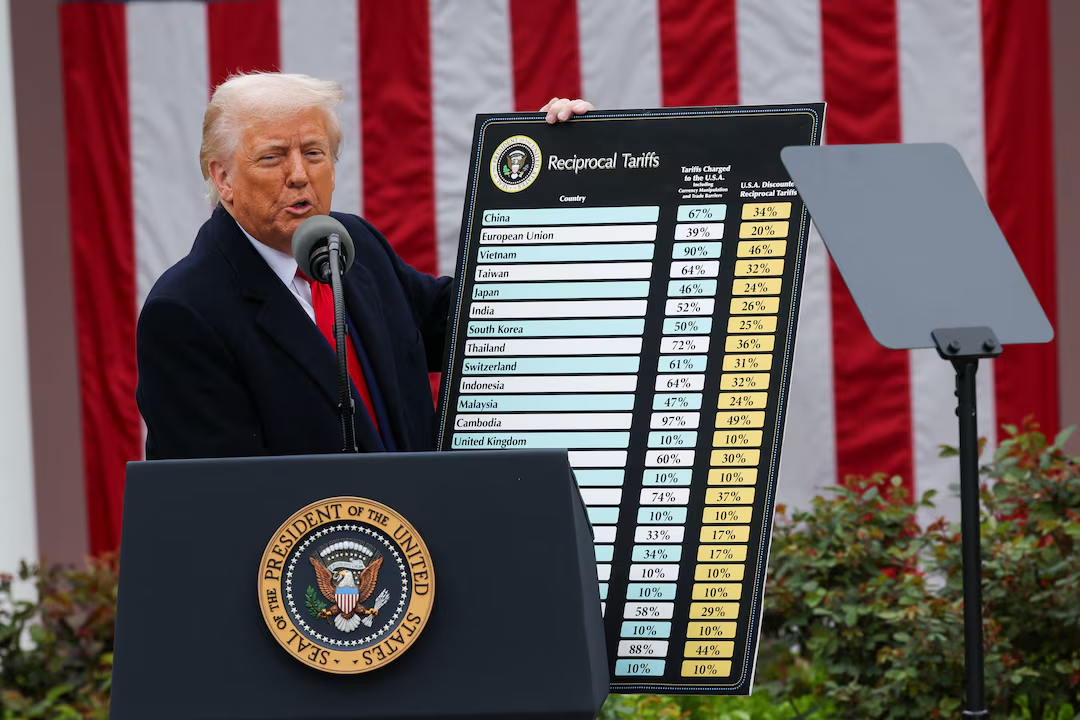
The war of words that began with titles like “Tariff King” has India’s auto component industry, a vital contributor to the nation’s manufacturing and export sectors, currently navigating a complex global trade environment. The recent imposition of widespread tariffs levied by President Donald Trump on auto imports by the United States has introduced new challenges, compelling manufacturers globally to reassess strategies and explore avenues for resilience and growth.
Taking note of the executive order signed on April 02, 2025, as part of the “Liberation Day” initiative, ACMA, Shradha Suri Marwah, President of ACMA and CMD Subros Ltd., in a press note stated, “We understand the intent of the U.S. administration to boost domestic manufacturing and address trade imbalances. It is to be noted that autos and auto parts, and steel and aluminium articles, already subject to Section 232 tariffs at 25 per cent, announced earlier in President Trump’s order on March 26, 2025, are not covered in the aforementioned order.” “The detailed list of auto components that will be subject to a 25 per cent import tariff in the US is, however, awaited,” the statement clarified. ACMA remains hopeful that the ongoing bilateral negotiations between the Indian and U.S. governments will lead to a balanced resolution that benefits both economies. An estimate pegs the cost of a US-manufactured car to go up by USD 6000 to give a perspective. A 25 per cent tariff will significantly increase the cost of semiconductors imported into the U.S., particularly from Taiwan, South Korea, and China, which dominate the global chip manufacturing. The tariff could strain diplomatic and trade relations with these key U.S. allies. While the tariffs might incentivise domestic semiconductor production, scaling up U.S. manufacturing is a long-term process that requires significant investment and time as per Ashok Chandak, President, IESA. He points out that the higher Prices for Electronics will likely be passed on to consumers, making electric vehicles and industrial electronics more expensive. Pressure on the U.S. Companies that depend on semiconductor imports, such as Apple, NVIDIA, and Tesla, will face increased production costs, potentially leading to reduced profit margins or higher consumer prices.


Ashok Chandak,President IESA
A Jolt to Indian Auto Component Exports:The United States’ decision to levy a 25 per cent tariff on imported automobiles and components has sent ripples through global supply chains. The spike in China tariffs to 245 per cent has only complicated matters with the latter standing up to what it terms as “bullying.” For India, which exported auto components worth USD 6.79 billion to the U.S. in FY24, accounting for 27 per cent of its total auto parts exports, the stakes are significant. The tariffs, effective from April 02, 2025, encompass engines, transmissions, powertrain components, and key electrical parts. Speaking on semiconductors, Chandak opines that the impact India is unlikely to experience any major short-term consequences due to this tariff, as it is not a major exporter of semiconductors to the U.S. Moreover, India’s import duty on semiconductors is already zero, meaning there are no reciprocal tariff concerns. In the long run, Indian semiconductor brands will not be at a major disadvantage, as the U.S. tariff is expected to apply uniformly to all exporting nations.Indian auto component manufacturers are grappling with the potential impact on their competitiveness in the U.S. market. While the tariffs are not India-specific, they level the playing field among exporting nations, including China and Mexico. However, the increased cost burden may affect demand and profitability. A senior industry executive noted, “The order by the U.S. President does not mention any tariff lines, so as of now, it is tough for India’s auto component OEMs to figure out the extent of the impact on exports to that country.” Saurabh Agarwal, Partner & Automotive Tax Leader at EY India, regarding the impact of US tariffs on the automotive sector, stated, “With US automotive tariffs rising, India’s electric vehicle sector has a prime opportunity to capture a larger share of the US market, especially in the budget car segment. China’s 2023 auto and component exports to the US stood at USD 17.99 billion, while India’s were only USD 2.1 billion in 2024, highlighting the growth potential. To accelerate this, the government should enhance the PLI scheme by including more auto components, opening it to new players, and extending it by two years.”

Pratik Kamdar, CEO and Co-Founder, Neuron Energy
Diversification and Strategic Realignment In response to the tariffs, Indian auto parts manufacturers are exploring strategies to mitigate the impact. One approach involves tapping into markets unaffected by the U.S. tariffs. Companies are considering rerouting shipments through countries with favourable trade agreements to maintain price competitiveness. Additionally, firms are engaging with U.S. business partners to discuss measures for minimising operational disruptions. The focus is on sustaining long-term relationships and exploring collaborative solutions to navigate the new trade landscape. Pratik Kamdar – CEO and Co-Founder, Neuron Energy echoed the sentiment, calling it a pivotal moment today where India has the opportunity to become self-reliant and battery-efficient by scaling up local manufacturing capacity. “Maharashtra, being a key EV hub, can attract investments from companies that are looking to reduce their import dependency on the U.S. The tariff on auto components announced by the U.S. government poses significant challenges for Indian EV manufacturers, especially those who are sourcing critical components like battery cells from the U.S. The double duty charges on import and export will lead to increased production costs, impact affordability, and slow the adoption,” he opines. Kamdar hailed the Indian government’s support through the FAME scheme, the PLI program, and incentives for local battery production as instrumental in mitigating the impact. To ensure long-term sustainability, he called for diversifying our sourcing strategies and tapping into emerging markets across Europe, Southeast Asia, and the Middle East.
Promoting Localisation and Export Growth
Recognising the challenges posed by global trade shifts, the Indian government is advocating for increased localisation and export diversification. Commerce and Industry Minister Piyush Goyal has urged auto component manufacturers to reduce import dependency and enhance local production capabilities. He emphasised the need to become indigenous suppliers and manufacturers to supply components to other countries. The government has set an ambitious target of achieving USD 100 billion in auto component exports by 2030. To support this goal, initiatives are underway to boost local manufacturing, invest in technology upgradation, and develop smart industrial cities that provide conducive environments for manufacturing and exports.

Subhabrata Sengupta,Partner, Avalon Consulting Energy

Saurabh Agarwal , Partner & Automotive Tax Leader at EY india
Investment and Capacity Expansion: The auto component industry is proactively investing in capacity expansion and technology enhancement to strengthen its global competitiveness. The Automotive Component Manufacturers Association of India (ACMA) has announced plans to invest nearly USD 6.5 billion to USD 7 billion over the next five years. These investments aim to increase value addition, upgrade technology, and promote localisation. The focus areas include the production of advanced parts such as electric motors, airbags, and automatic transmissions. By accelerating the localisation of these components, the industry aims to reduce import value by up to Rs. 25,000 crore (approximately USD 3 billion) over five years. Subhabrata Sengupta, Partner, Avalon Consulting, sought more clarity on some aspects of the new tariffs. As widely reported, India’s total exports under Chapter 87 amount to USD 2.6 billion. While it is evident that duties will be imposed on fully built vehicles and Completely Knocked Down (CKD) units, the specific HS codes and components affected are yet to be confirmed. It would be prudent to await the official notification for further clarity.
He further pointed that mong India’s automotive exports, USD 268 million is attributed to tractors and tractor parts, but the treatment of these items under the new tariff structure remains uncertain. Key export categories include brake linings, gearboxes, radiators, and axles. While it is fairly certain that gearboxes and axles will attract duties, the status of other components is yet to be determined. “Notably, major Indian component manufacturers with a presence in the U.S. should be able to localise production to mitigate the impact. Additionally, given the structure of global auto supply chains, an immediate and complete halt to supply is unlikely. In our assessment, most Indian exporters will have an opportunity to transition toward local production,” he said. A more significant concern could be the ripple effect on India’s exports to other markets, particularly Mexico, if Mexican auto exports to the U.S. are adversely affected. The impact on Indian companies operating in the U.S. and Canada also warrants close monitoring, as per Sengupta.
Trade Performance
Despite global trade uncertainties, India’s auto component industry has demonstrated resilience. In the first half of FY25, the industry recorded an 11.3 per cent growth in turnover, reaching Rs. 3.32 lakh crore (USD 39.6 billion). Exports increased by seven per cent to USD 11.1 billion, with North America leading the growth at 8.3 per cent. However, imports also rose by four per cent to USD 11 billion, with China remaining the largest source, accounting for 28 per cent of total auto component imports. This underscores the need for continued efforts to enhance domestic manufacturing capabilities and reduce reliance on imports.
Strategic Path Forward
The imposition of U.S. tariffs presents both challenges and opportunities for India’s auto component industry. While the immediate impact may be disruptive, it also catalyses strategic realignment. By focusing on localisation, diversifying export markets, and investing in capacity and technology, the industry can build resilience and sustain growth. Collaborative efforts between industry stakeholders and the government will be crucial in navigating this complex landscape.