

For years, the Indian road transport industry has repeated one line with absolute certainty: “There is a driver shortage,” writes Meet Morjaria.
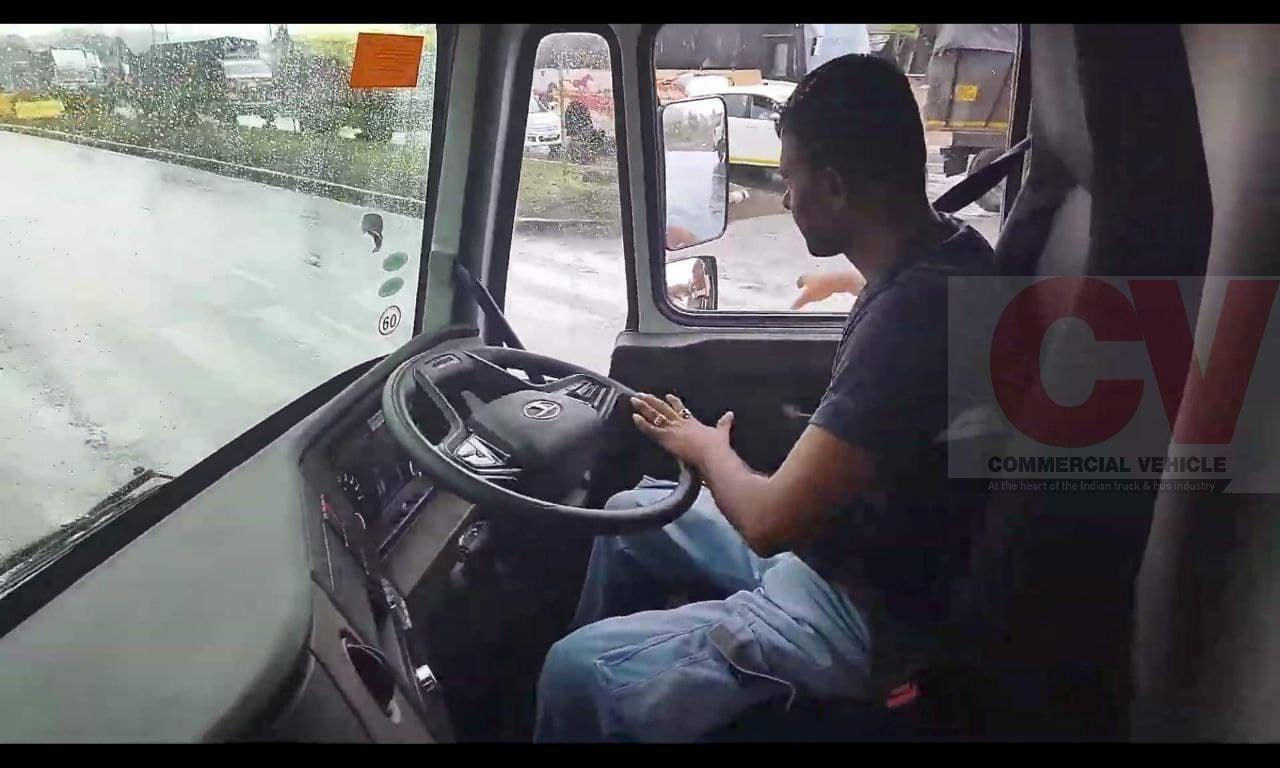
It is spoken in boardrooms, quoted in discussions, and echoed at industry events. Over time, it has become an accepted truth, almost unquestioned, almost convenient. But when a belief survives this long, it deserves a closer look. Is India truly running out of drivers, or are we running out of patience, systems, and accountability?
This article is not written to provoke headlines. It is written to provoke thought.
India Did Not Lose Drivers Overnight
The narrative that India suddenly lost lakhs of skilled drivers, that highways are deserted, or that vehicles have come to a halt is simply untrue.
What changed was not supply alone. What changed was expectation.
Drivers today compare. They observe. They calculate. They compare effort versus reward, time away from family versus dignity at work, and risk taken versus respect received. When those equations stop making sense, participation drops. That is not a shortage. That is a signal.
The Cost of Calling It a Shortage
Labelling the situation as a driver shortage is comfortable. It shifts responsibility from leadership to demographics.
If there is a shortage, then no one is accountable. Not the shipper. Not the transporter. Not the system.
But if we accept that this is a management issue, the conversation becomes uncomfortable. Because then the questions change.
Why are waiting hours still unpaid? Why are rest facilities still optional? Why is dignity still considered a benefit and not a baseline?
Shortage narratives protect inefficiency. Management narratives demand reform.
Drivers Are Responding Rationally
A professional driver today makes rational decisions. He avoids routes with habitual delays. He avoids clients known for disrespect. He avoids operations where uncertainty is routine.
From the outside, it looks like absenteeism. From the inside, it is optimisation. Drivers are reallocating their effort to where they feel valued.
That is not rebellion. That is intelligence.
The Silent Exit Nobody Tracks
What the industry rarely measures is silent exit. Drivers who do not protest. Drivers who do not demand. Drivers who simply choose different work.
Local transport. Shorter routes. Predictable schedules. Lower stress even at lower pay.
They are not unemployed. They are unavailable to broken systems. And every year, that pool grows.
Technology Did Not Create the Gap
It is easy to blame modern distractions or alternative employment. But technology did not chase drivers away. Mismanagement did.
Tracking systems track the vehicle, not the human. Dashboards measure kilometres, not fatigue. Efficiency metrics reward speed, not sustainability.
When data ignores people, people ignore the system.
A Leadership Question Disguised as a Labour Problem
The real question is not where all the drivers have gone. The real question is, why do the best drivers avoid certain operations?
That answer reveals everything.
Good drivers gravitate toward predictability — clear timelines, respectful loading points, and fair dispute resolution. They do not chase the highest rate. They chase the lowest uncertainty.
What the Best Operators Already Know
Quietly, without panels or press releases, the best-run fleets have figured this out.
They load on time. They resolve issues fast. They treat drivers as professionals, not extensions of metal.
Their trucks rarely stand idle for lack of manpower — not because they pay dramatically more, but because they manage them more deliberately.
Reframing the Conversation
If we continue calling this a driver shortage, we will keep applying the wrong solutions.
More licenses. More incentives. More schemes.
But if we acknowledge this as a mindset and management issue, the solutions become simpler and harder at the same time. Simpler because they are operational. Harder because they require discipline.
Time respect. Process clarity—human dignity.
The Industry Is At a Fork in the Road
One path continues the familiar narrative: blame shortages, lower expectations, and accept chaos as normal.
The other path demands introspection — better planning, better behaviour, better leadership.
Drivers will follow the second path automatically. They always have.
The future of Indian logistics will not be decided by how many drivers we produce. It will be decided by how many professionals we are willing to become.
And that is not a labour issue. That is a leadership choice.
—
Disclaimer:
The views expressed in this article are those of the author and do not necessarily reflect the views of CV Magazine or its editorial team.