

At India’s largest cargo-handling port, scale, multimodal connectivity, and increasingly electrified terminal operations are reshaping trade movement, Ashish Bhatia writes.
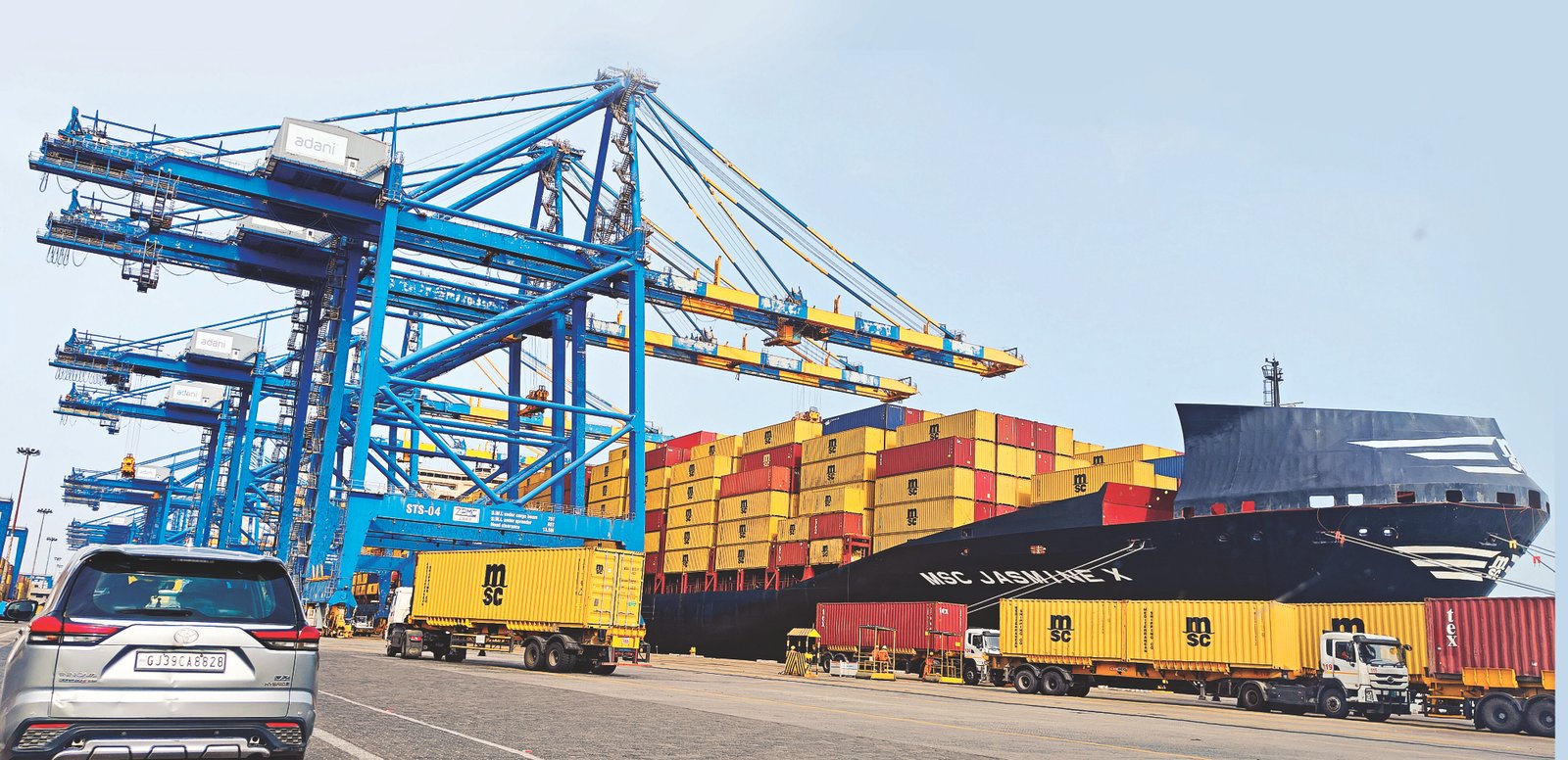
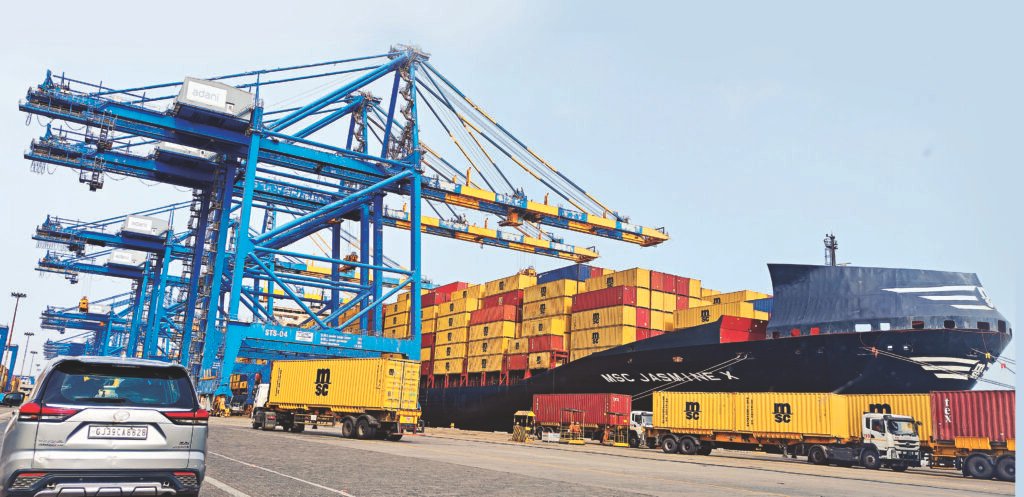
With expanding freight movement, accelerating container evacuation and streamlining gate throughput are essential to enhancing overall supply chain performance. Constant motion defines the landscape at Mundra Port. Ships berth and set sail, gantry cranes shift boxes between decks and yard trailers, hauliers manoeuvre into assigned lanes with systematic precision, and freight trains transport cargo inland. This perpetual operational flow involves personnel, machinery, and goods across an establishment critical to national commerce. Situated along the Kutch coastline in Gujarat, Mundra acts as a primary maritime conduit for the northern and north-western hinterlands, bridging ocean trade with key industrial and consumer hubs. Its strategic value lies in this comprehensive integration, uniting deep-water berths, specialised terminals, arterial highways, rail links, and ancillary logistics assets into a unified operating framework.
The scale is substantial. Adani Ports and Special Economic Zone (APSEZ) reports that Mundra handled 192 million metric tonnes (MMT) of cargo and 8.5 million Twenty-Foot Equivalent Units (TEUs) in FY2025–26. Its infrastructure includes 29 berths, comprising 27 berths and two single-point moorings, while an electrified 64-km rail connection links Mundra with the Indian Railways network at Adipur. These capabilities support a diverse cargo portfolio spanning containers, dry and liquid bulk, automobiles and other cargo categories.
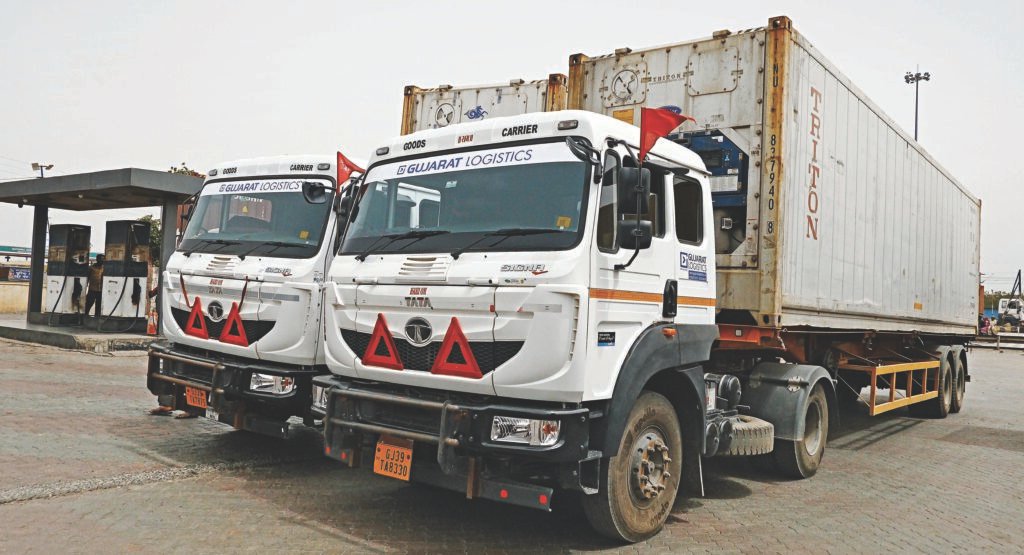
For road transport, the port’s importance is equally tangible. Every container moving between vessel and inland destination depends on a coordinated sequence of terminal handling, truck availability, documentation, gate clearance and onward transportation. Efficiency at the port is therefore not simply a question of crane productivity. It is also about how quickly cargo can leave the terminal and resume its journey through the wider supply chain.
Mundra’s development has placed it among India’s most significant maritime logistics assets. APSEZ reported that the port became the first in India to cross 200 MMT of annual cargo volume in FY2024–25. Its FY2025–26 operational figures demonstrate the continued scale of its cargo and container business. The port’s infrastructure is designed to accommodate different vessel and cargo requirements. Its facilities handle containerised freight alongside dry bulk, liquid cargo, crude oil, chemicals, liquefied petroleum gas, liquefied natural gas and roll-on/roll-off (RoRo) traffic. This diversity matters because the demands of handling a container vessel differ considerably from those of managing bulk commodities, liquid cargo or vehicle exports.
Mundra has also established a notable position in automotive exports. APSEZ reported that its RoRo operations achieved a record throughput of 229,357 units in FY2025–26. On March 10, 2026, the AMCT RoRo terminal loaded 6,008 vehicles onto the vessel MV NOCC ADRIATIC, known to be a record for the number of vehicles handled on a single vessel in India, according to on-ground officials. Such milestones illustrate the port’s ability to accommodate high-volume export movements. They also highlight the importance of synchronisation between vessel schedules, terminal capacity, vehicle staging areas and inland transport arrangements. As trade volumes increase, each stage must keep pace with the others if additional capacity is to translate into faster end-to-end movement.
THE ROAD- RAIL CONNECTION
Mundra’s connectivity is one of its strategic advantages. Road transport provides flexibility for regional distribution and last-mile movements, while rail offers an alternative for moving large volumes over longer distances. The port’s dedicated 64 km electrified rail line connects it to the national rail network at Adipur. The route supports double-stack container movement, enabling two layers of containers to be transported on suitable trains. This arrangement can increase the volume moved per train and improve the use of rail infrastructure, subject to the operational and technical requirements of the route and rolling stock.
For cargo owners and logistics operators, the combination of road and rail creates options for matching the transport mode to the shipment. Trucks remain indispensable for terminal access, regional collection and delivery, and movements that require flexibility. Rail can support high-volume inland corridors where schedules, infrastructure and cargo flows make it viable. The effectiveness of this multimodal model, however, depends on coordination. A container must be available at the right time, in the right location, with the appropriate documentation and onward transport arranged. A delay at one point can have consequences across the chain, tying up equipment and creating additional movements.
PRECISION AND PRESSURE
A walkthrough of the highly restricted operating area reveals the structured nature of terminal movements. Containers are directed to designated locations, while cranes transfer them onto trailers according to prescribed operating procedures. Dedicated terminal areas and equipment arrangements support the handling of particular services and customers. The process is meticulous, with designated parking and container slots, coordinated equipment movements and an emphasis on safe handling. The workforce manages a 24-hour operation, with port personnel working to maintain continuity during periods of disruption. Yet they are prone to a persistent challenge, which is the time required for containers to move through the terminal and exit into inland transport.
An indicative duration of around three to four hours from a container being discharged from a vessel to its onward movement out of the terminal, compared with a claimed 30–40 minutes at some global benchmarks. These figures should be treated as observations reported during the visit, rather than as a verified average for Mundra or a like-for-like international comparison. Nevertheless, the underlying issue is important. Container evacuation is influenced not only by crane performance but also by yard capacity, the positioning and repositioning of containers, vehicle arrival patterns, documentation, gate processing and the availability of onward transport. When containers accumulate beyond the capacity available for immediate evacuation, additional shifting may be required to access the right unit. Trucks can then wait for their turn, while a temporary disruption can create queues that persist even after the original issue has been resolved. For transport operators, working against the backdrop of a West Asia conflict, these delays have a direct commercial dimension. A vehicle waiting at a terminal is unavailable for its next assignment. Driver hours, fuel consumption and equipment utilisation are affected, while delivery commitments become more difficult to manage. The port and its logistics partners therefore share an interest in reducing avoidable waiting and unnecessary container movements.
Everyone would rather steer clear of the additional pressure created by geopolitical disruption in West Asia. According to the account, terminal personnel were working to keep services moving despite the accumulation of containers and vehicles at entry and exit points. Closely watched under CCTV surveillance, the impact of disruption extends beyond the immediate cargo affected. Changes in shipping schedules, delayed arrivals, altered routing and the repositioning of containers can complicate terminal planning. A temporary interruption in equipment or gate operations can also produce a queue that takes time to clear.
The account suggested that even an interruption lasting an hour or two could generate a substantial backlog in a field observation. It nonetheless illustrates the sensitivity of a high-volume logistics system to relatively short periods of disruption. APSEZ’s response includes a dedicated Empty Container Yard (ECY) initiative announced in September 2026. The proposed facility is intended to bring empty-container storage, inspection, maintenance and related services into a more integrated arrangement within the Mundra Port and Special Economic Zone ecosystem. APSEZ states the initiative is designed to reduce unnecessary container movements, improve turnaround and strengthen coordination among shipping lines, terminal operators, Customs and transporters.
There is a perceived imbalance between imports and exports, with imports accounting for around 60–70 per cent of the movement discussed, with exports making up the balance. A major chunk of the imports, in turn, also includes dumps like scrap, waste paper and used tyres among the imported materials. A view from one operating area can offer valuable insight into the cargo being handled at that moment, but it cannot establish the composition of the port’s overall trade. Similarly, the import–export balance at one port should not be treated as a proxy for India’s national trade balance, explained the official.
ELECTRIFICATION INSIDE THE PORT
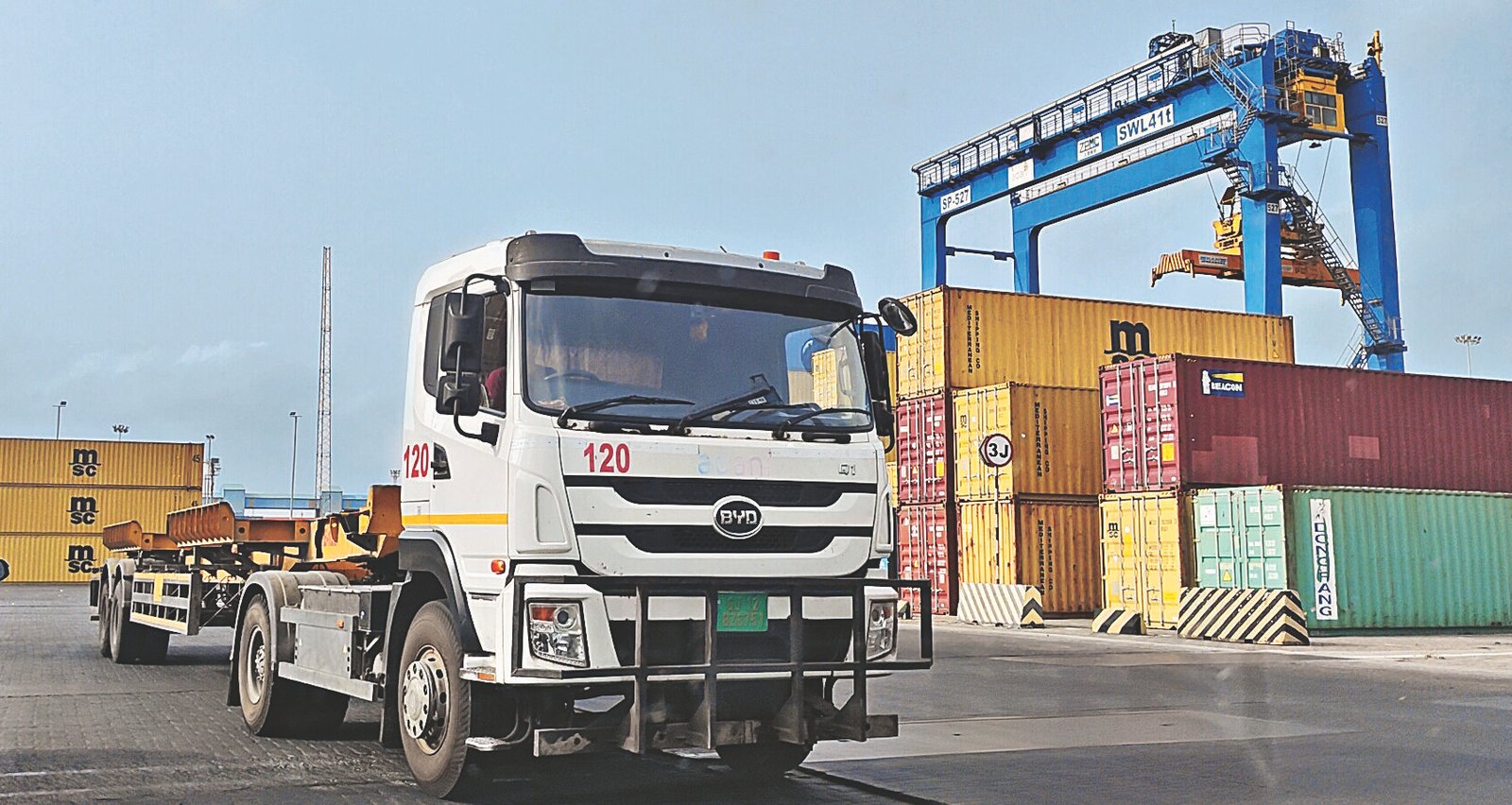
One of the most striking features of the walkthrough was the presence of battery-electric terminal tractors operating within the port premises. The BYD Q1-series units are designed for repetitive movements within controlled logistics environments. They move trailers and containers between designated points, often following predictable routes and operating cycles. These vehicles can return to known locations, and charging can be planned around operating schedules. Recent reporting says APSEZ has inaugurated approximately 400 electric tractor-trailers for moving empty containers within Mundra’s port area. Adani Group ordered 400 BYD Q1R electric terminal tractors for four ports: Mundra, Hazira, Kattupalli and Ennore in 2023. The advantages are not automatic. A fleet operator must consider vehicle acquisition cost, battery performance, charging capacity, duty cycles, maintenance, utilisation and the consequences of downtime. The business case depends on whether the vehicle can complete its assigned work reliably and deliver a competitive total cost of ownership over its operating life. Depending on the variant, the Q1 series features a Lithium Iron Phosphate (LFP) battery pack of 217 kWh or 255 kWh, an electric motor producing up to 180 kW (approximately 241 bhp) and torque of up to 1,500 Nm. Published specifications indicate a Gross Combination Weight (GCW) rating of 31.5 tonnes for the Q1A and 46.3 tonnes for the Q1M, with the Q1A claimed to have reported ranges of 150 km and up to 200 km for the respective configurations.