

As India grapples with high road accident rates and gears up to meet global safety benchmarks, Commercial Vehicle (CV) safety has come under sharper focus, writes Ashish Bhatia.
The Ministry of Road Transport & Highways (MoRTH) is spearheading regulatory change, mandating both active and passive safety inclusions. With sweeping reforms such as mandatory ADAS systems up to Level 2, advanced telematics integration, and policy-backed incentives, OEMs are responding proactively. Backed by tier 1 suppliers and influenced by global partnerships, India is playing its part in the safety evolution of commercial transport.
Regulatory Catalyst As The Driver Of Change
The policy push from MoRTH is driving the acceleration toward safer commercial vehicles in India. The mandatory fitment of AIS-140 compliant telematics systems has revolutionised fleet monitoring. All passenger-carrying commercial vehicles are now expected to be equipped with GPS, IRNSS tracking, and systems capable of real-time data transmission. These technologies allow authorities and fleet operators to monitor route adherence, speed violations, and accident-related metric in real time. More importantly, the embedded functionalities support fleet-wide analytic, including fatigue monitoring, geofencing, and preemptive alerts.
MoRTH has also mandated six-point seat belts, Anti-lock Braking Systems (ABS), and Tyre Pressure Monitoring Systems (TPMS) across all new heavy commercial vehicles from June 2025 onward. This has initiated significant changes in OEM design and production processes, prompting them to re-engineer cabin layouts, integrate smarter dashboards, and ensure crash-safe door and seat architectures. These mandates have catalysed a mindset shift in the Indian CV ecosystem. From basic compliance to safety-led innovation.
ADAS Integration
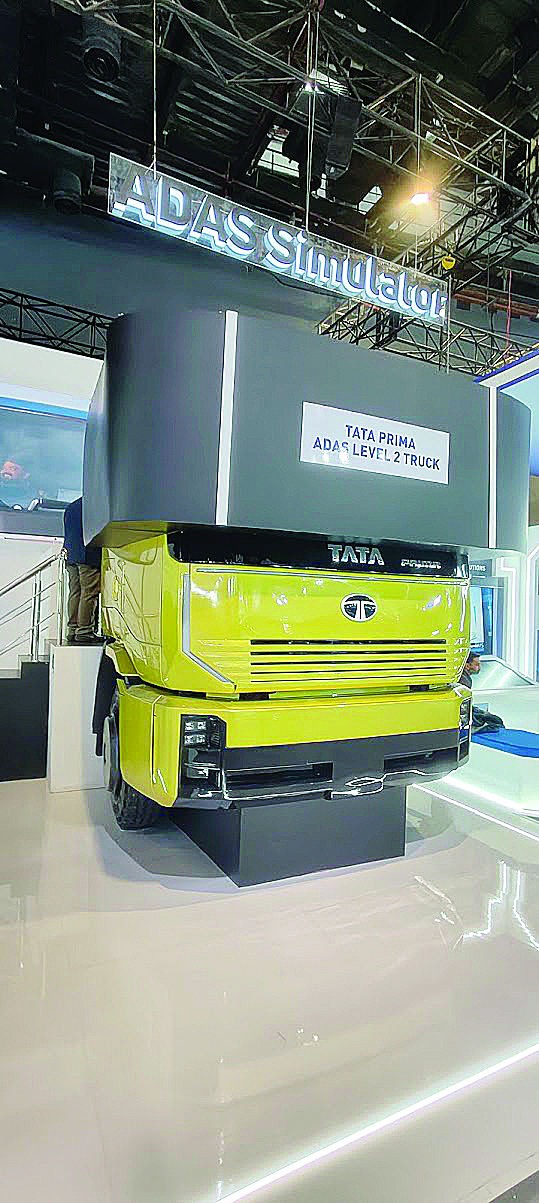
Indian commercial vehicle manufacturers are gradually moving from mechanical safety to digital intelligence. Companies such as Tata Motors and Ashok Leyland are embedding Level 1 and Level 2 Advanced Driver Assistance Systems (ADAS) into their fleets. Tata’s Prima and Signa series trucks now feature optional modules for Autonomous Emergency Braking (AEB) and Lane Departure Warning (LDW). Meanwhile, Ashok Leyland has introduced adaptive cruise control and driver drowsiness detection systems in partnership with Valeo under its HALO initiative.
The inclusion of ADAS is not merely a feature-based upgrade. OEMs are leveraging it to reduce accidents, enhance insurance viability, and elevate the Total Cost of Ownership (TCO) proposition for fleet operators. In effect, safety has become a selling point, one that contributes directly to profitability and sustainability.
Tier-1 Collaboration
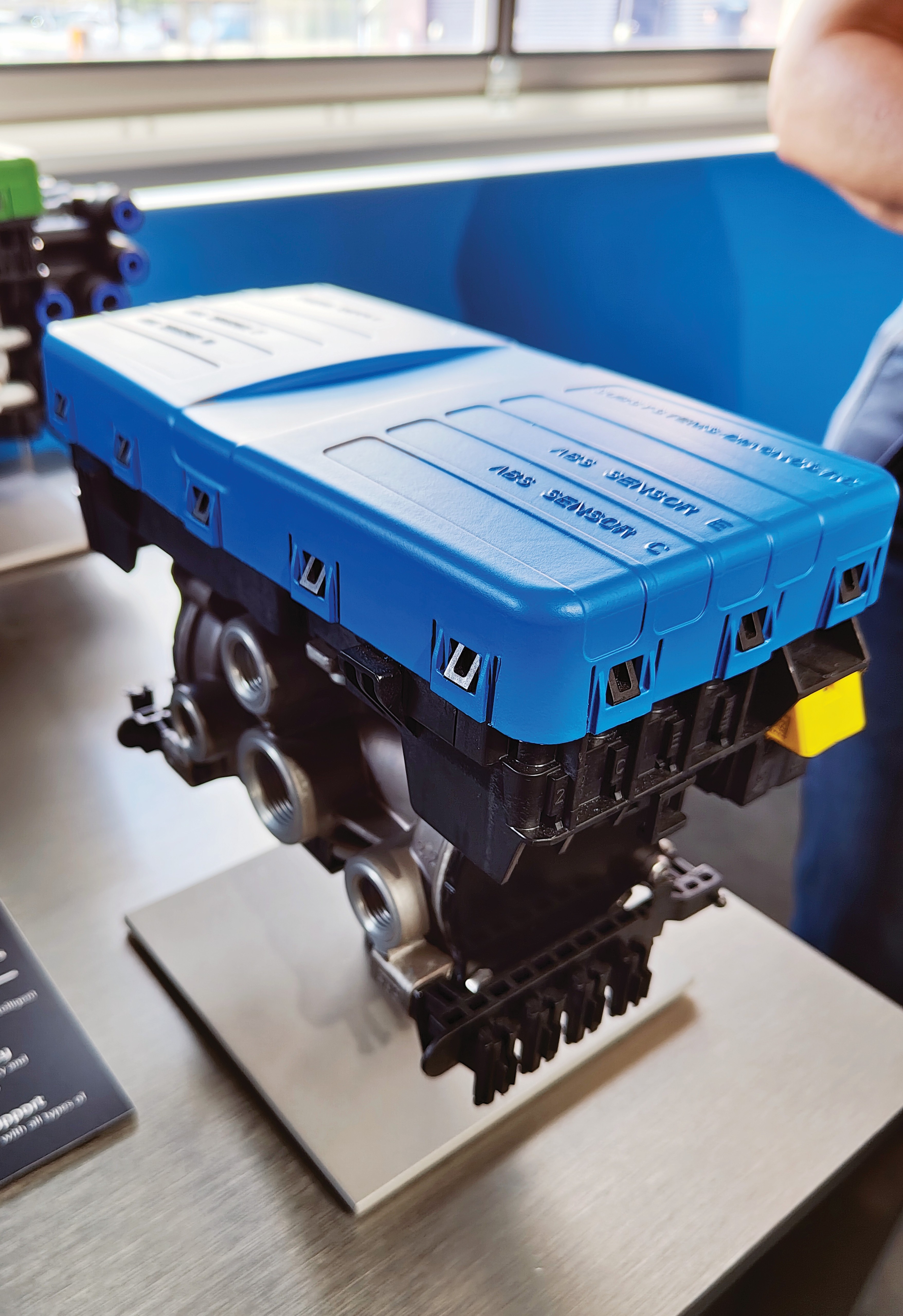
Technology partnerships have become the backbone of CV safety innovation. Visteon has established India’s first ADAS R&D centre tailored for regional traffic scenarios. The facility focuses on developing radar and camera modules optimised for Indian conditions, like unpredictable traffic behaviour and low-light environments.
Bosch has introduced an integrated Electronic Stability Program (ESP) built specifically for medium-duty trucks. This system amalgamates ABS, TPMS, rollover mitigation, and traction control, delivering a unified safety package. Valeo continues to strengthen its position in both OEM and aftermarket segments by supplying camera-lidar kits and embedded ADAS modules. These collaborations offer Indian OEMs a modular plug-and-play approach, reducing R&D cycles while enabling faster deployment of safety technologies.
Telematics Meets AI
The convergence of telematics and artificial intelligence has turned commercial vehicles into real-time data ecosystems. Fleetguard, a Cummins subsidiary, offers AI-backed dashboards that compile engine vitals, coolant status, and driver behaviour to predict mechanical failures. A recent internal study highlighted that 40 per cent of engine-related repairs can be prevented with early warnings derived from telematics data. Additionally, OEMs like Mahindra and Tata are working on Over-The-Air (OTA) update frameworks for ADAS and telematics firmware. These updates allow for real-time compliance with evolving safety mandates and enhance features post-sale. This approach not only reduces service downtime but also future-proofs vehicles against shifting regulations.
Reinventing Crash Resilience
While active safety systems prevent accidents, passive safety features minimise the consequences of unavoidable incidents. Indian OEMs are upgrading structural elements across the board. This includes designing cabins with stronger B-pillars, incorporating crumple zones, and using reinforced door beams. These enhancements are aligned with international safety standards such as the European CMVSS and Bandung crash protocols.
Many new heavy commercial vehicles are now equipped with dual airbags, motorised seatbelt tensioners, and high-strength steel chassis. Ashok Leyland’s Pro 6020 bus, for instance, features driver and co-driver airbags and an energy-absorbing front fascia. These improvements are no longer restricted to luxury buses but are being rolled out across volume models, making safety democratised and standardised.
Lessons from Europe
The evolution of commercial vehicle safety in India is increasingly guided by global benchmarks. OEMs like Volvo, Scania, MAN, and DAF are pioneering developments such as dual-lane autonomous emergency braking, 360-degree camera vision, and V2V (Vehicle-to-Vehicle) platooning technologies. These features, once seen as niche, are now influencing Indian OEMs’ long-term strategies.
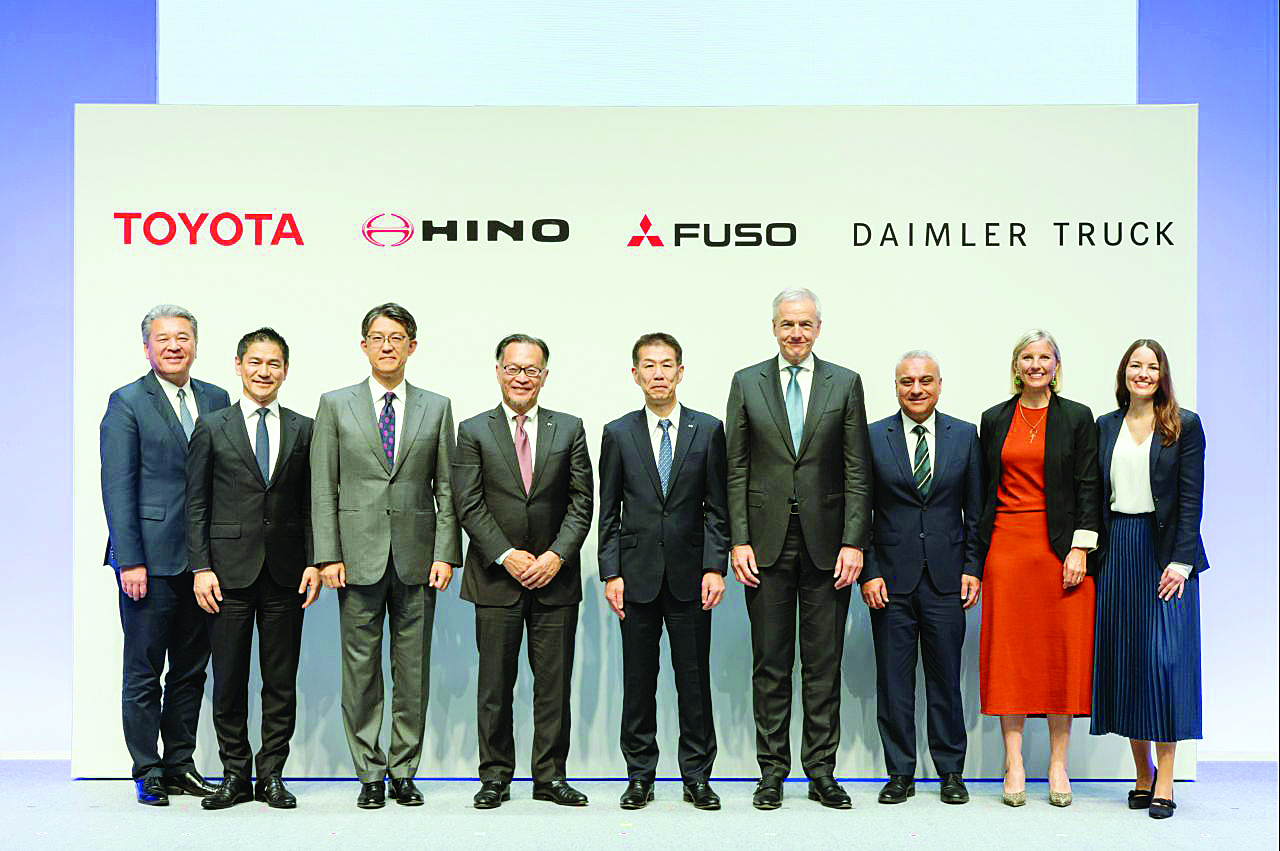
The recent strategic alliance between Daimler Truck, Volvo, and Traton (Scania’s parent group) is another significant development. The trio has announced a Euro 500 million joint venture to develop a standardised Software-Defined Vehicle (SDV) platform. While targeted at global markets, the trickle-down effect is likely to shape the roadmap for Indian commercial vehicles, especially in areas like AI-powered adaptive learning, OTA safety modules, and driver intent prediction.
A New Global Trade Backdrop: The Tariff Angle
India’s CV safety evolution is not occurring in a vacuum. The recent rollback of tariffs by the U.S. on certain Chinese automotive goods, to 30 per cent as part of a renewed bilateral trade dialogue, has sent ripples through global supply chains. In response, India is reportedly considering safeguard duties on select Chinese imports, particularly in electronic control units and ADAS sub components, to avoid a sudden flood of low-cost alternatives that could jeopardise domestic tier-1 and tier-2 suppliers. By managing these policy variables, India aims to retain its growing reputation as a preferred global hub for safety-compliant commercial vehicles, especially as export demand from Southeast Asia and Africa surges.
The 2025–2030 Roadmap
Looking ahead, Indian commercial vehicles are expected to adopt more connected and autonomous safety systems. Between 2025 and 2027, it is anticipated that ADAS will become mandatory for all new M&HCV models. Crash testing will also likely be standardised across truck and bus platforms. By 2028–2030, the integration of Vehicle-to-Everything (V2X) communication, e-call systems, and AI-driven route risk assessment tools is expected. Beyond 2030, the commercial vehicle industry may see limited deployment of Level 3 autonomy in dedicated freight corridors and further convergence with electric propulsion platforms that come pre-embedded with software-based safety stacks. OEMs are already investing in dedicated safety teams, simulation labs, and real-world scenario training. Partnerships with global software firms for in-cabin monitoring and cloud safety analytic are emerging as the next frontier.
Stepping Into The Global Safety Arena
India’s commercial vehicle landscape is experiencing a tectonic shift from rudimentary safety compliance to predictive, intelligent, and embedded safety systems. With MoRTH as the regulatory anchor and OEMs increasingly embracing advanced safety protocols, the sector is rapidly aligning with international best practices. Tier-1 suppliers are helping make sophisticated safety systems accessible and affordable, while partnerships with European OEMs provide a forward-looking blueprint. In parallel, safeguard duties and policy buffers are ensuring that this transformation is resilient against global trade shifts. As safety becomes the cornerstone of reliability and efficiency, India is poised to lead in shaping the next generation of safe commercial transport.