

RailTrans Expo 2025 showcased India’s mobility transformation through sustainable logistics, hyperloop development, modern rail infrastructure, and strategic public-private partnerships, aligned with the Viksit Bharat 2047 roadmap, writes Richa Tyagi.
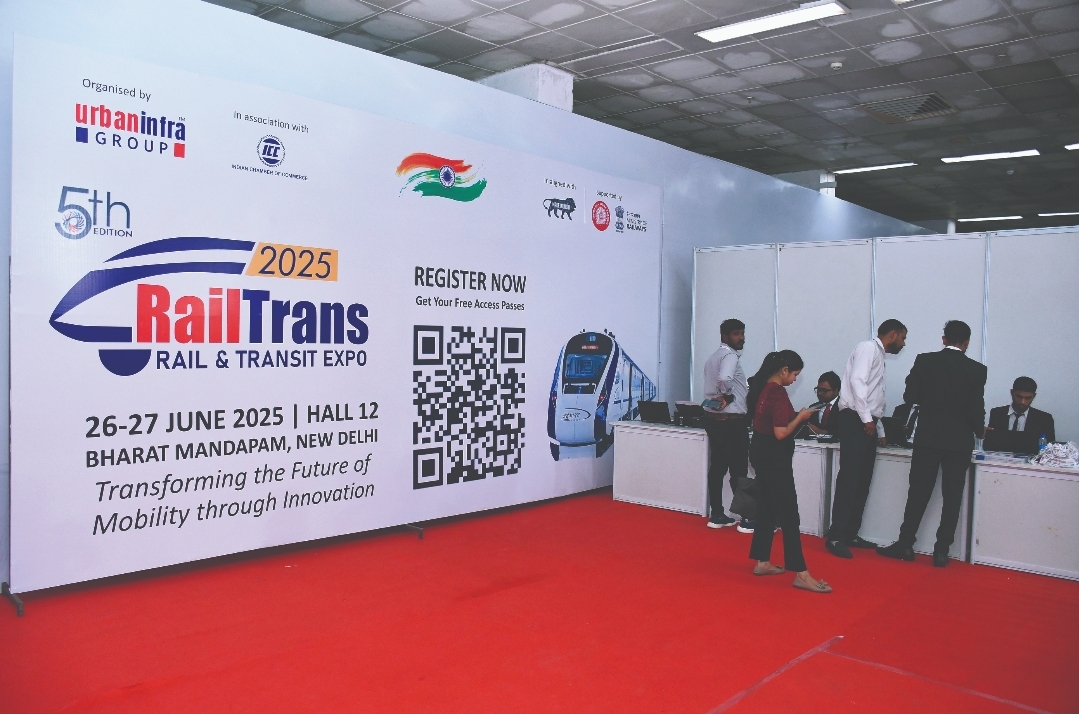
The 5th edition of RailTrans Expo 2025, India’s premier exhibition and knowledge-sharing platform for railways, logistics, and urban mobility, was inaugurated at Bharat Mandapam, Pragati Maidan, New Delhi. The two-day event, organised by the Urban Infra Group in association with the Indian Chamber of Commerce (ICC) and the Ministry of Railways, Government of India, is themed “Viksit Bharat 2047 – Transforming the Future of Rail and Mobility through Innovation.”
FINANCING THE FUTURE
At RailTrans Expo 2025, experts actively explored sustainable, scalable, and innovative financing mechanisms to meet India’s growing rail and mobility infrastructure needs. They focused on balancing public investment, encouraging private participation, and integrating climate-resilient funding as part of the Viksit Bharat 2047 vision.
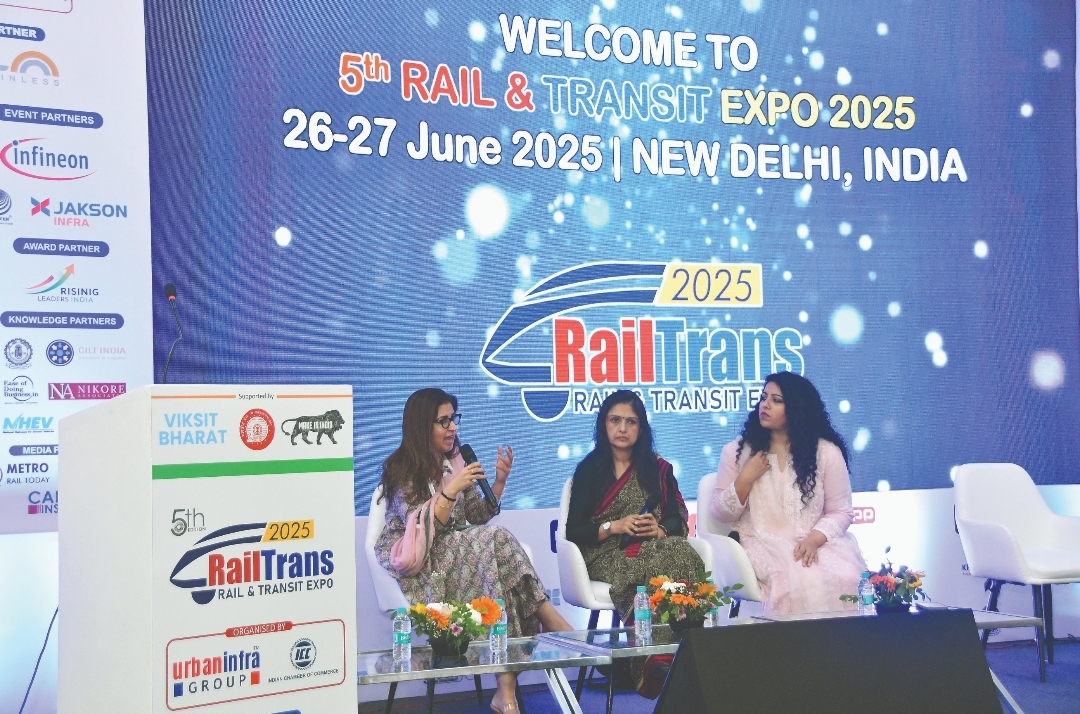
The experts discussed key topics such as hybrid financing for rail and mobility, green bonds and ESG financing, and blended financing models that combine public support with private capital, including Viability Gap Funding and Multilateral Development Banks. They also examined Transit-Oriented Development (TOD), value capture finance, institutional investments, sovereign wealth participation in mobility assets, and global best practices in infrastructure financing. Mitali Nikore, Founder of Nikore Associates and the session’s moderator, noted, “What is really changing in the financing landscape is the shift towards leveraging private capital. The government is no longer taking sole responsibility for financing projects; it is ensuring that every rupee invested is accompanied by at least an equivalent or greater amount from the private sector. This shift demands a rethinking of how we structure public-private partnerships (PPP), which have become one of the most important instruments in advancing urban mobility, railways, and highways.”
Mona Sivastava, Chief Engineer at Indian Railways, shared insights into how this transition is unfolding within the railway system: “As an organisation, Indian Railways is heavily involved in infrastructure development. But beyond just building infrastructure, we see ourselves as a premier service provider. We are focusing on innovation in areas where we have not explored before. We are evaluating how much we can leverage through different financing modes, including PPPs, particularly for station development. We are diversifying our financial strategy to ensure infrastructure is not only built but also well-prepared and maintained to deliver consistent service.”
Sapna Bhawnani, Vice President of Communications & CSR, APAC at Alstom, offered the manufacturers’ and OEMs’ perspective. “One of the biggest successes in this space has been the public-private partnership (PPP) model we established with Indian Railways. A prime example is the landmark agreement we signed in 2014 to manufacture 800 locomotives. At the time, we were still in the exploratory phase, but the successful execution and implementation of the project gave both sides the confidence that such models can truly work. Together, we delivered not only a highly viable and successful product for the market but also proved that PPPs can be effective financing models for infrastructure development.”
INDIA’S HYPERLOOP VISION
The IIT Madras Discovery Campus hosts India’s first-of-its-kind Hyperloop Vacuum Tube Test Facility, a 400-meter-long, two-meter-diameter infrastructure that stands as one of the most economical hyperloop testing centres globally. The project, jointly funded by the Ministry of Railways with support from L&T, Tata Steel, Ansys, Dassault Aviation, and several other industry leaders, has successfully completed vacuum testing, and pod testing inside the vacuum tube is currently in progress.
The hyperloop pod, weighing approximately 1.5 tons, is one of the heaviest of its kind globally. Recently, the Railway Board approved the expansion of the facility, which will soon become one of the largest hyperloop testing centres in the world. Currently, India lacks true high-speed mobility solutions, making hyperloop technology a revolutionary development. IIT Madras has developed three generations of hyperloop pods, each supporting the different stages of high-speed transit: linear propulsion, which is already implemented in metros across seven countries; magnetic levitation, the next stage of development; and vacuum propulsion, the most advanced, still in the testing phase. The third-generation pod, capable of operating across all three technologies, will soon begin trials. Aditya Khakse, Lead – Business Development at TuTr Hyperloop (IIT Madras), stated, “This project has received overwhelming support as a nationally significant initiative. We have successfully completed both vacuum and pod testing, and we are now progressing toward full-scale testing of all three key technologies: linear propulsion (0–200 km/h), magnetic levitation (200–400 km/h), and vacuum-based propulsion (400–600 km/h), all to be tested within our existing tube infrastructure.”
Looking ahead, the initial deployment will focus on cargo rather than passenger transport, due to fewer regulatory challenges and easier testing opportunities. The team has divided the technology into three key areas: full-stack technology development, scalable infrastructure, and industrial collaboration via a consortium approach. Aditya added, “We recognise that we cannot do this alone. We have partnered with key industry stakeholders and identified promising use cases in defence, mining, and logistics, where the technology can boost safety, efficiency, and reduce costs. Thanks to India’s strength in frugal engineering, we have built this world-class solution at a fraction of the cost compared to similar efforts in the US or Europe, without compromising on quality or performance. Our immediate goal is to begin revenue generation through cargo operations, which already have strong customer interest. Over the next decade, we aim to scale this into a full-stack hyperloop solution for India and the world.”
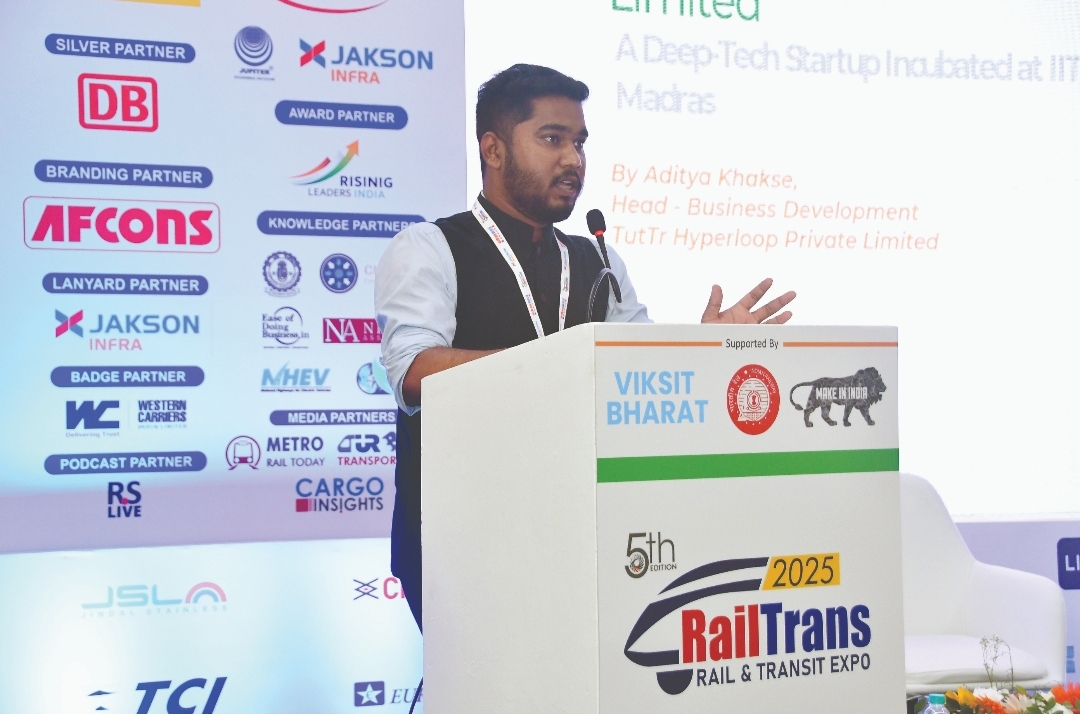
Aditya Khakse, Lead – Business Development at TuTr Hyperloop (IIT Madras)
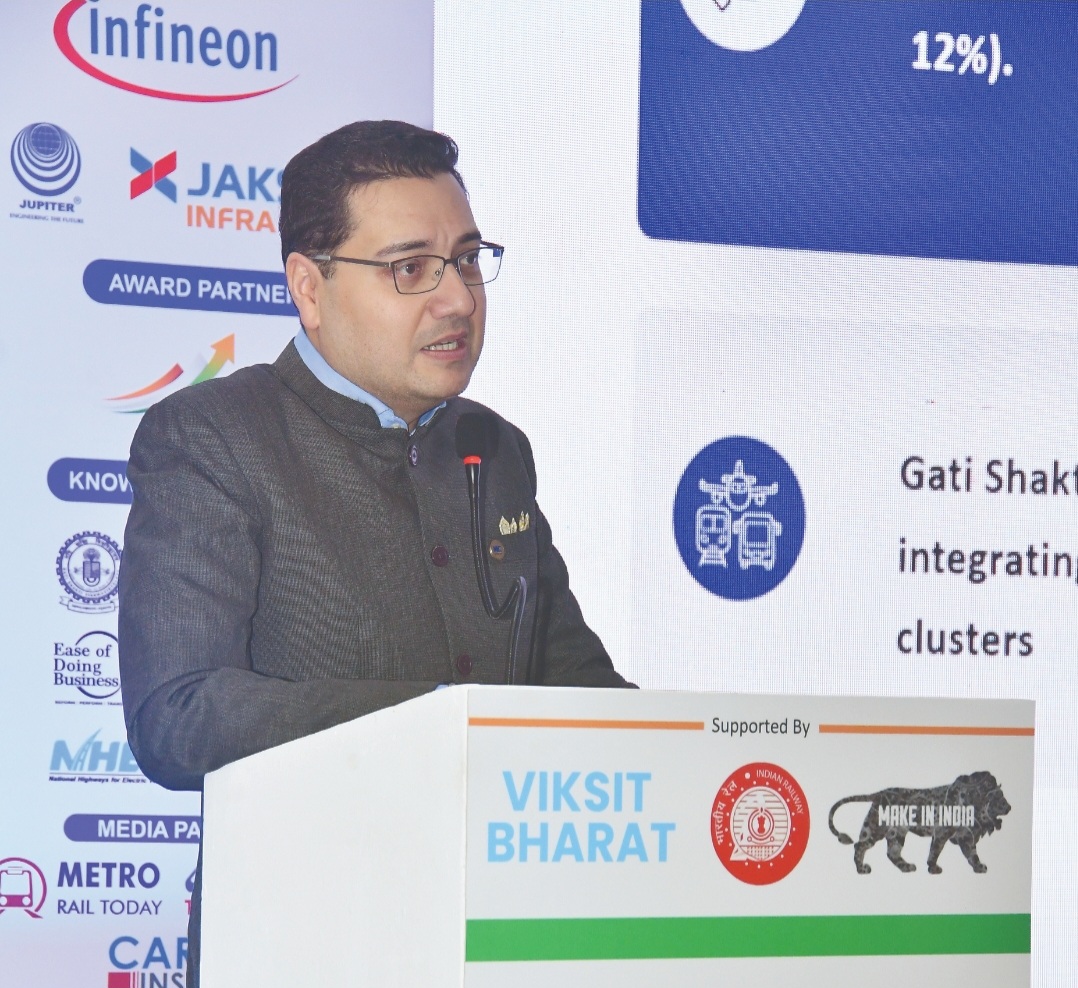
Kanishka Sethia, Chairman of the National Logistics and Supply Chain Committee at ICC and CEO of Western Carriers India Ltd.
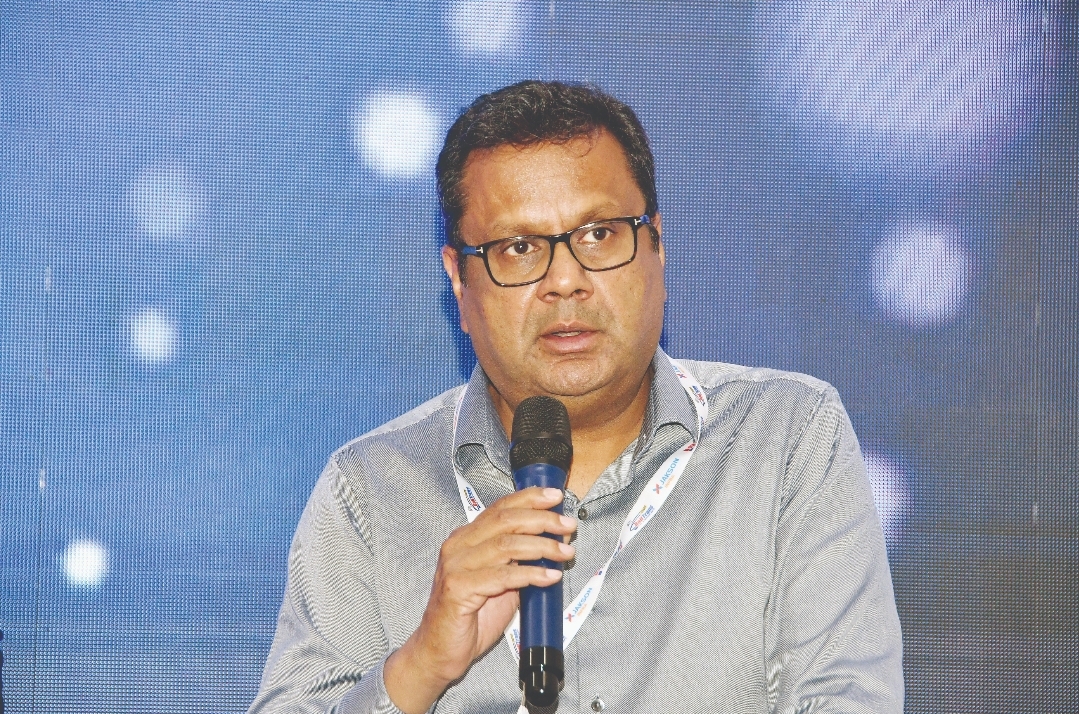
Manish Agrawal, Head of Infrastructure at Siemens Ltd.
2047 READINESS: TRACKS, TRAINS & TECH
To critically evaluate the adoption of advanced technologies in India’s railway infrastructure, including tracks, rolling stock, and signalling systems, it is essential to examine existing bottlenecks, the future potential for modernisation, and alignment with global standards as envisioned in the Viksit Bharat 2047 roadmap. This involves benchmarking modern track infrastructure against global best practices, deploying next-generation rolling stock that is smart, durable, and high-speed ready, and modernising signalling systems, from indigenous solutions like KAVACH to global systems such as ETCS. It also includes the evolution of telecommunication technologies from 2G to 6G (Next Generation Networks), achieving interoperability and seamless system integration, applying artificial intelligence in railway systems, and addressing financing and procurement challenges in adopting high-tech upgrades.
Manish Agrawal, Head of Infrastructure at Siemens Ltd., highlighted the technical complexities involved in modern railway electrification. Referring to challenging terrains such as Jammu & Kashmir and Rudraprayag, he noted that tunnel systems in these regions require specialised electrification solutions. “We have already implemented such electrification systems in similar difficult geographies,” he shared. “Going forward, we hope to elevate the Indian Railways’ reliability and performance to a much higher level, maintaining the same commitment to innovation and excellence.”
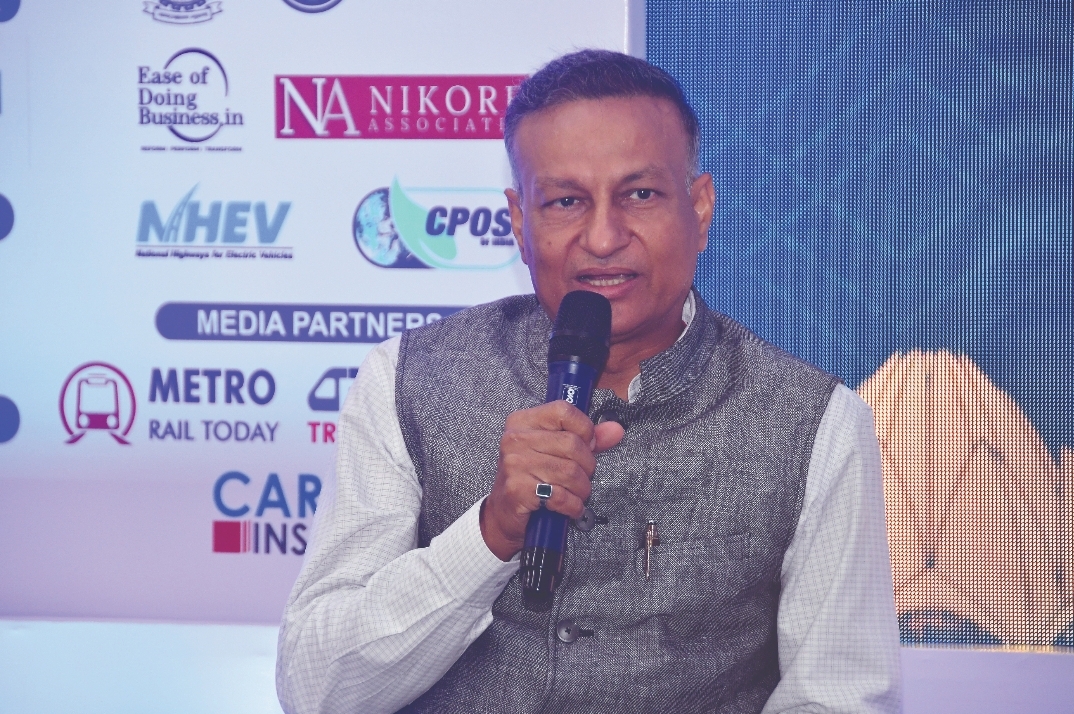
Dr. Sanjeev Kumar Lohia, Former MD & CEO of IRSDC
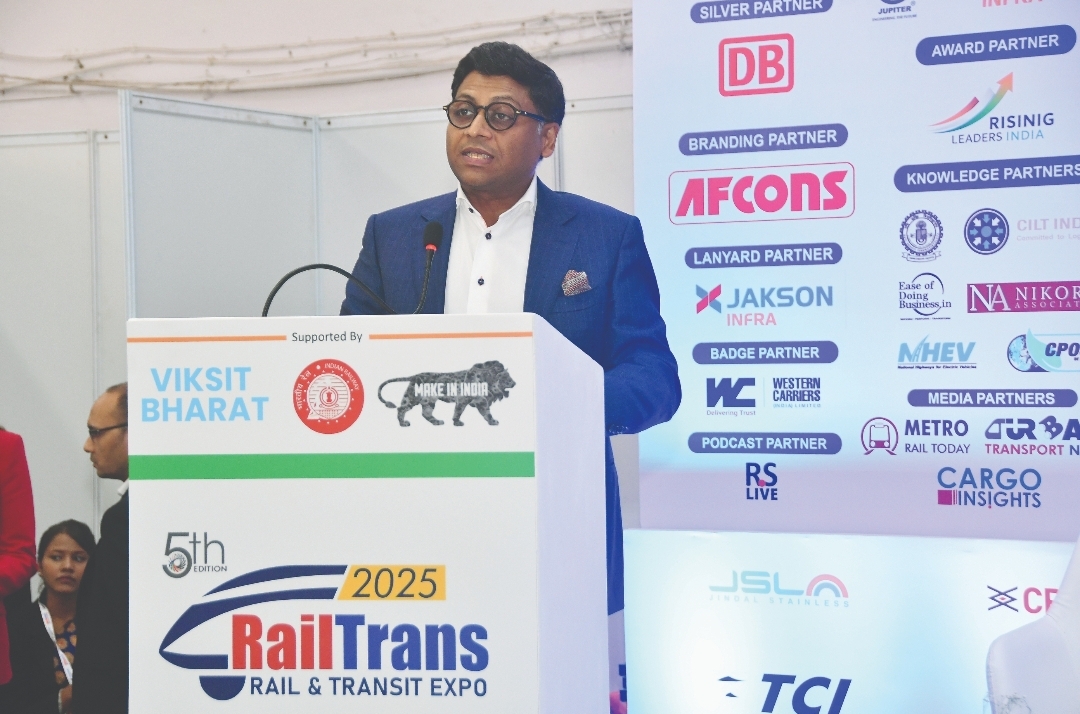
Vikash Lohia, Deputy Managing Director of Jupiter Wagons and Chairman of the Railways Expert Committee at ICC
VISION ON NATIONAL LOGISTICS DAY 2025
India’s logistics sector, valued at approximately USD 300 billion in 2023, is projected to grow to USD 360 billion by 2025, playing a pivotal role in the country’s journey toward a USD five trillion economy by 2027. Currently, logistics contributes around 14 per cent to India’s GDP, which is a significant share that highlights the urgency to improve efficiency and reduce costs. Recognising this, the Government of India has launched ambitious reforms under the PM Gati Shakti National Master Plan, a USD 1.2 trillion initiative aimed at transforming the nation’s logistics infrastructure. This includes the integration of over 1,200 industrial clusters across the country, representing more than a quarter of the current GDP, and the digitisation of 1.46 lakh kilometres of highways. The plan involves coordination with 44 central ministries and 36 states and union territories on a single digital platform to streamline infrastructure development and improve coordination, and encompasses 208 major projects worth INR 15.39 lakh crore.
Kanishka Sethia, Chairman of the National Logistics and Supply Chain Committee at ICC and CEO of Western Carriers India Ltd., remarked, “This is systems engineering on a national, if not global, scale.” He highlighted that under Gati Shakti, India plans to develop 300 new multimodal terminals over the next five years, modernise 200 existing terminals, launch 400 new Vande Bharat trains by 2028, and develop 160 airports, including water aerodromes and heliports. These are transformative numbers and reflect the scale of India’s logistics ambitions.
Green logistics is emerging as India’s next competitive edge, with investments in EV-based last-mile delivery and solar-powered warehouses. The Union Budget 2025 has allocated INR 1.5 lakh crore for green infrastructure, and Gati Shakti is supporting climate-resilient infrastructure at scale. Pilot corridors are already testing carbon-neutral supply chains, positioning green logistics as both a compliance imperative and a future-ready solution.
To bridge the infrastructure and logistics gap, FY 2025 will see a major push through public-private partnerships, with the government creating industrial ecosystems, scaling up startups, and attracting global investors. Simplifying policy frameworks, embracing digital innovation, and transforming last-mile logistics are seen as essential steps. The call to action is clear: Digitise, unify, and decarbonise India’s supply chain.
NEXT-MILE – ENHANCING PUBLIC-PRIVATE SYNERGIES
Dr. Sanjeev Kumar Lohia, Former MD & CEO of IRSDC, shared his perspective on railway station modernisation and redevelopment, emphasising the need for a paradigm shift in mindset. He noted that for over 150 years, Indian Railways has primarily functioned as a long-distance transporter of goods and passengers. However, whenever a railway station was established, it naturally evolved into a city centre, with significant activity developing not only within the station premises but also in the surrounding areas, often resulting in urban chaos.